
A wedding veil needs gentler care than a standard load of washing. Preserving your wedding veil at home can begin with hand-washing it in cold water with a small amount of laundry detergent, rinsing thoroughly and air-drying it. Never put it in the dryer.
It’s natural to want to protect the delicate fabric and keep the veil looking its best. Cleaning is only part of the process: how you fold, wrap and store it matters too.
This guide explains how to approach a DIY wash, when a veil may need more careful handling, and how to choose between a 100% cotton bag and an acid-free box with tissue paper. You’ll also learn where to store the veil, how to keep it separate from your gown, and what to consider before packing it away.
Key Takeaways
- Choose storage that keeps the veil protected from light, damp and contact with gown fastenings.
- Use careful folding and protective wrapping to help reduce creases and shield delicate details.
- Plan DIY costs around the supplies you need, including your chosen storage option.
- Take extra care with visible marks or delicate embellishments before deciding whether to wash the veil at home.
Storage conditions for preserved wedding attire
Wedding veil preservation usually takes 2 to 8 weeks after the veil reaches the preservation facility. How long it lasts depends on its fabric, condition and storage; a cool, dry, dark place with a steady temperature helps protect it.
-
Choose a Storage Bag or Archival Box
Choose a 100% cotton bag for breathable protection, or an acid-free, lignin-free box for a structured option. Match the box to the veil’s length: a cathedral-length veil needs room to lie with fewer tight folds. A box that compresses the fabric can leave creases. Keep the veil separate from the wedding gown.
-
Use a Garment Bag for Storage and Travel
Store or travel with the veil in its own non-woven garment bag, rather than sharing the wedding gown’s bag. Beading and zips can snag or tear delicate tulle. Avoid plastic covers, and keep the bag away from direct sunlight and damp areas, both at home and in transit.
-
Store the Veil in a Preservation Chest
Keep a preservation chest in a cool, dry, dark cupboard with a steady temperature. Avoid attics and basements, where conditions can become hot or damp. Keep the chest away from sunlight and moisture. Arrange the veil loosely inside so the lid and other contents don’t press against the fabric.
-
Use Acid-Free Storage
Place acid-free tissue between folds, and choose a box that is also lignin-free. If the veil has a metal comb, wrap it in acid-free tissue so the metal doesn’t touch the fabric. Remove an attached headpiece if possible, or wrap it separately. Wash and dry your hands before handling the veil.
DIY preservation with cotton bags or acid-free boxes
Choose a storage method that suits the veil’s length, construction and the space available. When preserving your wedding veil at home, protect it without compressing delicate fabric or embellishments.
- Prepare a clean, dry surface and lay out the veil so you can see its shape. Check the hem, comb area and decorative details for snags before folding. This helps prevent loose threads or embellishments from getting caught inside a fold.
- Choose a 100% cotton bag when you want flexible storage that can accommodate the veil without forcing sharp folds. A clean cotton sheet or pillowcase can also wrap it. Avoid plastic wrapping, which can hold moisture close to the fabric during storage.
- Choose an acid-free box if you want a firm container to protect the veil from pressure by other stored items. When preserving your wedding veil in a box, fold it loosely and place acid-free tissue between layers. Leave enough room so the fabric isn’t squeezed.
- Remove an attached headpiece if you can do so without pulling at the veil. Wrap it in acid-free tissue, keeping comb teeth, clips and decorative edges from rubbing against the netting. If it must stay attached, position it so its weight doesn’t rest on delicate fabric. For ornate headpieces, tiaras, or bridal accessories stored separately, tailored cushioning from suppliers like Foam Packaging Direct can help protect fragile embellishments and keep pieces securely supported.
- Close the storage bag or box without flattening its contents, then choose a protected place away from direct sunlight and damp. Keep the veil separate from items with rough edges or fastenings. If you’re still choosing a veil to complement your gown, you can book a bridal appointment to explore styles and proportions.
DIY veil preservation costs
- List the supplies you already own before estimating your DIY cleaning costs. A clean cotton sheet or pillowcase can protect the veil, and you may already have a suitable cotton bag. Buying only what’s missing keeps your total focused on what you actually need, rather than the cost of a complete preservation kit.
- Price the storage option separately from cleaning materials. A 100% cotton bag is one choice; an acid-free box and acid-free tissue paper are another. The veil’s length and the space needed for loose folds affect the box size. If you already have suitable tissue or a cotton wrap, factor that into your own total.
- Set aside a separate budget if the veil needs professional attention. This is not a DIY veil-preservation price or the price of a veil or storage bag. It refers to a different service.
- Compare like with like before deciding. A DIY total covers only the supplies you buy for cleaning and storage; professional preservation is a separate option. Check whether your estimate includes a storage box, tissue paper or other materials. A simple veil without visible marks may need different supplies from a long, embellished design.
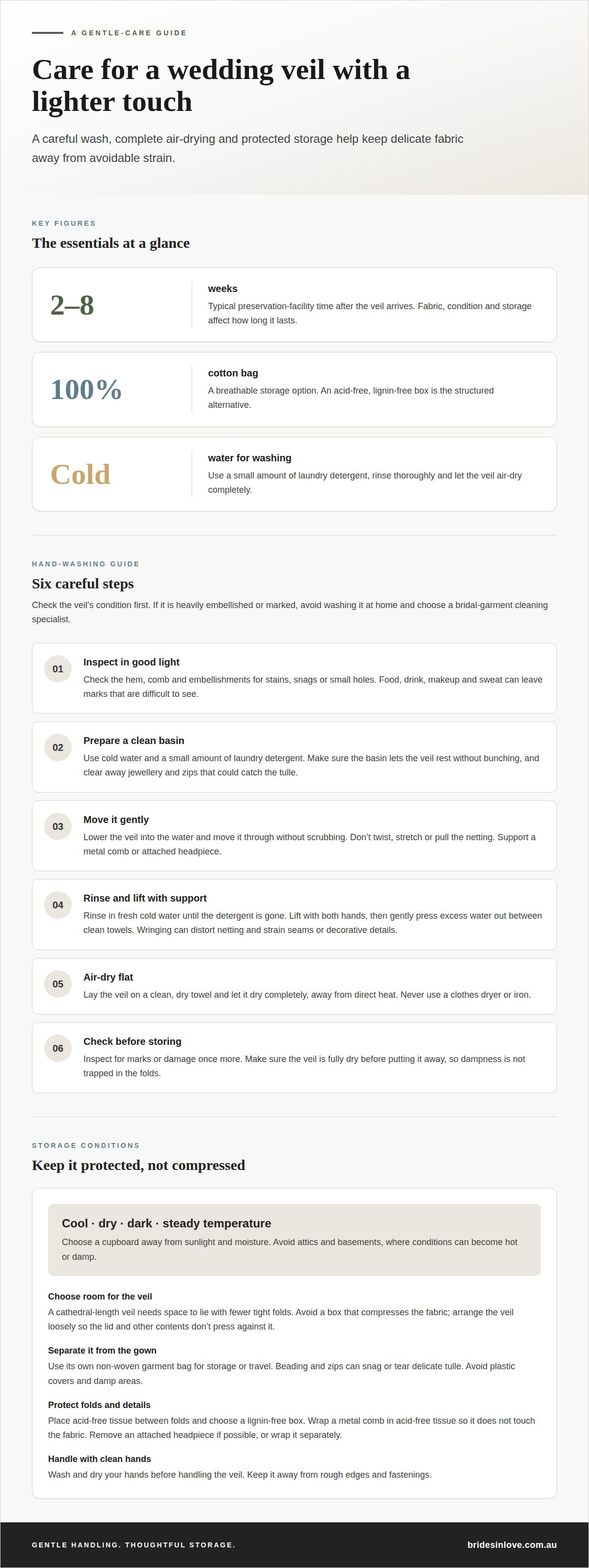
Hand-washing with cold water and detergent
- Inspect the veil in good light before washing. Look along the hem, comb and embellishments for stains, snags or small holes. Food, drink, makeup and sweat can leave marks, including stains that are difficult to see. If the veil is heavily embellished or marked, avoid home washing and choose a bridal-garment cleaning specialist.
- Fill a clean basin with cold water and add a small amount of laundry detergent. Choose a basin large enough for the veil to rest without bunching. Before washing, clear nearby surfaces of jewellery, zips and anything else that could catch the tulle.
- Lower the veil gently into the water and move it through the basin without scrubbing. Don’t twist, stretch or pull the delicate netting. Support a metal comb or attached headpiece so its weight doesn’t drag across the fabric or strain the stitching.
- Rinse thoroughly in fresh cold water until the detergent is gone. Lift the veil with both hands, supporting the fabric rather than pulling on one edge. Gently press excess water out between clean towels. Wringing can distort the netting and strain seams or decorative details.
- Lay the veil flat on a clean, dry towel and let it air-dry completely. Keep it away from direct heat, and don’t use a clothes dryer or iron, as these can damage delicate fabric. Make sure it is fully dry before storage to avoid trapping dampness in the folds.
- Once dry, inspect the fabric again for marks or damage before putting it away. Preserving your wedding veil starts with choosing care that suits its condition. If you’re selecting a veil to complement your gown, book a bridal appointment to explore styles and proportions.
Brides in Love: Wedding Societe Gowns
Brides in Love is a natural next step when you’re choosing a veil to complement your gown. The boutique offers Wedding Societe gowns and bridal veils, so you can consider these key pieces of your wedding look together. Its focus is selecting your attire, not cleaning or preserving it.
Consider the setting and silhouette you want before choosing a veil. A beach ceremony, for example, may call for a different overall look from a formal celebration. Think about how the veil’s length and shape will sit with your gown and move as you do.
Bring reference images of your venue and preferred dress styles to your appointment, along with any headpiece you’re considering. These details give the stylist context for discussing how the pieces work together. If you’re still comparing gowns, Brides in Love also offers Zavana Bridal and White April gowns.
Brides in Love recommends booking an appointment ideally 9 to 12 months before your wedding date. This gives you time to explore gown and veil options as part of your wider planning. Your chosen veil can then be cared for and stored using the steps outlined in this article.
For a coordinated bridal look, start with the gown, then consider how a veil complements its shape and formality. Bring questions about veil styles and gown pairings to your appointment, so the discussion stays focused on the look you want.
Contact Brides in Love to discuss your bridal appointment.
Plan the next chapter for your bridal look
Deciding how to care for your veil can also prompt you to think about which pieces you want to keep and wear again. A thoughtful plan for preserving your wedding veil helps you handle it after the celebration, while leaving room to decide what your bridal style means beyond the wedding day.
If you're still choosing a gown, Brides in Love offers Zavana Bridal and White April gowns at its Sydney boutique. Considering the gown and veil together can help you shape a personal look, from the ceremony to the finishing details. Take time to focus on the silhouette and finish you're drawn to.
Bring your ideas and questions to a bridal appointment, whether you're selecting a gown or considering how a veil will complement it. A clear plan can make each choice more considered and help you approach the next stage of wedding preparations with confidence.
Arrange an appointment with Brides in Love and take the next step towards a bridal look that feels distinctly yours.
Frequently Asked Questions
How do you clean a veil?
For a simple veil without heavy embellishments, hand-wash gently in cold water with a small amount of laundry detergent, then rinse and air-dry. Don’t scrub embroidered details or pull at attached trims. Check the care label if available, and avoid home treatment for visible stains or delicate embellishments, as rubbing can spread a mark or snag the decoration.
How do you store the veil in the box?
Arrange the veil loosely in a clean, appropriately sized box, placing acid-free tissue between folds to cushion the layers. Wrap any metal comb separately so it doesn’t touch the fabric. Don’t force a long veil into a small box. For a Sydney bride storing a cathedral-length veil, extra room helps prevent tight folds and excessive creasing.
What if it has some wrinkles even after hanging?
Let the veil hang freely in a steamy bathroom for 4-5 days to allow wrinkles to relax naturally. Keep it clear of wet surfaces and don’t use an iron, which can damage delicate fabric. If creases remain, steaming is preferable to direct heat. Test carefully on an inconspicuous area only if the fabric and trim allow.
How should you clean a wedding veil before storing it?
Before cleaning, inspect the veil closely, including the hem and areas near the comb, for marks, tears or small holes. Food, drink, makeup and sweat can leave stains, some of which are hard to see. Don’t rub at a stain. A bridal-garment cleaning specialist can assess heavily embellished or stained veils.
Can you preserve a wedding veil at home, or should you use a specialist?
Home care can suit a simple veil in good condition with no visible stains. A veil with heavy embellishment, delicate trims or marks needs careful handling, so professional bridal-garment cleaning is the safer choice. Consider the fabric and construction first: intricate details can snag during washing, and stains may become harder to address over time.
What are the steps for storing a wedding veil long term?
First, make sure the veil is clean and completely dry. Wrap or fold it with acid-free tissue, keeping any metal comb separate from the fabric, then place it in a cotton bag or suitable archival box. Store it away from sunlight and damp, at a steady temperature. Handle older stored veils gently, as the fabric can become brittle and small holes more noticeable.


