
The gown isn’t the only detail worth capturing in your wedding photos. Creating a wedding day flat lay with accessories starts with choosing meaningful pieces, such as your veil, jewellery, rings, invitation and a flower, then arranging them with space and balance.
These small details reflect the look and feel you’ve chosen for the day, so it makes sense to capture them together. A flat lay can also include personal items from both partners, making the composition feel considered rather than limited to bridal accessories.
This guide explains how to select and prepare details, layer accessories and textures, and use light and a simple background to bring the composition together. You’ll also find ideas for including sentimental pieces, from a family heirloom to handwritten vows, while keeping the arrangement polished and personal.
Key Takeaways
- Build a balanced flat lay by choosing a focal piece, layering textures and leaving breathing room around key details.
- Gather meaningful items, loose florals and paper details together so the photographer can style them efficiently.
- Use soft window light where possible, or position a softbox at an angle to create gentle depth.
- Plan accessory spending around the pieces that matter most, and explore bridal accessories alongside gown options.
1. Composition using anchors, layers and triangles
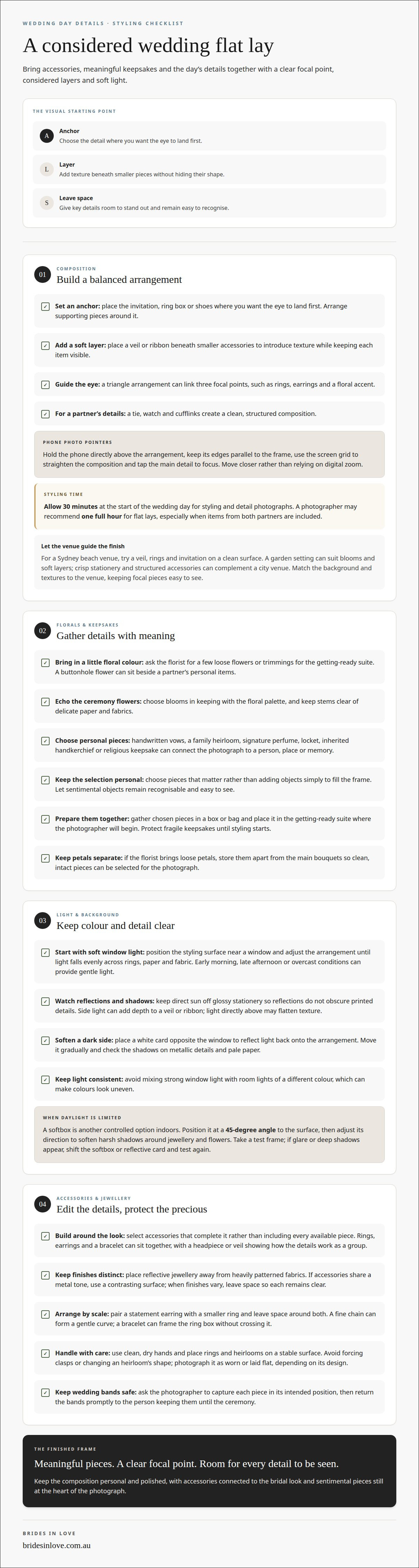
Start with an anchor: place the wedding invitation, ring box or shoes where you want the eye to land first. Arrange supporting pieces around it, leaving enough space for each detail to stand out. Layer a veil or ribbon beneath smaller accessories to add texture without hiding their shape. A triangle arrangement can guide the eye between three focal points, such as rings, earrings and a floral accent. For a groom’s photograph, the clean lines of a tie, cufflinks and a watch—such as one fitted with a sleek leather strap from o2leather.com—create a more structured composition.
To photograph the flat lay with a phone, hold it directly above the arrangement and keep the edges parallel to the frame. Use the screen grid to straighten the composition, tap the main detail to focus, and move closer rather than relying on digital zoom.
Couples should allow 30 minutes at the start of the wedding day for styling and detail photographs. A photographer may recommend one full hour for flat lays, especially when the arrangement includes items from both partners.
For a Sydney beach venue, try a simple arrangement of a veil, rings and invitation on a clean surface. A garden setting may suit a looser composition with blooms and soft layers, while crisp stationery and structured accessories can complement a city venue. Match the background and textures to the venue, keeping the focal pieces easy to see.
2. Florals and personal or sentimental items
Loose blooms bring the wedding’s floral palette into detail photographs without crowding the arrangement. Ask your florist to include a few loose flowers or trimmings with the arrangements for the getting-ready suite. A buttonhole flower can add a small floral accent beside a partner’s personal items. Choose blooms that echo the ceremony flowers, and keep stems clear of delicate paper and fabrics.
Personal pieces give flat lays meaning beyond their colour scheme. A handwritten vow, family heirloom or signature perfume can connect the photograph to a person, place or memory. Choose items that matter to you rather than adding objects simply to fill the frame. A locket, inherited handkerchief or religious keepsake can sit beside the day’s details while remaining easy to recognise.
Before the wedding, gather the chosen pieces in a box or bag. Place it in the getting-ready suite where the photographer will begin, and protect fragile keepsakes until styling starts. If the florist is bringing loose petals, keep them separate from the main bouquets. This makes it easier to choose clean, intact pieces for the photograph.
For a cohesive finish, repeat one floral colour in a ribbon or paper detail, then let sentimental objects remain the focus. Couples planning their bridal look can also plan a bridal appointment around the accessories they hope to wear.
3. Natural window light and artificial softbox lighting
For a wedding detail flat lay, soft natural light helps preserve colour and depth. Position the styling surface near a window, then adjust the arrangement until light falls evenly across rings, paper and fabric. Early morning, late afternoon or overcast conditions can provide gentle window light. Keep direct sun off glossy stationery, where reflections can obscure printed details.
Watch the shadows as you position each piece. A window to one side can add depth to a veil or ribbon, while light from directly above may flatten its texture. If one side looks too dark, use a white card opposite the window to reflect light back onto the arrangement. Move the card gradually, checking how it affects shadows on metallic details and pale paper. Avoid mixing strong window light with room lights of a different colour, which can make colours look uneven.
For an indoor room with limited daylight, a softbox gives the photographer another controlled option. Position it at a 45-degree angle to the surface, then adjust its direction to soften harsh shadows around jewellery and flowers. Keep the light source consistent while styling, so the photograph has a balanced look from edge to edge. A quick test frame can reveal glare on a ring or deep shadows beneath an invitation. Shift the softbox or the reflective card, then take another frame. This simple lighting adjustment helps preserve fine details in lace, printed paper and polished metal.
4. Bridal accessories and jewellery
Build the bridal arrangement around accessories that complete the look, rather than including every available piece. An engagement ring, wedding band, earrings and bracelet can form a refined group, with a headpiece or veil showing how the details work together. When creating a wedding day flat lay with accessories, keep reflective jewellery away from heavily patterned fabrics so each finish remains visible. A ring box can anchor the composition and keep the bands easy to locate.
Handle rings and heirlooms with clean, dry hands, and place them on a stable surface before photographing. Ask the photographer to capture each piece in its intended position, then return the wedding bands promptly to the person keeping them until the ceremony. For a delicate heirloom, avoid forcing clasps or changing its shape for the frame. Photograph it as worn or laid flat, depending on its design.
Group jewellery by scale: place a statement earring beside a smaller ring, then leave space around both. A fine chain can form a gentle curve, while a bracelet can frame the ring box without crossing it. Creating a wedding day flat lay with accessories works best when every precious detail remains distinct. If the accessories share a metal tone, choose a contrasting surface to separate their outlines; if the finishes vary, leave enough space for each to read clearly. Aim for a considered edit that connects the accessories to the bridal look while preserving the personal significance of heirlooms.
Wedding Flat Lay Accessory Prices in Sydney
A flat lay doesn’t have a standard accessory price: its total depends on which pieces you choose to buy, borrow or already own. Without a verified public Sydney price range to quote, a made-up figure would not help you plan. Instead, budget by item and prioritise pieces you’ll wear again, such as earrings or a headpiece, alongside details chosen mainly for the wedding photographs.
Start with the essentials in your look. List the veil, jewellery and hair accessory separately, then note any heirloom or borrowed piece that already fills one of those roles. This shows which items you still need and helps avoid duplicate purchases. Design, materials and level of detail affect the cost of each piece, so compare similar items when setting your budget.
Keep the photograph itself in perspective: it can feature personal items you already have, such as invitation stationery, a ring box or a family keepsake. Loose flowers and styling surfaces can also work with existing wedding details instead of being purchased just for one image. Set your priorities before shopping, then tailor the selection to your overall wedding budget.
Bridal jewellery, veils and headpieces can help complete the look as well as contribute to the flat lay. To explore accessories alongside gown styling, book an appointment.
Brides in Love: Wedding Societe Gowns
Brides in Love is a natural next step if you’re choosing a gown and want its accessories to feel considered in your wedding photographs. A Wedding Societe gown can guide the flat lay’s palette and mood, helping you choose details that complement your bridal look. The gown need not appear in every frame; a veil, headpiece or jewellery can carry its style into a close-up.
Start with the gown’s silhouette, fabric and decorative details. A simple veil can suit a gown with intricate embellishment, while a detailed headpiece may add definition to a cleaner neckline. Brides in Love offers Wedding Societe, White April and Cizzy Bridal gowns, as well as bridal veils and headpieces. Choosing these elements as a coordinated look gives the photographer clear details to capture, from the overall silhouette to the finishing touches.
Bring your preferred accessories into the gown decision, or use your chosen gown to narrow down accessory options. This keeps the flat lay connected to what you’ll wear, rather than turning it into a collection of attractive but unrelated objects. A bridal appointment can help you consider gown and accessory options together, with the final selection reflecting your personal style and wedding setting. Keep the photograph’s purpose in mind: it should capture the details that make the look yours, including any meaningful jewellery or heirloom you plan to wear.
Contact Brides in Love to discuss your bridal gown options.
Make your finishing details feel like you
The final step in creating a wedding day flat lay with accessories is choosing details that connect to your bridal look, not simply filling the frame. Use your gown as a reference: its silhouette, fabric and embellishment can guide your accessory choices and the photograph’s overall mood.
If you’re still deciding on a gown, Brides in Love, the exclusive Sydney stockist of Sima Couture, offers Sima Couture, Zavana Bridal and White April gowns. Exploring these options can help you shape a cohesive look, from the gown itself to the pieces you’ll wear and photograph. You don’t need to purchase extra items just for the flat lay; meaningful details you already own can make the image more personal.
Bring your ideas, preferred accessories and any gown inspiration to your next planning step. A considered selection gives your photographer a clear sense of the details you value, while leaving room for their styling choices on the day. Book an appointment with Brides in Love to explore gown options and build a look that feels distinctly yours.
Frequently Asked Questions
The Art of Wedding Details: What to include in wedding detail photos?
Include details that capture your wedding’s style and personal touches, such as stationery, rings, flowers and meaningful keepsakes. A paper suite might feature invitations, envelopes and RSVP cards, while a venue sketch or custom calligraphy adds a distinctive touch. For a double-sided invitation, provide two copies so both sides can appear in the photographs together.
A Flat Lay Mat or the Room Itself?
Either can work: choose a styling mat for a clean, consistent backdrop, or use a room surface that adds character. A patterned tiled floor, textured sofa or tablecloth can connect the photograph to the venue. Consider the colours and patterns around the details, and keep the surface clear enough for each item to stand out.
Why are Flat Lays Important?
Flat lays preserve small design choices that may not stand out in wider wedding photographs. A close-up can capture the invitation typography, menu design or name cards that helped shape the celebration’s visual style. These details are optional, but couples can also display a favourite photograph at home as a lasting reminder of the day’s personal touches.
What items should be included in a wedding day flat lay?
Choose items that represent both partners and the celebration, rather than treating the photograph as a checklist. A groom’s details might include a tie, cufflinks, watch, shoes or belt, while couples planning a bohemian or outdoor wedding might feature artisanal accessories like bespoke hats topanga canyon. Menus and name cards can show the table styling, while a map or venue sketch adds a sense of place. Select only the pieces that matter to you.
How to style and arrange a wedding flat lay step by step?
First, separate items by partner and type, such as stationery, accessories and keepsakes. Set aside a second copy of any double-sided invitation, then identify the detail you most want to feature. Arrange supporting pieces around it, keeping small items visible and paper edges tidy. After photographing the rings, return them to the person responsible for them until the ceremony.
What accessories make a wedding flat lay look cohesive?
Accessories feel cohesive when they connect to the wedding’s overall visual style. Repeat a detail from the stationery, such as its colour or ribbon, in a small styling accent. Pair jewellery and hairpieces with the gown’s level of detail so the photograph feels considered rather than crowded. A few coordinated pieces make a clearer impression than unrelated extras.


