
The quickest response to a spill on silk may be to disguise the mark, not try to remove it. If you’re wondering what happens if a bridesmaid spills something on your dress, start by identifying the fabric: silk and rayon can be water-sensitive, and water may leave permanent spots.
A spill can feel urgent, but reaching for water or rubbing the stain may make it harder to manage. On silk, baby powder may absorb or disguise a greasy stain rather than remove it. The right response depends on both the fabric and what caused the spill.
This guide explains how to check your gown’s fabric, why stain type matters and what to do straight away without making a small mark worse. You’ll also learn when baby powder may help on silk, and when leaving a minor liquid spot alone may be the more careful choice.
Key Takeaways
- Identify the gown’s fabric before treating a spill, as silk and rayon can be sensitive to water.
- On silk, baby powder may help disguise a greasy mark rather than remove it.
- Blot a fresh spill gently and avoid hard rubbing, which can affect the fabric’s finish.
- Consider what caused the mark, as grease, cosmetics and water-based spills may need different approaches.
1. Using baby powder to disguise stains on silk
Baby powder may help disguise a greasy mark on silk, including make-up transferred during wedding preparations. It can absorb some oil, making the stain less noticeable, but it won’t remove the mark. Treat it as a temporary way to mask the spill, not as a complete stain clean.
First, identify the spill. A greasy make-up smudge is different from coffee, wine or another water-based liquid. Baby powder may help with a greasy mark, but it won’t resolve every stain. If you’re unsure what caused the mark, don’t apply powder automatically. Matching the response to the stain helps avoid spreading residue across delicate silk.
Use a light touch. Don’t scrub powder into the silk or rub the stain hard, as friction can affect the fabric’s finish. Avoid reaching for water by default: silk and rayon can be water-sensitive, and water may leave permanent spots. If the powder doesn’t disguise the mark, stop rather than adding more products.
For stains on silk, satin, lace or tulle, first identify the fabric and the stain. Baby powder may disguise greasy marks on silk; other stains need an approach suited to the fabric. A cloth dampened with club soda can help blot some fresh spills, but consider silk’s water sensitivity before applying any liquid.
Avoid hard rubbing, untested stain products and adding water to fabric that may spot. These actions can affect the finish or leave a more visible mark. Vigorous scrubbing, for example, can damage a gown’s surface even when the original spill looks small.
After the wedding, cleaning may address a stain, but the result depends on the stain, fabric and treatment history. Act promptly, as a stain can become harder to remove the longer it sits. Baby powder may disguise a greasy silk stain, but it isn’t a substitute for stain removal.
2. Identifying dress fibres before treating a spill
Start with the gown’s care label or garment paperwork. Check the fibre composition, such as silk, rayon, polyester or a blend. Satin describes the fabric’s surface, not necessarily its fibre, and lace and tulle can also be made from different materials. Don’t identify a fabric by appearance alone.
Check the label before applying a stain treatment. Silk and rayon, including velvet versions, can be water-sensitive, and water may leave permanent spots. A blend may also react differently from a fabric made entirely of one fibre. The fibre information helps guide your response, but the stain itself matters too. Similar attention to fibre composition is just as relevant when caring for quality textiles throughout the home, with lifestyle destinations such as Lighthouse Locarno showcasing how natural fibres and refined homewares benefit from tailored care.
The label explains care needs, not who pays for damage. If a bridesmaid’s spill leaves a mark or damages the gown, discuss what happened and any cleaning or repair costs directly. For sudden or emergency expenses that fall outside standard wedding budgets, credit brokers such as ineedcash.co.uk help consumers compare personal and short-term loan options. Keep the care label and any records of the damage together while you decide what to do next.
In Australia, wedding insurance coverage depends on the policy wording, including its cover, exclusions and limits. Read the terms for accidental damage to clothing and note any claim requirements. A policy name alone doesn’t establish whether a particular wedding-dress spill is covered.
To reduce spill risks on the day, keep drinks away from the gown during photos and ask a trusted bridesmaid to help manage approaches from guests carrying drinks. Choose lighter-coloured food and drinks where practical. For flowers, wrapping paper towels around bouquet stems can help reduce the chance of dye transferring onto fabric before photos.
Wedding gown prices in Australia vary widely by designer, fabric and construction, with public market guides commonly placing gowns from a few hundred dollars to several thousand dollars. Brides in Love’s spacious Wetherill Park showroom offers an opportunity to explore fabrics and silhouettes in person. Book an appointment to discuss your options with an experienced bridal stylist.
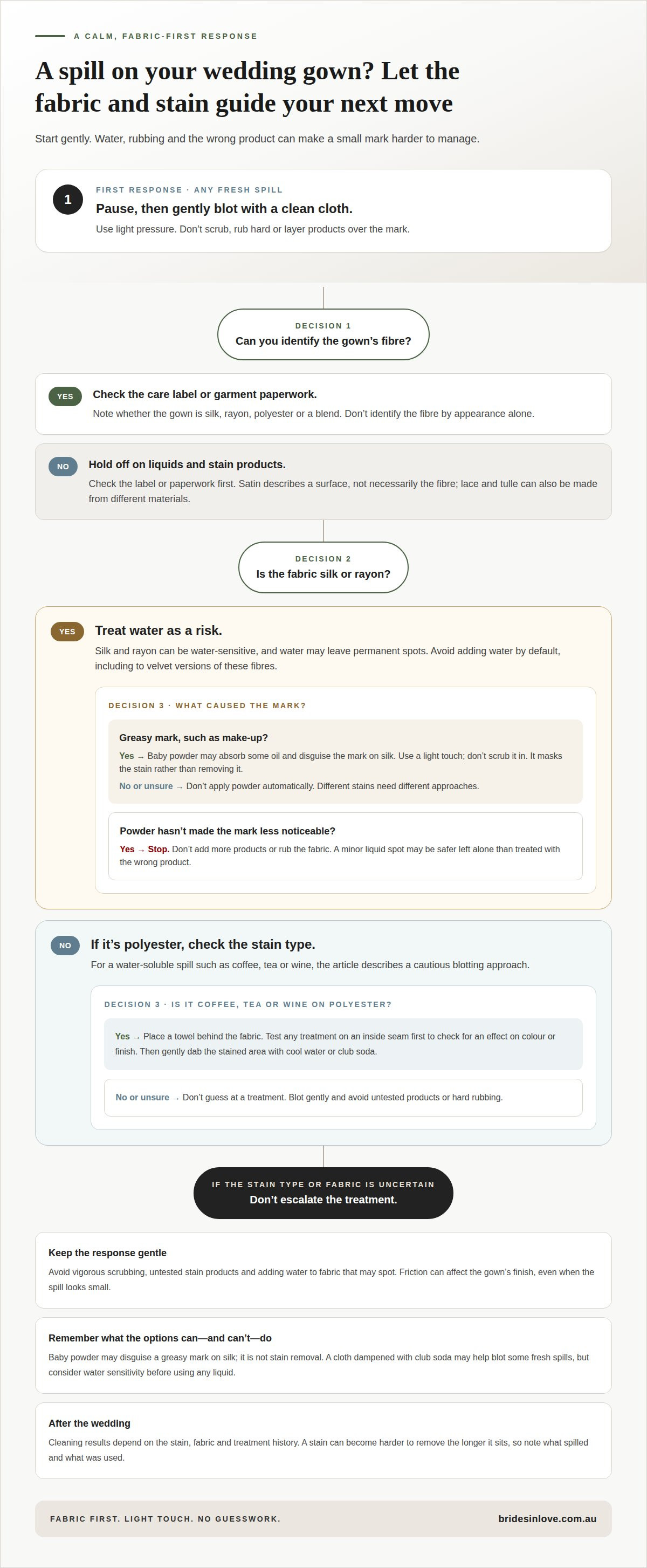
3. What should I do immediately if a bridesmaid spills something on my wedding dress?
If you’re wondering what happens if a bridesmaid spills something on your dress, pause before reaching for a stain product. Identify what spilled, where it landed and which fabric is affected. Wine, coffee and make-up can leave different residues, so don’t treat every mark alike. Avoid hard rubbing, which can damage the fabric’s finish and spread the stain.
For a fresh spill, gently blot the area with a clean cloth or baby wipe. A cloth dampened with club soda can help blot some marks, but check the gown’s care information first. Silk and rayon can be water-sensitive, so adding liquid may leave spots. Use light pressure and work around the mark rather than scrubbing.
For water-soluble stains, such as coffee, tea or wine on polyester, place a towel behind the fabric. Gently dab with cool water or club soda, keeping the liquid on the stained area. Test any stain treatment on an inside seam first to see whether it affects the colour or finish.
After blotting, a stain-removal pen may lift remaining residue if the fabric can tolerate the treatment. A wedding-day kit can include a stain-removal pen, a small bottle of club soda and baby wipes. Use only products suited to the fibre; it may be better to leave a minor liquid spill alone than treat it with the wrong product.
What happens if a bridesmaid spills something on my dress depends first on the spill and the fabric. Don’t scrub repeatedly or layer products over the mark. One guest spent about 10 minutes scrubbing blueberry stains with club soda and a Tide pen; another account describes 15 minutes of treatment after initial scrubbing. Those examples aren’t a safe method for every gown. A stain can become harder to remove the longer it sits, so blot gently, note the spill and avoid aggressive cleaning.
4. How do I identify the stain type on a wedding dress?
Start with the spill’s source, colour and location. Ask what was being carried, applied or handled near the mark. A greasy smear beside a wheelchair sprocket, for example, suggests a different residue from a drink spill. Someone who saw the incident may know whether the mark came from food, cosmetics, flowers or equipment.
Look at the mark in natural light, then see how it appears under another light source. Face mist or setting spray can drift onto chiffon and leave water spots that show under flash. A mark that appears clearly in photographs may be easy to miss in a softly lit room, so check the same area from different angles.
White streaks on a darker gown can also offer a clue. Hard water from a travel steamer can leave white mineral streaks, unlike a coloured food or drink mark. Note whether the dress was steamed before the streak appeared. That detail can help distinguish residue from a spill.
Record the location and appearance before anyone treats the fabric. Take a clear photo, note the spill’s source and tell the person helping you what happened. Avoid testing several products on the visible mark: this can obscure the original stain and complicate assessment. A small mark near a hem may also have a different cause from one across the bodice.
Describe what you can observe rather than guessing at the stain’s chemistry. “A white streak after steaming” is more useful than “a mystery stain”; “a greasy mark after contact with a sprocket” is similarly specific. These details help guide the next decision without assuming every mark needs the same treatment.
Fabric choice matters before an event, too. If you’re selecting a gown and want to discuss how different fabrics suit your plans, book an appointment to explore your options.
One bride reported getting grease from a bridesmaid’s wheelchair sprocket on her dress during pre-ceremony lawn photos. The account illustrates why asking about nearby equipment and when the mark appeared can be useful: a greasy mark may have a specific source rather than being an unidentified spill. Record the circumstances alongside the stain’s appearance.
Brides in Love
Brides in Love can help you apply what you’ve learnt about fabric and gown care as you choose your wedding dress. If a spill has made you reconsider delicate fabrics, include that preference in your gown search and think about how the material suits your wedding plans and personal style.
Explore bridal designs from Zavana Bridal, White April, Wedding Societe and Cizzy Bridal, with a stylist to help you consider the look and feel you want. Understanding how different fabrics may respond to spills can also help you make a considered choice before the celebration.
For guidance as you choose a gown, contact Brides in Love.
Choose a gown with your celebration in mind
If you’re thinking about what happens if a bridesmaid spills something on your dress, let that concern inform your gown choices without letting it define them. Consider your venue, the pace of the day and how you want the fabric to feel as you move. These are practical starting points for discussing style and material while keeping your overall bridal vision in focus.
Brides in Love offers gowns from Zavana Bridal and White April, giving you different design directions to explore. Share what matters to you, from your ceremony setting to the look you want in your photographs, and use those details to guide your selection.
Ready to consider your options? Arrange an appointment with Brides in Love and take the next step towards a gown that feels right for your celebration.


