
A smooth gown moment starts with a calm, capable helper. The best help dressing on your wedding day comes from someone reliable who knows you well. A maid of honour or bridesmaid is a classic choice, while a stylist or dressmaker can assist with a more complex gown. Choose someone who can learn how to fasten it before the day.
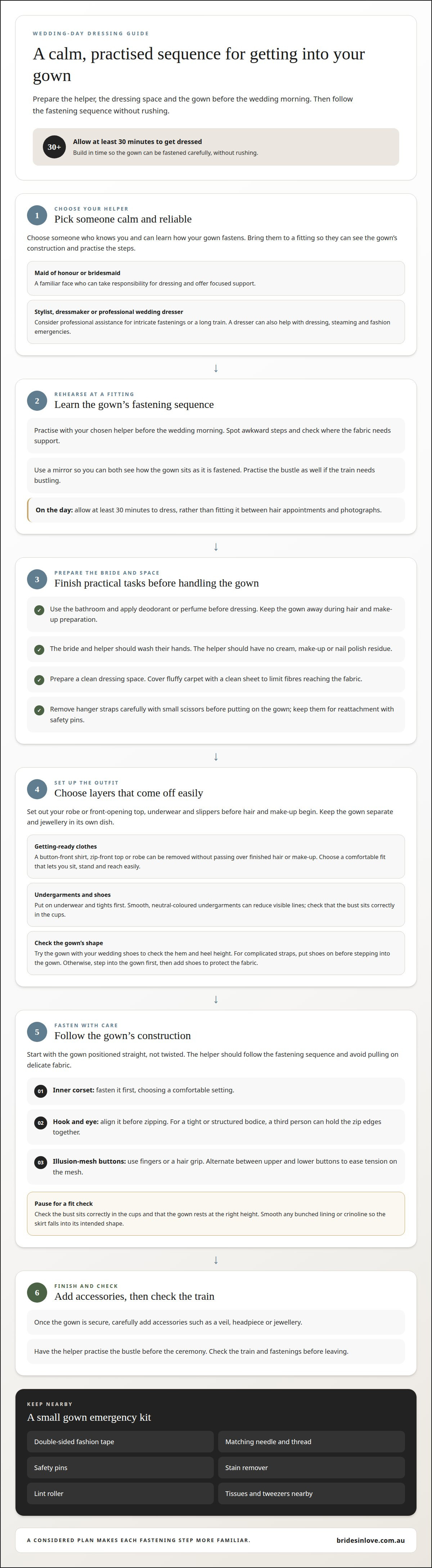
Getting ready feels more composed when the practical details are sorted in advance. Bring your helper to a fitting so they can practise the fastening, and allow at least 30 minutes to get dressed without rushing.
This guide explains who can help you into your gown, how to prepare the room and your outfit, and what to wear while getting ready. You’ll also learn why practising beforehand matters and how it can make each fastening step feel more familiar on the day.
Key Takeaways
- Choose a calm, reliable helper and make sure they know how your gown fastens.
- Prepare the dressing area and finish personal preparations before handling the gown.
- Choose getting-ready clothes that can be removed without disturbing your hair or make-up.
- Practise the gown’s fastening steps beforehand so you and your helper feel more confident.
1. Who will help me put on my wedding dress?
For help dressing on your wedding day, choose someone calm, reliable and familiar. A maid of honour or bridesmaid is a classic choice, while a stylist or dressmaker can assist with a complex gown. Bring your helper to a fitting so they can learn how it fastens.
Put on underwear and tights first. Try the gown with your wedding shoes to check the hem and heel height. For complicated straps, put your shoes on before stepping into the gown. Otherwise, step into the gown first, then add shoes to protect the fabric.
Choose smooth, neutral-coloured undergarments to reduce visible lines beneath the fabric. Check that your bust sits correctly in the cups before fastening. Confirm that the gown rests at the right height, as it may not shift once closed.
Your helper should wash their hands, then follow the gown’s fastening sequence. Fasten an inner corset first, choosing a comfortable setting. Align the hook and eye before zipping. For a tight or structured bodice, a third person can hold the zip edges together. Fasten illusion-mesh buttons with fingers or a hair grip. Alternating between upper and lower buttons eases tension on the mesh.
A wedding-day emergency kit can include double-sided fashion tape, a needle and thread that match the gown, safety pins, stain remover and a lint roller. Keep tissues and tweezers nearby for quick finishing touches.
Common challenges include a tight zip, buttons catching on illusion mesh, misplaced cups, bunched lining and a train that needs bustling. A bridal dresser can steam the gown and veil, help with dressing, handle fashion emergencies and bustle the train.
Once the gown is secure, carefully add accessories such as a veil, headpiece or jewellery. Have your helper practise the bustle before the ceremony, then check the train and fastenings before you leave.
2. Preparing the bride before she puts on the gown
Choose a helper who is calm, dependable and familiar with the bride’s preferences. A maid of honour or bridesmaid is a practical choice because she knows the bride and can offer focused support. A professional wedding dresser may suit a gown with intricate fastenings or a long train. For help dressing on your wedding day, make sure the chosen person understands the gown’s construction and fastening steps.
The cost of a wedding-day dressing assistant in Australia depends on the arrangement: a friend’s help differs from a professional’s time, travel and duties. A professional dresser can attend the bride’s getting-ready location. Brides who prefer a familiar face can ask a maid of honour or bridesmaid to take responsibility for dressing.
Arrange professional assistance once the wedding schedule and preparation location are settled, allowing time to coordinate arrival and responsibilities. Bring your chosen helper to a gown fitting so they can practise fastening it and learn where it needs support. A bridesmaid should know how to close the dress gently, manage its layers and avoid pulling on delicate fabric.
Before dressing, finish tasks such as using the bathroom and applying deodorant or perfume. Keep the gown out of the way during make-up and hair preparation to reduce the chance of spills. Ask the bride and helper to wash their hands. The helper should have no cream, make-up or nail polish residue. Prepare a clean dressing space, and cover fluffy carpet with a clean sheet to limit fibres reaching the fabric.
Remove hanger straps carefully with small scissors before putting on the gown, then keep them for reattachment with safety pins. Give the wedding party a simple timeline and clear responsibilities, such as who carries the veil or holds the train. To practise these steps during a gown fitting, book an appointment.
3. Choosing comfortable getting-ready clothes
Choose clothes that open at the front, such as a button-front shirt, zip-front top or robe. These styles come off without passing over finished hair or make-up. A loose robe is easy to slip off, while a shirt stays in place during breakfast, photographs or final hair touch-ups. Choose a comfortable fit that allows you to sit, stand and reach for accessories easily.
Match your getting-ready clothes to the gown’s neckline and back. For a low-back wedding dress, avoid wearing a bra while getting ready, as straps can leave marks across your back. If you wear a bra earlier, remove it before dressing in the gown. Check your back in a mirror after changing, especially if your dress has an open or low-cut design.
Set out your complete outfit before hair and make-up begin. Place your robe or front-opening top, underwear and slippers together, keeping the wedding gown separate. A pale or neutral robe can look polished in photographs; a washable layer is practical around make-up or breakfast. Keep jewellery and accessories in a separate dish, away from loose sleeves that could catch on delicate pieces.
Consider the room and getting-ready schedule when choosing a layer. A lightweight robe can feel comfortable in a warm room, while a soft cardigan is useful if the space feels cool. Choose sleeves that can be pushed up for make-up or hand washing. Avoid tight cuffs and bulky collars, which may catch on hair or jewellery when you change.
Before the final change, remove the robe or shirt carefully by opening its buttons or zip fully. Don’t pull a top over your head once hair and make-up are finished. Ask your helper to hold a loose sleeve or hem away from your face as you change. Having a fresh, front-opening layer ready is also practical if breakfast or make-up marks your first outfit.
4. Practising putting on a wedding dress
Practise putting on the gown with your chosen helper before the wedding morning. A fitting is a useful time to learn the fastening sequence, spot awkward steps and check where the fabric needs support. Allow at least 30 minutes to dress, rather than squeezing the process between hair appointments and photographs. Use a mirror so the bride and helper can see how the gown sits as they fasten it.
Start with the gown positioned straight, not twisted. If your gown has a hoop, take care when stepping into it so the skirt stays in shape. Smooth any bunched crinoline so the skirt falls into its intended silhouette. If the gown twists as it is pulled up, take it back down and begin again. After fastening, gently pull down and smooth each lining layer to prevent gathered tulle or fabric from forming lumps.
Practise the details that depend on the gown’s design. Position a strapless gown slightly higher than its usual place before zipping, as it will settle into position. For illusion mesh, fasten the top hook and eye before the buttons. Alternate between buttons near the top and bottom to bring the gown together without tugging hard on the mesh. A crochet hook can help guide loops over buttons on a back-buttoning dress.
Finish by checking the fit, fastening and train in the mirror. If something feels wrong, take the gown off and start again rather than forcing a zip or pulling at delicate fabric. Have the helper practise the sequence until each step feels clear, including smoothing the lining and checking the skirt. That rehearsal makes the wedding morning easier to organise and leaves time for careful adjustments. Book a gown appointment to practise the dressing steps during a fitting.
Allow 30-45 minutes to get dressed in the wedding dress, rather than rushing. Keep the mirror in view while fastening, checking that the gown is pulled up straight. If it twists, take it down and begin again.
Brides in Love: Wedding Societe Gowns
Brides in Love offers Wedding Societe gowns for Sydney brides choosing a dress to suit their wedding and personal style. Once you know who will help you dress, consider how the gown’s fastening, silhouette and train fit into your getting-ready plans. Sharing these practical priorities while choosing a gown can help you plan a smoother dressing rehearsal with your chosen helper.
Explore the Wedding Societe range alongside your preferences for comfort, movement and the overall look you want. A gown appointment is a useful next step when narrowing down your choice and considering how your gown will work on the day.
Contact Brides in Love to discuss your gown choice.
Choose a gown that feels like you
Your wedding-day look can reflect more than a dress code. Consider the setting, how much movement your day calls for and the style you want to remember in photographs. A coastal ceremony, a formal ballroom, or an idyllic countryside setting like Quob Park Estate, Hotel & Spa each create a different backdrop for your gown. Let your preferences guide the decision rather than choosing a look simply because it suits a trend.
Brides in Love offers Sima Couture, Zavana Bridal and White April gowns, giving Sydney brides distinct designer options to explore. As you compare styles, notice which details feel most like you, from the overall silhouette to the gown’s finish. A clear preference can make your next appointment more focused.
For help dressing on your wedding day, choose a gown that feels comfortable as well as considered. A confident choice gives you a personal starting point for the celebration ahead.
Arrange an appointment with Brides in Love and take the next step towards your wedding look.
Frequently Asked Questions
Who will help me put on my wedding dress?
A trusted maid of honour, bridesmaid or professional bridal dresser can help you into your gown. For help dressing on your wedding day, give one person the lead role rather than having several attendants manage the gown at once. That person can coordinate with the photographer before dressing begins and keep the space clear while others prepare. Choose someone whose manner helps you stay focused.
Is a professional dresser worth it compared with help from a bridesmaid?
A professional dresser can be worthwhile when the gown has intricate construction or your bridesmaid has several responsibilities that morning. Their attention can stay centred on the bride’s outfit, while a friend brings familiarity and emotional support. For a straightforward gown and a calm attendant, a bridesmaid may be enough. Base your choice on the gown, the schedule and the type of support you want.
How do I choose a wedding day dresser near me?
Choose a dresser whose travel plan suits your Sydney preparation address and ceremony schedule. The closest suburb is less important if the journey leaves little room for delays. Decide whether you need help with the gown alone or also with accessories and the train, then agree on the role, arrival time and meeting point in advance. Clear arrangements help prevent confusion on the morning.


