
A stuck zip is not a cue to pull harder. When you’re dressing for your wedding, protecting the gown matters more than getting the zipper moving in a hurry. Fixing a stuck zipper on a wedding gown starts with a calm look at what’s caught, before you try anything that could snag delicate fabric or strain the zip.
It’s understandable to feel under pressure, especially when the ceremony is close and everyone is waiting. But force can turn a small snag into damaged fabric or a broken zip. A careful inspection can help you tell whether the slider is catching on cloth, the teeth look misaligned or there’s another visible problem.
This guide explains how to inspect the area, when a gentle release may be appropriate and when to stop. It also covers what to note if the zip needs an experienced garment professional’s assessment. The guiding rule is simple: only try to free the zip while the gown stays supported and the fabric remains safe.
Key Takeaways
- Pause and support the gown before inspecting the zip. Pulling harder can put delicate fabric at risk.
- Look for a fabric snag, stiff movement, misaligned teeth or visible slider damage before deciding what to do.
- When fixing a stuck zipper on a wedding gown, consider a gentle release only if the snag is clearly visible and the fabric is relaxed.
- Use clean hands and work slowly, keeping the gown supported and the fabric clear of the slider.
- Stop if the zip repeatedly resists, the fabric is torn or damage is visible. An experienced garment professional can assess the problem.
Stuck wedding dress zip: what to do before moving it
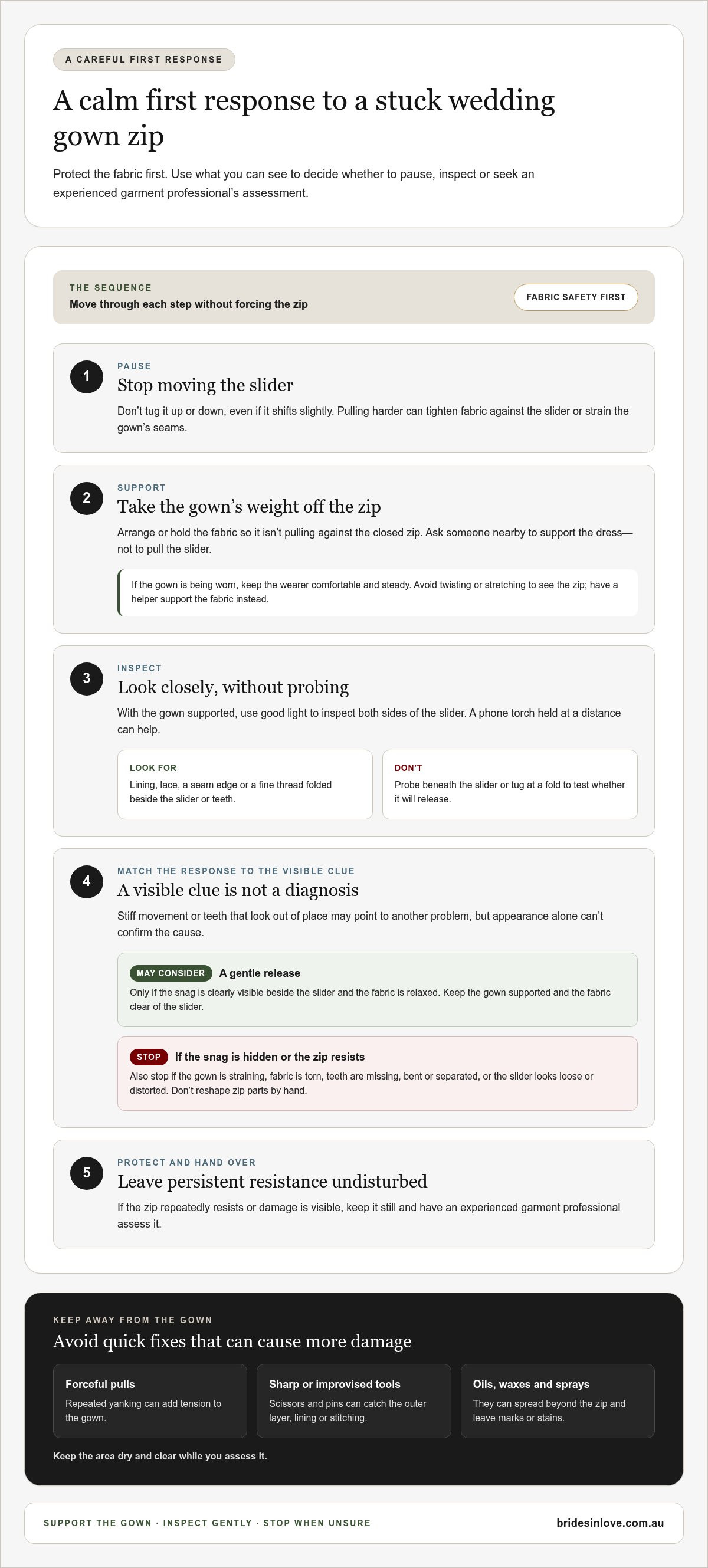
Pause first. A zip that won’t move can feel urgent when you’re getting ready, but pulling harder may tighten fabric against the slider or strain the gown’s seams. Ask someone nearby to support the dress, not to pull the zip. Take the gown’s weight off the closure and inspect the area before trying to move it.
Use this short first-response sequence:
- Stop moving the slider. Don’t tug it up or down, even if it shifts slightly.
- Support the gown. Hold or arrange the fabric so its weight isn’t pulling against the closed zip.
- Inspect the area. With good light, look for cloth caught beside the slider or anything visibly out of place.
Keep the wearer comfortable and steady while you check. If the gown is being worn, avoid twisting or stretching to get a better view. Have a helper support the fabric instead. A zip works by bringing its teeth or coils together through the slider, as outlined in the mechanics of a zipper. If lining, lace or a seam edge is caught at the slider, tension can press it more firmly into the moving parts. That makes a small snag harder to see and may pull delicate fabric out of shape.
How to check whether fabric is caught in the zip
Position the gown so the closed zip and nearby fabric are supported rather than hanging under their own weight. Use a well-lit room or a phone torch held at a distance, and inspect both sides of the slider. Look for lining, lace, a seam edge or a fine thread folded beside the teeth. Don’t probe beneath the slider. If you can’t see what’s caught, stop and keep the zip still.
What not to do when a gown zip will not move
Avoid yanking, repeated forceful movements or asking several people to pull in turn. More hands can mean more tension on the gown, not more control. Keep scissors, sharp pins and improvised tools away from the fabric; a slip could catch the outer layer, lining or stitching. Household oils, waxes and sprays can spread beyond the zip and leave marks or stains that may be difficult to remove. Keep the area dry and clear while you assess it.
Once you’ve checked the fabric, use what you can actually see to decide whether a gentle next step is appropriate. If the cloth is hidden beneath the slider, the zip resists or the gown is straining, don’t test it with another pull. Careful fixing a stuck zipper on a wedding gown begins with protecting the fabric, not forcing the closure.
Why wedding gown zips get stuck: identify the problem before choosing a fix
A zip that stops moving can have several causes, and the first clue is what you can see around it. A fabric snag is material caught between the slider and the zip teeth. Stiff movement, teeth that no longer meet evenly or a slider that looks distorted may point to other problems, but appearance alone can’t confirm the cause. Treat what you notice as a clue, not a diagnosis.
The gown’s position matters too. If its weight is hanging from the closed zip, or the wearer is stretching or twisting, fabric and seams may be under tension. That strain can make the slider harder to move even if the zip itself isn’t damaged. A stuck zip alone doesn’t prove the gown is too tight. Check how the gown is sitting and whether the fabric is relaxed before drawing conclusions.
Clues that fabric or lining is caught
Look for a small fold, pinched edge or trapped thread close to the slider. With a concealed zip, lining or a seam allowance may catch beside the teeth while the outer fabric hides the snag. Don’t tug at a fold to test it. If the material won’t come free without force, leave it in place and stop. Pulling can stretch or tear delicate layers.
Notice whether the slider appears to be holding fabric on one side, or whether the cloth seems smooth and clear around it. These observations can help distinguish a visible snag from general resistance, but they don’t prove what is happening inside the slider. Keep the gown supported while looking, and don’t move the zip just to see whether suspected fabric releases.
Clues that the zip itself may be damaged
Check the visible teeth without pressing or bending them. Missing or bent teeth, or teeth that appear separated where the zip should close, are reasons not to keep pulling. A loose slider or one that looks visibly distorted is another reason to stop and seek help. Don’t try to reshape the parts by hand. Doing so could make the zip harder to assess and put nearby fabric at risk.
Resistance can be less clear-cut. A slider may feel stiff without an obvious fault, while tension from the gown can make movement difficult. Avoid deciding that the dress is too tight, or that the zip is broken, based on a single symptom. The aim of this stage of fixing a stuck zipper on a wedding gown is to recognise visible warning signs and avoid testing them with force.
If you’re choosing a gown or reconsidering how it should fit, a personalised bridal styling appointment can help you explore gown options with an expert stylist. If a zip shows damage or remains stuck, leave the closure undisturbed for an experienced garment professional to assess.
Which stuck-zip fix is safest? Match the response to what you can see
Choose your response based on the visible clue, not a guess about what is happening inside the zip. If a loose fabric edge is clearly caught beside the slider and the gown is relaxed, a careful release may be reasonable. If you can’t see the snag clearly, pausing is safer than experimenting. Damaged teeth, a distorted slider or strong resistance are stop signs, not invitations to apply more force.
This distinction matters on a wedding gown. Layers, lace and embellishment can make a small movement harder to control. A home remedy that might suit a sturdy everyday garment may be risky near delicate fabric. Use the guide below to decide whether to leave the zip alone or consider a minimal response.
| Visible clue | Low-risk response | When to stop |
|---|---|---|
| A loose fabric edge is clearly visible beside the slider | Keep the gown supported and consider gently easing only the free edge away | Stop if the material or slider resists, or the snag is partly hidden |
| The zip is stiff, but no fabric is visibly caught | Pause and keep the gown relaxed; don’t test it with repeated pulls | Stop if resistance continues or the gown is under tension |
| Teeth look bent, missing or separated, or the slider looks distorted | Leave the zip undisturbed | Stop immediately and seek assessment from an experienced garment professional |
| Fabric is torn, embellished or caught under tension | Support the gown without trying a home fix | Stop; further handling could worsen the damage |
When a gentle fabric release may be reasonable
Only consider a release if you can see a loose fabric edge beside the slider, with the surrounding material relaxed and clear. Have another person support the gown so its weight doesn’t pull on the zip. With clean hands, ease the visible edge away gently without tugging the slider. Stop at once if the fabric tightens, the zip shifts against resistance or the edge won’t release easily.
When to skip home fixes and stop
A tear, damaged teeth or a slider stuck while the gown is under tension calls for restraint. Delicate embellishment and layered fabric can also increase the chance of accidental damage during DIY attempts. Don’t try several remedies one after another. Each attempt adds handling without confirming the cause. When fixing a stuck zipper on a wedding gown, stopping is safer whenever the clue is unclear or the zip resists.
If you’re still planning your gown and would value guidance on choosing a style, you can arrange a personalised bridal appointment. A stuck or damaged zip should be left undisturbed for an experienced garment professional to assess.
How to try freeing a stuck wedding gown zipper without forcing it
Try a home release only if you can clearly see a loose edge of fabric caught beside the slider and the gown is supported without strain. If the snag is hidden, the zip looks damaged or the fabric is embellished around the closure, don’t attempt to free it yourself. Never force a zip against caught gown fabric. Work slowly and stop if minimal, gentle effort doesn’t help.
A cautious step-by-step approach to a visible snag
Keep the wearer comfortably positioned and ask a helper to support the gown so its weight isn’t pulling on the zip. Use clean hands and make sure the caught edge is clearly visible. Don’t use a tool or pull the slider to create extra room.
- Support and inspect. Keep the fabric relaxed, then look at where the loose edge meets the slider.
- Ease the fabric away. With your fingertips, gently guide only the visible edge away from the slider. Don’t tug the zip or pull the fabric tight.
- Pause and assess. If the edge releases without resistance, check that the zip path is clear before testing movement.
- Test with minimal effort. Move the slider only slightly and gently. Stop at once if the fabric shifts, strains or catches again, or the zip does not move easily.
This is a limited attempt, not a repair. If the snag doesn’t release readily, leave the zip where it is. Repeating the same movement, changing direction or adding force can place more stress on the fabric and closure. The safest approach to fixing a stuck zipper on a wedding gown is to stop as soon as the zip or gown resists.
After the zip moves: check the gown before dressing
Before continuing, inspect the outer fabric, lining and full zip path for fresh pulls, fraying or separation. Check where the material was caught and look along the teeth for anything bent, displaced or damaged. Good light helps you see fine threads and small changes in delicate fabric.
If the fabric and zip appear undamaged, you may move the slider slowly once more, without pulling the gown taut. Stop if you feel resistance or spot damage. Don’t keep testing it to build confidence. Repeated movement can turn a minor issue into a bigger concern. If the closure still feels unreliable, leave it undisturbed and arrange assessment by an experienced garment professional.
If you’re planning your wedding look, a personalised styling appointment can help you explore gown options with an expert. Book a bridal appointment to discuss your gown plans with the Brides in Love team.
When to stop troubleshooting a gown zip and plan your next step
Stop if you see torn fabric, damaged or separated teeth, a distorted slider, or if the zip keeps resisting after a gentle attempt. A time-critical situation is another reason to avoid experimenting. Rushing can make it harder to handle the gown carefully. Leave the closure undisturbed and arrange an assessment with an experienced garment professional rather than trying another remedy.
Stopping isn’t a failure. A wedding gown may have delicate layers, lace or embellishment close to the zip, and a problem that looks small can be difficult to assess without understanding the construction. The safest approach to fixing a stuck zipper on a wedding gown is to protect the fabric and share clear observations, not to keep testing the zip.
What details to record before seeking experienced help
Take a clear photo of the zip and nearby fabric if you can do so without moving the slider or pulling the material. Note where the zip is stuck, whether fabric appears caught and any visible damage, such as a tear, fraying or separated teeth. Describe only the gentle steps already attempted. Keep the gown supported and avoid further movement while arranging the next step.
These details can help explain what you observed, but they don’t replace an in-person assessment. Don’t try to improve the photo by stretching the fabric or exposing a hidden part of the zip. If the gown is being worn, keep the wearer comfortable and avoid movements that place strain on the closure. If the zip is under tension or the fabric is damaged, leave it as it is.
Planning your bridal gown appointment in Sydney
For Sydney brides still planning their wedding look, Brides in Love’s luxury showroom in Wetherill Park offers a local setting to explore gowns. Personalised one-on-one consultations draw on over 15 years of bridal styling expertise, helping brides consider gown options and their overall look.
For a stuck zip, keep the next step focused on assessment by an experienced garment professional. To explore bridal styles and gown options, you can book a bridal appointment with Brides in Love.
Make space for the next part of your bridal journey
A zip issue can interrupt the getting-ready moment, but it doesn’t have to take over your wedding plans. If fixing a stuck zipper on a wedding gown needs an experienced assessment, leave the garment undisturbed. Keep that decision separate from choosing how you want to feel in your dress.
As you plan what comes next, give yourself room to focus on the details that feel personal: the silhouette, the finishing touches and how you want to feel on the day. A considered choice can make the process feel calmer and more distinctly yours.
When you’re ready to explore gowns and styling, book a bridal appointment with Brides in Love in Wetherill Park, Sydney.
Frequently Asked Questions
Can I use a safety pin to free a stuck wedding gown zipper?
No. Keep safety pins away from the zip because the point can catch fine fabric, lining or beadwork, especially if the gown shifts while someone is dressing. If you can see a loose fabric edge beside the slider, support the gown and ease that edge away with your fingertips only. Don’t use the pin to lift cloth or pry at the slider. Stop if the fabric won’t release gently.
Is a stuck wedding dress zipper a sign that the gown is too tight?
Not necessarily. A caught lining edge, teeth that aren’t meeting evenly or a damaged slider can all cause resistance, so a stuck zip alone doesn’t establish a fit problem. Notice whether the gown feels strained across the body, but don’t pull harder to test it. If it won’t close comfortably or the wearer feels restricted, pause and arrange an experienced assessment of the gown’s fit and zip.
Can a wedding gown zipper be replaced without damaging the dress?
It may be possible, but a garment professional needs to assess the gown before recommending replacement. The zip, surrounding seams, fabric and construction all affect the work involved. A simple zip area differs from one beside layers or delicate embellishment. Don’t unpick stitching or remove the zip yourself. An assessment can help establish a suitable next step without guessing from appearance alone.
What happens if the wedding gown zipper breaks on the wedding day?
Stop moving the slider and ask a trusted helper to keep the gown supported, so the closure isn’t pulled by the garment’s weight. Don’t try to close a broken zip with force, pins or household products. Keep the affected area steady and seek experienced garment help as soon as practical. If you’re already dressed, avoid twisting or stretching while deciding what to do next.
Can I use lubricant on a wedding gown zipper?
It’s safest not to apply household products such as oil, wax, soap or hairspray to a bridal zip. A product can transfer beyond the teeth onto visible fabric or leave residue near the seam. First look for a fabric catch without moving the slider. If the teeth or slider appear faulty, adding lubricant won’t address that visible damage, so leave the zip undisturbed for assessment.
How can I prevent a wedding gown zipper from catching while getting dressed?
Before dressing, have a helper check that the lining, hair and accessories are clear of the zip path. Keep the gown untwisted and supported as the slider moves, rather than letting the garment’s weight pull against the closure. Move it steadily without rushing. If it catches, pause and check what’s happening before continuing. A calm dressing routine makes it easier to notice a snag early.


