
A couture gown’s price is rarely just a designer label. Why are couture gowns so expensive? The answer often lies in the design decisions, skilled construction and personal service behind the finished look. The details, and the work involved, vary from gown to gown.
It’s understandable to wonder whether a higher price reflects craftsmanship or simply a luxury name, especially when gowns can differ so much in fit, finish and design. A couture purchase isn’t automatically right for every bride. Understanding what contributes to the price can help you compare gowns fairly and decide where you want to invest within your wedding budget.
This guide looks at how fabric, construction, detail and personalisation can shape a gown’s value, and how to weigh those factors against your priorities. For a local point of comparison, Brides in Love’s Wetherill Park showroom carries a range of exquisite bridal designs. The aim is to help you choose with confidence, whether your priorities are intricate craftsmanship, a particular silhouette or a balanced overall budget.
Key Takeaways
- Why are couture gowns so expensive? The label can signal elevated design and construction, but it doesn’t describe one universal production process.
- Design complexity, fabric choices and embellishment can all influence the work and finishing a gown requires.
- Compare couture, designer and ready-to-wear gowns by looking at design development, construction, finish and fit, rather than relying on labels alone.
- Start with your total wedding attire budget, then separate must-have gown features from details you could comfortably compromise on.
- A personal consultation at Brides in Love’s Wetherill Park showroom can help you assess gown details and how different designs feel on you.
Why do couture gowns cost more than many wedding dresses?
Why are couture gowns so expensive? A price tag doesn’t show how much comes from design, construction or service. The word “couture” can suggest elevated design and construction, but it doesn’t describe one universal production process. Two gowns carrying the same label may differ in how they’re developed, made and finished.
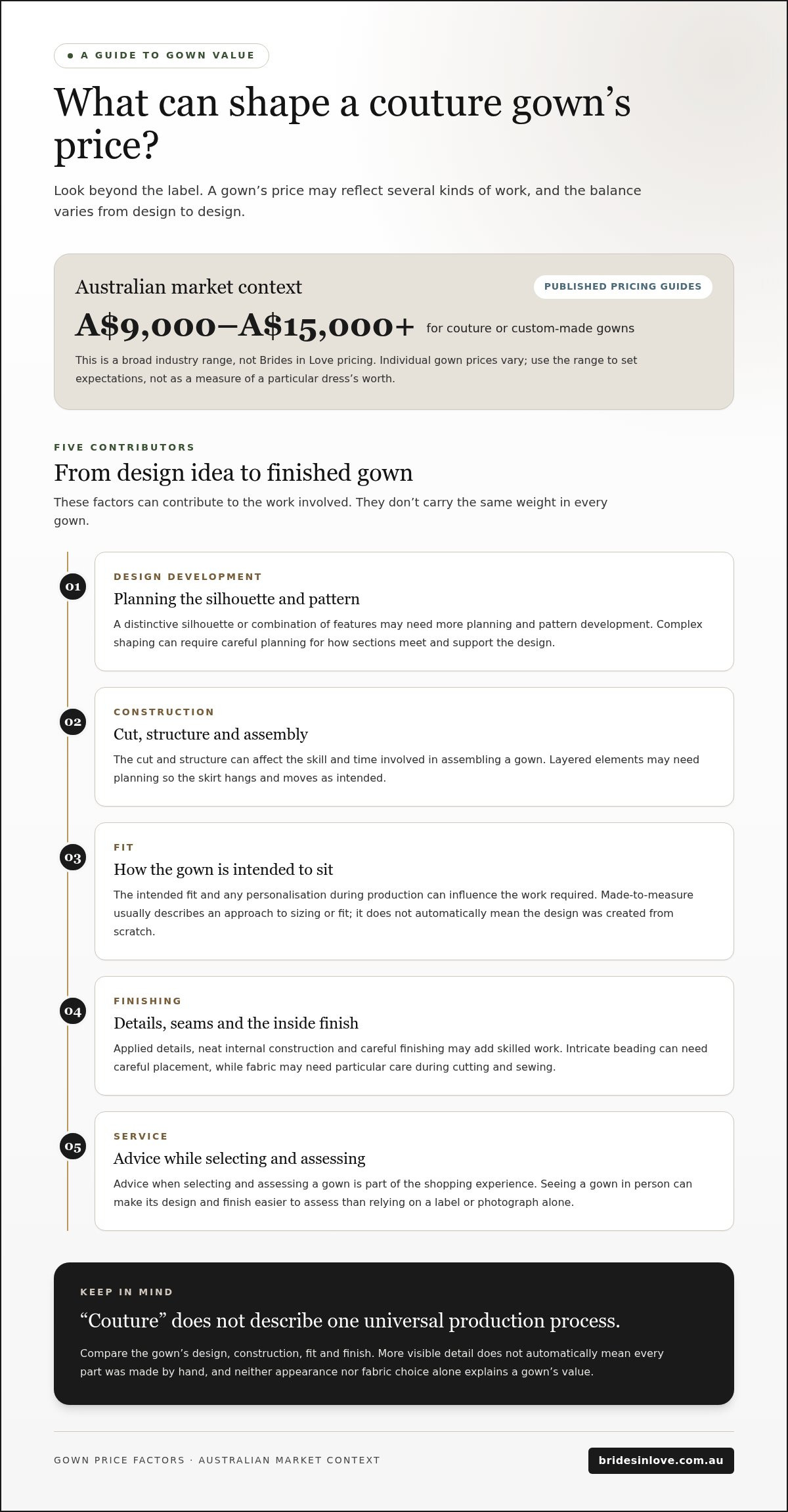
For broad Australian market context, published pricing guides place couture or custom-made gowns at around A$9,000 to A$15,000 or more. This is an industry range, not Brides in Love pricing, and individual gown prices vary. Use it to set expectations, not as a measure of what a particular dress is worth.
What does couture mean when you are shopping for a wedding gown?
In bridal shopping, couture is generally associated with elevated design and construction, but fashion terminology isn’t always used consistently. Haute couture has a specific meaning within the French fashion industry, while bridal retail may use “couture” more broadly to describe a design-led, high-end gown. The label alone doesn’t tell you exactly how a particular dress was produced.
“Designer” often identifies the person or label behind a gown, rather than a specific construction method. “Made-to-measure” usually describes an approach to sizing or fit, but it doesn’t automatically mean the design was created from scratch. These terms can overlap, and individual designers may use them differently. For a more useful comparison, look at the gown itself: its silhouette, bodice shaping, seams, applied details and how it moves when worn.
Brides in Love is the exclusive Sydney stockist of Sima Couture gowns. Seeing a gown in person makes its design and finish easier to assess than relying on a label or photograph alone.
Why the price is more than the fabric alone
Fabric is one visible part of a gown, not the whole garment. The price may also reflect work at several stages:
- Design development: A distinctive silhouette or combination of features may need more planning and pattern development.
- Construction: The cut and structure can affect the skill and time involved in assembling a gown.
- Fit: The intended fit and any personalisation during production can influence the work required.
- Finishing: Applied details, neat internal construction and careful finishing may add skilled work.
- Service: Advice when selecting and assessing a gown is part of the shopping experience.
These factors don’t carry the same weight in every design. A clean, restrained gown may call for precise pattern work and finishing, while an elaborate design may involve more visible detailing or construction steps. Neither appearance nor fabric choice alone explains a gown’s value.
A gown’s price can reflect a combination of design development, skilled making, fit, finishing and service. The balance depends on the individual gown and designer. When comparing options, consider the workmanship and how well the gown meets your priorities. Don’t assume that “couture” guarantees one fixed level of customisation.
How design and craftsmanship can shape a couture gown's price
Looking beyond the label, the design itself can help explain differences in price. A simple outline may still need precise shaping, while a gown with several interacting features can require additional pattern development, construction steps and finishing. The details vary by designer and gown, so more detail doesn’t automatically mean every part was made by hand.
Design details that may require more skilled work
These are examples, not features found in every couture gown. Intricate beading may need careful placement to follow the design. Layered elements can require planning so the skirt hangs and moves as intended. Complex shaping may call for a pattern that accounts for how different sections meet and support the silhouette.
Where embellishment is applied by hand, it may take more time than a simpler finish. The work depends on the scale and placement of the detail and how it interacts with the garment. A striking feature can also affect nearby construction: the maker may need to work around it while joining seams or finishing edges. Focus on the details that contribute to the look you want, rather than judging complexity by sparkle alone.
More complex construction can call for more skilled work, because each added detail has to be planned, assembled and finished so the gown functions as well as it looks.
Materials, patternmaking and finishing
Fabric choice can influence both a gown’s appearance and the work involved. Different fabrics handle differently during cutting and sewing. Some need particular care to keep their lines, drape or surface even. Embellishment can also affect how a gown is handled and finished. There’s no single fabric or technique that defines couture, and a premium-looking finish doesn’t reveal the full making process.
Patternmaking turns a design idea into garment pieces that can be cut and assembled. The gown’s cut, proportions and the way its sections join all shape that process. Structure and seam finishing may need careful work inside the gown, even when hidden beneath the outer fabric. These details help the garment sit and move as intended.
For a practical comparison, assess both the visible surface and the construction you can see or feel: do details meet cleanly, do seams lie smoothly, and how does the gown feel as you move? At a Sydney bridal appointment, a stylist can help you weigh those details alongside fit and design. Brides in Love’s Wetherill Park showroom offers personalised consultations, including for brides considering Sima Couture. Book a bridal appointment to compare gowns in person.
Couture versus other designer gowns: what are you paying extra for?
Labels can help orient your search, but they don’t explain fully how a gown is designed, made or fitted. Terms such as “couture”, “designer” and “ready-to-wear” are used differently across bridal fashion, and production approaches vary. To understand what you might be paying extra for, compare the gown and the experience around it, not the category name alone.
How couture, designer and ready-to-wear can differ
The descriptions below are broad guides, not fixed rules. A designer gown may be ready-to-wear, made-to-measure or produced using another approach; couture can also mean different things in bridal retail. Look at the design development, construction and fit approach of the specific gown you’re considering.
| Category | What it may describe | What to compare |
|---|---|---|
| Couture | A design-led gown associated with elevated detail or construction. The term doesn’t guarantee one production method. | Distinctive design features, construction, finishing and any personalisation. |
| Designer | A gown created under a designer’s name or label, across a range of production approaches. | The individual design, materials, workmanship and fit process. |
| Ready-to-wear | A gown offered in standard sizing, though the exact approach can vary by label. | How the sample sits, what adjustments may be needed and how the finished fit will be achieved. |
These categories aren’t a guaranteed price ladder. A designer gown may have intricate construction, while a couture-labelled gown may have a restrained look. The label alone can’t tell you which design took more development or what finishing is included. Compare similar silhouettes or levels of detail, then consider the construction and service for each gown.
Why the most expensive gown is not automatically the best value
A higher price doesn’t guarantee a better personal fit or a style that feels right for you. Craftsmanship and personal preference are different measures. A beautifully made gown can still feel wrong if the silhouette doesn’t suit your taste, the structure feels uncomfortable or the design doesn’t match the mood of your wedding.
Weigh each gown against your own priorities. Think about the silhouette you feel confident in, the comfort you want through the day and whether the design suits your wedding. Then compare the construction and finish of the specific options. Consider what personalisation or service is included and whether those elements add value for you.
Keep alterations in view as a separate practical consideration. The fit when you try on a gown isn’t necessarily its final fit, and the work needed depends on the individual dress and your measurements. A fitting appointment can help you assess how the gown sits and moves, but alterations may still be needed to achieve the finished fit.
The answer depends on the gown’s design, making and included experience. The best value is the option that balances those qualities with your comfort and priorities. Brides in Love’s experienced stylists help brides compare gown details in a personalised consultation. Book a bridal appointment to explore your options in person.
How to decide whether a couture gown is worth it for your wedding
A considered gown decision starts with your overall wedding plan, not the label. Before browsing, set a realistic budget for your wedding attire and decide how much you want to allocate to the gown. That gives you a useful boundary when a design catches your eye and helps you compare options by what they offer, rather than by price alone.
Set a gown budget that fits the wider wedding plan
Include the gown and other attire costs you expect to manage. For example, allow room in your plan for accessories such as a veil or headpiece, and for any alterations you anticipate. You don’t need every final detail before you start shopping. A clear spending limit helps you decide whether a gown’s design and construction are worth prioritising within your wider plans.
Next, separate your priorities into two groups:
- Must-haves: The silhouette you feel confident in, the comfort you want or a particular construction detail that matters to your wedding vision.
- Nice-to-haves: Features you admire but could give up if they push the gown beyond your budget or don’t add much to how you feel wearing it.
This distinction can make decisions easier. If a gown has a detail you love, consider whether it’s central to your vision or simply appealing in the moment. A less elaborate design may be the stronger choice if it feels comfortable, suits the occasion and leaves room in your budget for other priorities.
Assess craftsmanship and fit during a consultation
Comparisons are most useful when the gowns are similar. Try options with comparable silhouettes or design features, then notice how the fabric behaves, whether seams sit smoothly, how details are finished and how each gown feels as you move. Pay attention to what you value in practice, not just what stands out in a photograph. A sample can help you understand the design, while the finished fit may involve separate alterations.
Use a bridal consultation to talk through your observations with an experienced stylist. Describe what feels comfortable, what you’d like to emphasise and which features matter most, then weigh those priorities against each gown’s construction and fit approach. At Brides in Love’s Wetherill Park showroom, personalised consultations give Sydney brides the opportunity to assess gowns in person. You can also compare the design details of a Sima Couture gown as part of that process.
Ultimately, why are couture gowns so expensive matters less than whether a particular gown’s craftsmanship and design are worth the investment to you. If you’re ready to compare options in person, book a bridal appointment.
Explore couture gowns with an experienced Sydney bridal stylist
Reading about construction can help you compare gowns, but seeing them in person adds another perspective. A fitting lets you notice how a silhouette sits on your body, how the fabric moves and whether the finish feels comfortable. These details can be hard to judge from a photograph, and how you feel wearing the gown matters as much as what you see on a hanger.
What a personal gown appointment can help you assess
At Brides in Love’s Wetherill Park showroom, a personalised one-on-one consultation with an experienced bridal stylist helps you explore gown details and fit. Try different silhouettes and levels of design detail, then pay attention to how each feels as you stand, sit and move. A detail you admired online may feel different in person, or a simpler design may suit your preferences better.
- Notice whether the gown feels comfortable and allows you to move naturally.
- Look at the finish and how the design details sit on the garment.
- Consider which silhouette feels most like you, rather than focusing only on the label.
- Discuss what you value in the design and fit with your stylist.
The purpose is to help you make a considered choice, not steer you towards the highest-priced gown. Brides in Love’s selection includes Sima Couture, giving Sydney brides a local opportunity to consider the label as part of a wider comparison.
A considered next step for Sydney brides
Brides in Love has served Sydney brides for 20 years, with over 15 years of bridal styling expertise in Wetherill Park. That local experience supports a practical, personal approach to gown shopping. Your stylist can help you assess the gown in front of you, your preferred fit and the details that matter to your wedding vision.
The price can reflect a combination of design, construction, finishing and service, but the right investment depends on what you value in your own gown. Compare the craftsmanship and fit of each option, then consider how you feel wearing it.
If you’d like to explore couture gowns in person, book an appointment at Brides in Love’s Wetherill Park showroom.
Choose the gown that feels right for your day
The question “why are couture gowns so expensive” can help you understand what may sit behind a price, but your next step is personal: imagine wearing the gown through the moments that matter to you. Think about how you want to move, how you want to feel and whether the design reflects your style. A gown’s value isn’t measured by its price alone. It also lies in the confidence and comfort you feel when you put it on.
Give yourself space to compare thoughtfully. Seeing a gown in person can turn a beautiful image into a clearer sense of how its shape, details and finish work for you. You don’t need to choose the most elaborate option to make a memorable choice. The right gown feels special and considered within the budget you’ve set.
Ready to explore couture designs in person? Book an appointment at Brides in Love and take the next step towards finding a gown that feels unmistakably yours.
Frequently Asked Questions
Are couture wedding dresses always handmade?
No. If handwork matters to you, ask which parts of the specific gown are hand-finished and whether that applies to the sample you try on or the gown supplied to you. Check the sample inside and out, including areas that aren’t immediately visible. This can help you assess the finish, but the sample alone may not show every production step, so look for clear information about the gown itself.
Does a couture gown include alterations in its price?
Don’t assume alterations are included. Before placing an order, read the written purchase information and check what the price covers, whether fittings are part of the arrangement and how alteration charges are handled. Keep those details with your order documents so you can refer to them during fittings. This helps you track the gown’s overall cost without relying on a verbal assumption.
Can a couture gown be worth the investment on a tight budget?
It can be, provided the full commitment fits comfortably within your wedding plans. Set a firm upper limit before shopping and treat it as a boundary, not a target you need to reach. If a gown exceeds that limit, pause before committing and consider whether its added features matter enough to justify changing other plans. A meaningful choice should feel special without creating ongoing financial strain.
How can I tell whether a wedding dress is couture?
Start with the designer’s own description of the particular gown, then compare it with the retailer’s product information and your order documents. Check that the designer and gown details refer to the same design, rather than relying on a broad label in an advertisement. A bridal stylist can explain how the term is being used for that gown and the information provided about it.
Why can two couture gowns have very different prices?
Because “couture” doesn’t standardise a gown’s design or the terms of its sale. When comparing options, look at the written details for each gown and note any differences in what the quoted amount covers. That makes the question “why are couture gowns so expensive” more useful: it shifts attention from the category name to the particular purchase. Compare those details with your priorities before deciding.
Is couture the same as made-to-measure?
No. To understand the fitting process, find out how your measurements will be used. They may guide the size ordered, inform adjustments to a standard design or be used in another way for that gown. Establish which decisions are made before the order and which can be addressed at fittings. Those specifics help you understand the process without assuming the label promises a one-off design.
When should I book a bridal gown appointment in Sydney?
Brides in Love recommends booking ideally 9 to 12 months before your wedding date. Add a reminder to your planning calendar early, then bring your wedding date and a clear spending limit to the appointment. If you’re shopping closer to the date, an appointment can still help you assess your preferences and discuss suitable options. Brides in Love’s Wetherill Park showroom offers personalised consultations with experienced bridal stylists.


