
What if the veil that looks beautiful on its own isn’t the one that best completes your gown? It can be hard to judge whether a particular length, shape or detail will complement your dress or compete with it until you see the pieces together.
The right veil works with your gown’s silhouette and detailing to create a balanced look that still feels distinctly yours. This guide covers how length, fabric and trim affect the overall effect, plus what to consider alongside your hairstyle and wedding setting. You’ll also find practical ways to assess the veil as part of your full bridal look.
Brides in Love has served the Sydney wedding industry for 20 years, with over 15 years of bridal styling expertise in Wetherill Park. At a one-on-one consultation in the spacious showroom, an experienced stylist can help you try veil options with your gown and explore how each choice brings the look together.
Key Takeaways
- Start with your gown’s silhouette, fabric and neckline to find a veil that complements its design.
- Let one detail take the lead: balance an ornate gown with a quieter finish, or add detail to a simpler dress.
- Compare shorter, fingertip, chapel and cathedral lengths against your gown and ceremony setting, rather than choosing by length alone.
- Try the veil with your bridal look, then check how it appears from the front, side and back as you move.
- A one-on-one appointment at Brides in Love’s Wetherill Park showroom lets you view gown and veil options together.
What does a wedding veil add to your bridal look?
A wedding veil is a finishing accessory worn with a bridal gown to frame the bride and complete the overall look. Depending on its length, shape and fullness, it can add softness, movement or a more formal focal point. It may also carry personal or cultural meaning; for background, explore the history and symbolism of wedding veils.
Wearing a veil is a personal styling choice, not a requirement. Some brides like how a sheer layer softens a gown’s lines, while others prefer their dress, hairstyle or another accessory to take centre stage. There’s no single correct answer. Choose what feels comfortable and reflects the look you want.
Think of the veil as part of your outfit, not an accessory to choose in isolation. It can change the impression of a gown without changing the gown itself, adding gentle movement to a clean silhouette or creating a stronger line behind a structured design. The effect depends on how its length and volume sit with the dress.
How a veil changes the overall silhouette
A light, softly falling layer can extend the gown’s lines and move as you walk. A fuller or more defined shape creates a stronger outline and draws the eye beyond the dress. Neither effect is automatically better. Consider whether you want a relaxed finish or a more formal, statement-making look.
Assess the complete look together. Notice where the fabric falls in relation to the waist, skirt and train. Check whether the added outline feels balanced from the front and back. A veil that looks striking on a hanger may sit quite differently with your gown.
Familiar shapes and lengths
Common options include fingertip, chapel and cathedral lengths. These names describe how far the fabric extends: fingertip styles fall around fingertip level, while chapel and cathedral options continue further behind you. Length affects the outline and how much fabric moves with you.
Length is only one part of the shape. A narrower fall can keep the look streamlined, while more volume can create a broader, softer frame around the gown. Treat these terms as a starting point, not a rulebook. Comparing different proportions beside your dress makes their effect easier to judge.
Look at the full silhouette rather than focusing on the accessory alone. A balanced result lets the gown and veil work together while allowing the detail you love most to stand out.
How to match a veil to your wedding dress details
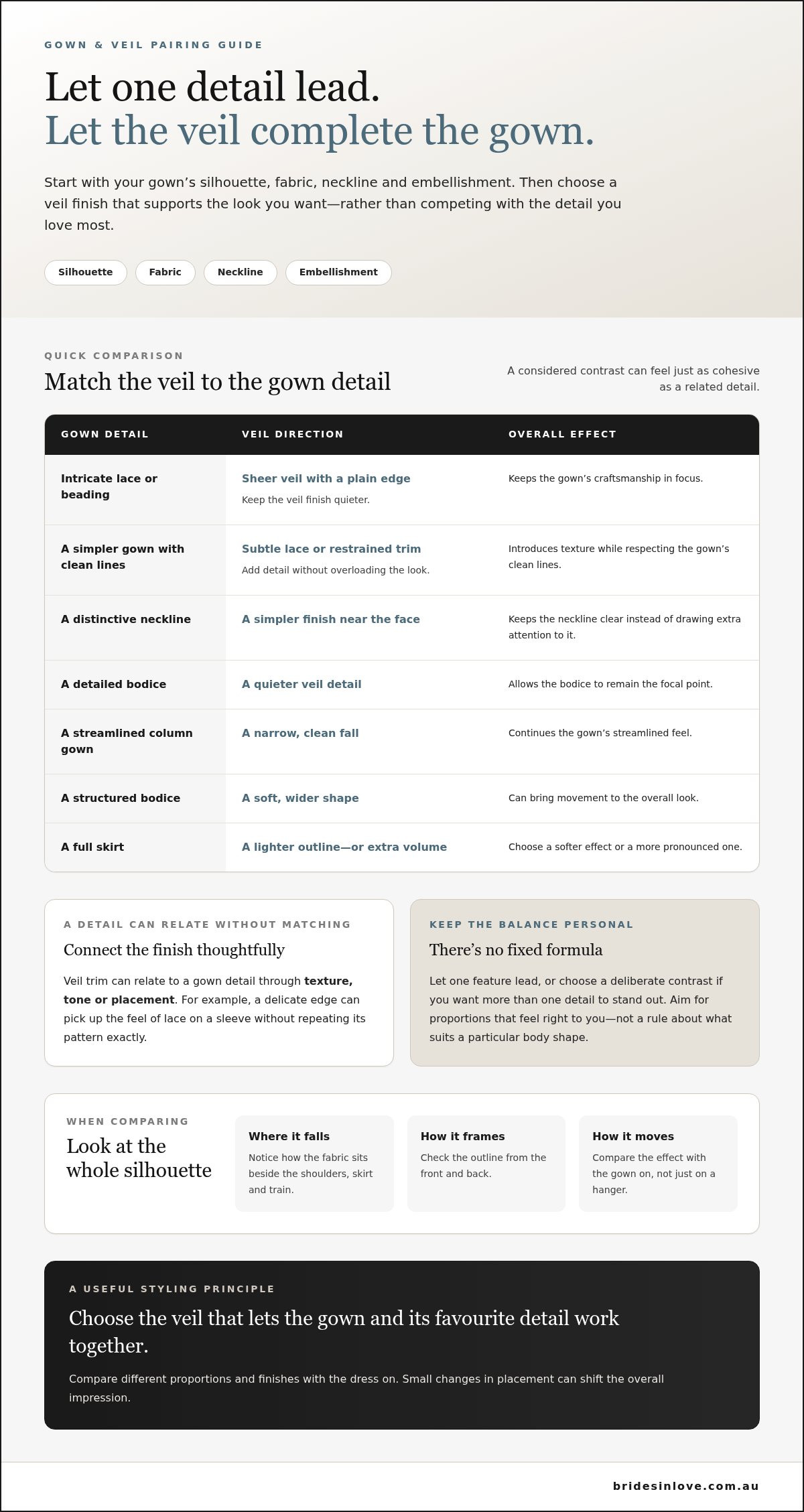
Start with the gown, then decide what you want the veil to add. Consider four details together: silhouette, fabric, neckline and embellishment. A close-fitting gown with clean lines creates a different effect from a full skirt in textured fabric, so the same veil won’t look the same with both. There’s no formula to follow. Aim for a balance that suits your personal style.
Notice where the dress already draws attention. A detailed bodice, distinctive neckline or dramatic skirt can act as the focal point. Let one feature lead and keep the others quieter, or choose a deliberate contrast if you want more than one detail to stand out. For gown-led styling inspiration, explore a range of bridal collections and designer looks.
Pairing lace, beading or clean lines
If your dress features intricate lace or beading, a sheer veil with a plain edge can keep its craftsmanship in focus. On a simpler gown, subtle lace or restrained trim can add texture without overwhelming its clean lines. A related detail can create continuity, but it doesn’t need to be an exact match.
Veil trim should relate to a gown detail through texture, tone or placement, rather than copy it exactly. A delicate edge might pick up the feel of lace on a sleeve without repeating its pattern. A clean finish can provide a calm contrast to detailed embroidery. Consider the neckline, too: decoration near the face can draw attention to an already embellished bodice, while a simpler finish keeps the neckline clear.
Your choice can reflect meaning as well as appearance. If you’re interested in the symbolism and meaning of a wedding veil, personal or cultural significance may inform the details you favour. Consider this alongside the gown and choose a finish that feels true to you.
Matching shape to the gown’s silhouette
Decide whether the veil should follow the dress’s lines or add contrast. A narrow, clean fall can continue the streamlined feel of a column gown; a soft, wider shape can bring movement to a structured bodice. With a full skirt, you might prefer a lighter outline or choose extra volume for a more pronounced effect. These are starting points, not rules.
Focus on the proportions you enjoy seeing in the mirror, rather than dressing to a fixed idea of what suits a particular body shape. Notice where the fabric begins and ends, how it frames your shoulders and how it sits beside the skirt. Small changes in placement can alter the overall impression, so compare options with the dress on.
Bring your gown, or clear photos of its fabric and finish, to a one-on-one styling appointment. You can compare pairings in context at Brides in Love, which offers bridal veils and accessories. Arrange an appointment to explore the look with a bridal stylist.
Which veil length suits your ceremony and gown?
Length changes the line of your bridal look, from a neat finish near the shoulders to fabric trailing behind the gown. The choice is personal, not a venue rule. Consider how formal you want the overall effect to feel, which parts of the dress you want visible, and how easily you’d like to move during the ceremony and celebrations.
| Length | Visual effect | Pairing to consider |
|---|---|---|
| Shorter | Light and close to the body, with little or no trailing fabric | A gown with visible back or skirt details, or a look where ease of movement matters |
| Fingertip | A defined finish around fingertip level | Many silhouettes, especially if you want some length without an extended train |
| Chapel | A longer line that usually extends beyond the gown’s train | A gown whose proportions can carry a trailing finish |
| Cathedral | A dramatic, extended line behind the dress | A gown and setting where a more formal statement feels at home |
Shorter veils and fingertip lengths
Shorter options create a lighter outline and can keep the gown’s back, skirt or detailing visible. A fingertip length gives you more visible fabric without the extended trail of longer styles. It commonly measures around 36-46 inches. These are options, not rules for a particular bride or venue. Consider how each feels with your dress and how you want to move.
Chapel and cathedral lengths
Chapel and cathedral lengths draw the eye along a longer, more dramatic line. Chapel lengths are commonly around 90-110 inches, while cathedral lengths are often 108 inches or longer. A cathedral style is often considered in relation to the gown’s train, with the fabric extending beyond it. The right proportion depends on the dress and the effect you want.
A longer veil won’t automatically overpower your gown. Proportion matters: a simple, streamlined dress can make an extended line feel intentional, while a detailed or full-skirted gown may call for a quieter treatment or a deliberate statement. Look at the back as well as the front. Check that the fabric’s width and length complement the gown rather than obscure details you want to show.
Let the ceremony setting inform your decision without treating it as a dress code. Think about the aisle, steps, outdoor surfaces and how much walking or dancing you expect. For a beach or garden ceremony, consider whether trailing fabric will feel comfortable as you move. For a formal setting, you may enjoy a more pronounced train. Walk and turn in each option to judge how it moves and feels for your day.
How to try on a veil and assess the whole look
A fitting gives you a clearer sense of proportion than a product photo. If possible, wear or bring your gown. If it isn’t available, bring clear photos showing the front, back, fabric and detailing. Compare a few alternatives rather than deciding from a single look. Small changes in length, fullness or placement can shift the overall effect.
A simple veil try-on checklist
Use this sequence to assess each option with the dress, not on its own:
- Start with the gown. Wear it if practical, or have its neckline, back and skirt details in view. Note the hairstyle you’re considering, as this can affect where the veil sits.
- Compare alternatives. Try different lengths or shapes, including a quieter finish and one with more presence. Check whether the trim competes with the gown’s detail, echoes it gently or creates a useful contrast.
- Review the full look. Look from the front, side and back. Turn, walk and sit to see how the fabric moves, whether it catches on the gown and how much of the dress remains visible.
- Check comfort and wear. Notice how the fastening feels and whether the style suits how you’d like to wear it during the day. Consider whether you want the same look throughout or expect to remove it later.
Accessories work best as a considered group. Look at how your headpiece, jewellery and gown details sit together, rather than assessing each piece separately. A bridal accessories guide can help you think about the overall balance before your appointment.
Making the most of a Sydney bridal appointment
A one-on-one styling consultation lets you compare veil options with your gown and refine the full look with an experienced stylist. Bring your dress, or photos that show its details, and share your ceremony setting, hairstyle ideas and preferences for comfort and movement. At Brides in Love’s Wetherill Park showroom, an in-person try-on helps you see how different choices look together.
Brides in Love recommends booking ideally 9 to 12 months before your wedding date. This gives you time to consider accessories alongside your gown and make a considered choice. Once you’ve reviewed the fit, finish and movement, you’ll have a clearer sense of what feels right for you.
Book a one-on-one bridal appointment to explore your complete look with a stylist.
Find your wedding veil with Brides in Love in Sydney
Choosing bridal accessories can feel easier when you have room to explore without needing every detail settled in advance. Brides in Love’s spacious showroom in Wetherill Park gives Sydney brides a welcoming place to consider their gown and finishing touches together. A personalised one-on-one consultation keeps the conversation focused on your style, priorities and the feeling you want your complete look to have.
What expert styling can bring to your decision
A stylist can help turn broad inspiration into a clearer direction. You might be drawn to a polished, understated look or want an accessory with more presence. Talking through those preferences alongside your gown can help you recognise which options feel harmonious and which don’t reflect your vision.
Your ceremony can inform the discussion, too. The mood of a coastal celebration may lead you towards a different overall impression from a formal evening wedding, while your comfort and personal taste remain central. There’s no need to follow a prescribed bridal formula. The aim is to find a combination that feels authentic to you and suits the occasion.
Brides in Love is an independent, family-owned Sydney boutique, with a spacious luxury showroom designed for discovery. A one-on-one appointment offers a considered setting to explore how your gown and accessories work together and make choices at a comfortable pace.
Plan your bridal appointment
Before your visit, jot down what you’re drawn to and what you’d rather avoid. You might note whether you favour a refined finish, enjoy a more expressive detail or want your gown to remain the main focus. Inspiration images can help communicate your taste, but they don’t need to dictate the final choice. Use them to start a conversation about what feels right in person.
Give yourself permission to adjust your ideas as you explore. A detail that looked essential in an image may feel less important beside your gown, while another option may feel unexpectedly right. A thoughtful styling conversation can help you arrive at a decision that feels personal, balanced and ready for your celebration.
Book a one-on-one bridal appointment and explore your look with the Brides in Love team.
Choose the finishing touch that feels like you
Your bridal look doesn’t need to follow a set formula. Let your own sense of style guide the final choice. The right veil feels at home with your gown and lets you enjoy how you look and move on the day. You can arrive with a clear favourite or just a few ideas, then refine your preferences as you see options in context.
Make your next step a chance to explore, compare and trust what feels right. A considered appointment can turn inspiration into a look that feels personal, polished and ready for your celebration.
Book your bridal appointment at Brides in Love’s Wetherill Park showroom to explore veil options with a stylist.
Frequently Asked Questions
Can you wear a veil with short hair?
Yes, short hair can work well with a veil. Choose an attachment point that feels secure with your hairstyle, whether your hair is cropped, in a bob or pinned back. At a trial, ask your hairstylist to test the fastening with the style you plan to wear, then move your head gently to check it stays comfortable. A headpiece can also help complete the look.
Can I wear a veil with a detailed wedding dress?
Yes. A detailed dress and a veil can work beautifully together if you decide which feature should draw the eye first. If the bodice has a motif you especially love, choose a sheer finish that leaves it visible in photos and from the back. For a more decorative effect, compare the textures beside the gown so the details feel considered rather than crowded.
Is it traditional to wear a veil at a wedding?
Veils are a familiar part of many bridal traditions, but customs vary across families, cultures and faiths. Some brides value the symbolism; others choose a veil simply because they like the look, and plenty decide not to wear one. Consider what feels meaningful to you and your partner, and discuss any cultural or religious expectations with the people whose guidance matters to you.
Can I take my veil off after the ceremony?
Yes, you can remove it after the ceremony if you’d prefer a lighter look for the reception. Plan the change before the day: decide who will help, where the fastening will be removed and how you’ll keep the fabric protected afterwards. Practising with the person helping you can make the transition smoother and reduce the chance of disturbing your hairstyle.
Can you wear a veil with a coloured wedding dress?
Yes. A coloured gown can pair with a veil in a complementary shade or a deliberate contrast. Compare the fabrics together in natural light, as stark white against a soft blush or champagne dress may look quite different from a closer tonal match. Think about the overall mood you want, then view the combination beside your accessories and in photographs.
How do you keep a wedding veil from slipping?
Ask your hairstylist to fit and secure the attachment during your hair trial, rather than waiting until the wedding morning. The best placement can depend on your hairstyle, hair texture and the accessory’s fastening. Wear it for a while during the trial, move as you expect to on the day, and have your helper learn how to adjust or remove it without pulling your hair.
Should my veil match my wedding dress exactly?
No, an exact match isn’t essential. Aim for harmony in colour, texture and formality instead. A subtly different lace pattern can complement the gown without looking like an attempt to duplicate it, while a plain finish can give a patterned dress room to stand out. Compare the pieces together under similar lighting before deciding.


