
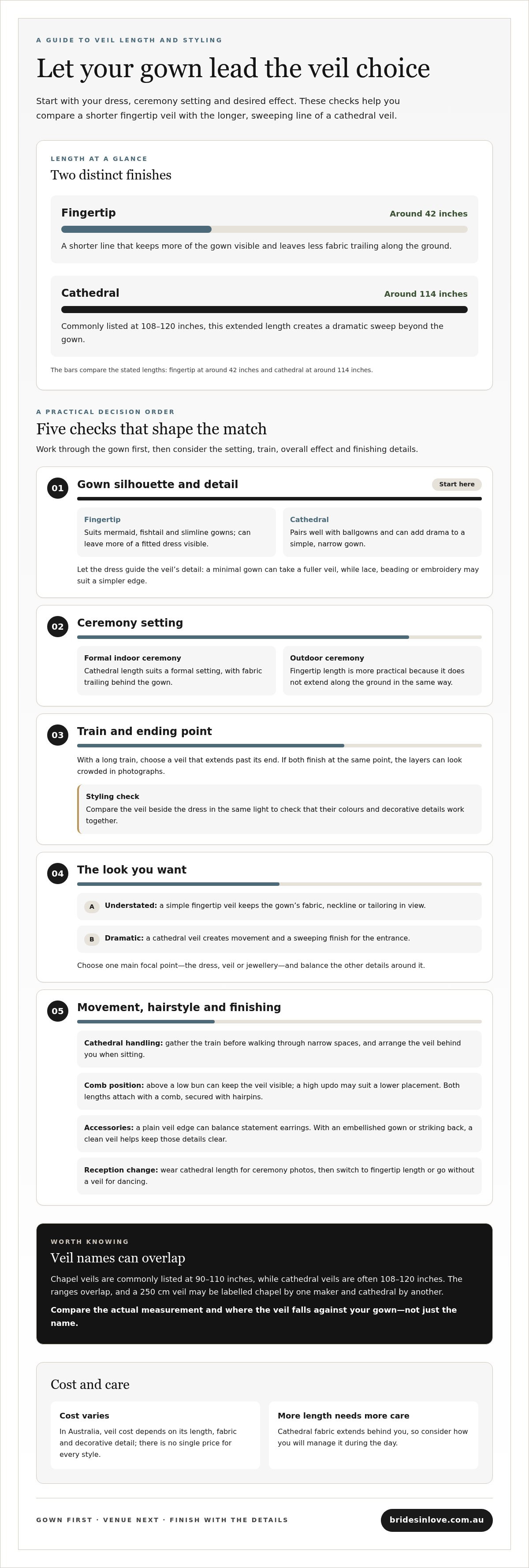
The longest veil isn’t automatically the best match for your gown. In the cathedral veil vs fingertip veil choice, a fingertip veil measures around 42 inches and suits a mermaid or fishtail silhouette, while a cathedral veil measures around 114 inches and brings a dramatic finish to a formal gown or longer train. The right length depends on how you want the veil to frame your dress and move through the day.
It’s easy to be drawn to a sweeping cathedral veil or a fingertip style that keeps the gown’s details in view. Both can look polished; the right choice depends on how the length and shape work with your silhouette, train and wedding setting. This guide compares the two styles and explains how they pair with different gowns, from simple dresses to long trains, so you can choose a veil that suits your bridal look.
Key Takeaways
- Choose a veil that complements your venue as well as your gown, especially when ceremony conditions could affect how the fabric moves.
- Consider how the veil’s placement will frame your silhouette and preserve the dress details you want to feature.
- Use the train as a key styling guide: the veil’s ending point can shape whether the overall look feels streamlined or layered.
- Decide whether you want a refined finishing touch or a more dramatic ceremony look, then compare veil lengths with your gown.
Can I wear a cathedral veil with a simple dress?
Yes. A cathedral-length veil can make a dramatic entrance with a minimal wedding dress, letting the fabric create the statement. Match its finish and length to your venue, gown and overall styling.
Dress silhouette and veil length
A-line and ballgown silhouettes can carry the sweep of cathedral length, while a simple, narrow gown gains drama from the veil’s train. A cathedral veil is commonly around 114 inches from comb to end. For a long dress train, choose a veil that extends beyond it; a veil ending at the same point can create crowded layers in photographs.
Veil and dress complement
Let the wedding dress guide the veil’s detail. A minimal gown can pair with a fuller cathedral veil for contrast, while lace, beading or embroidery may call for a simpler edge that doesn’t compete. Compare the veil beside the dress in the same light to check that their colours and decorative details work together.
Choose for the venue, too. A cathedral veil suits a formal indoor ceremony, where its full length can trail behind the gown for a classic entrance. For an outdoor ceremony, a fingertip veil is more practical because it doesn’t extend along the ground in the same way. If the dress has a long train, select a veil that carries past its end rather than stopping at the same point.
Consider your hairstyle and earrings before settling on the comb position. With a low bun, placing the comb above the bun can keep the veil visible; a high updo may suit a lower placement. If you plan to wear statement earrings, a plain veil edge can keep the look balanced around your face.
| Veil option | Venue | Dress pairing | Effect |
|---|---|---|---|
| Cathedral, around 114 inches | Formal indoor ceremony | Ballgown or long train | Dramatic sweep |
| Fingertip, around 42 inches | Outdoor ceremony | Slimline or detailed gown | Less trailing fabric |
Choose cathedral length for a formal setting and a sweeping finish. Choose fingertip length when a shorter, easier-to-manage silhouette better suits the venue and gown.
Fingertip vs Cathedral Veil: Which Length Should You Choose?
Fingertip veils suit mermaid and fishtail gowns, while cathedral styles add a dramatic sweep to formal silhouettes. When comparing a cathedral veil vs fingertip veil, start with your dress, ceremony plans and the look you want for your entrance.
Fingertip veil length and fit
A fingertip veil generally falls near your fingertips when your arms are relaxed at your sides. It’s shorter than cathedral styles and can leave more of a fitted gown visible. For a close fit, check where the edge lands against your torso and skirt while standing naturally. For brides weighing a cathedral veil vs fingertip veil, consider how much of the dress you want visible in movement.
Cathedral veil length and effect
A cathedral veil commonly measures 108-120 inches, extending well beyond the gown’s train for a dramatic entrance. It creates a sweeping effect that suits formal wedding styling and draws the eye along the dress. If you want that extended line for the ceremony but less fabric later, plan to remove it or change styles for the reception.
Veil cost, handling and attachment
In Australia, veil cost depends on its length, fabric and decorative detail, so there isn’t one price for every style. Cathedral veils need more care to manage because the fabric extends behind you. Gather the train before walking through narrow spaces, and arrange the veil behind you when sitting.
Both lengths attach to the hairstyle with a comb. Position the comb to suit your hairstyle, then secure it with hairpins. A stylist can help place the comb as you prepare your final look.
Chapel length sits between fingertip and cathedral in many naming systems, but labels vary. It’s commonly listed at 90-110 inches, while cathedral styles are often 108-120 inches, so the ranges can overlap. Some makers label a 250 cm veil chapel length; others call it cathedral. Compare the actual measurement and where it falls against your gown, rather than relying on the name alone.
If you want a reception change, decide which look suits each part of the day: wear a cathedral veil for ceremony photos, then switch to a fingertip style or go without a veil for dancing. Consider how each option works with your dress and hairstyle.
Understated versus dramatic bridal styling
Choose a veil as part of the whole bridal look, not as a separate finishing touch. A clean, minimal dress can carry a bold veil, while an embellished gown may call for a quieter frame. Decide which detail should draw attention first.
For an understated effect, pair a simple fingertip veil with a sleek crepe dress, neat bun and small pearl studs. Its shorter line keeps the gown visible and creates a polished finish without adding another focal point. This works well when you want the fabric, neckline or tailoring to lead.
For a dramatic entrance, a cathedral veil creates movement behind a plain satin dress. A restrained edge keeps the look elegant rather than crowded. If the gown already features lace, beading or a striking back, choose a clean veil so those details remain clear in person and in photographs.
Use this three-step styling check before settling on a look:
- Pick the focal point: choose the dress, veil or jewellery as the main feature.
- Balance the finish: pair a decorated veil with simpler dresses, or a plain veil with intricate detailing.
- Review the full outfit: assess the veil, hairstyle and accessories together, not as separate choices.
A beautiful bridal look can also draw on a consistent design language. Repeat a soft floral detail from the dress in the veil edge or headpiece, rather than combining unrelated motifs. A pearl-accented gown can pair with understated pearl jewellery; a clean, architectural dress may suit a smooth veil and sculptural accessories. Start with the dress, then edit each addition until the details feel intentional.
For a final comparison, photograph each combination from the front and back. Look for one clear focal detail in each image, such as the gown’s neckline or the veil’s sweep. If both compete for attention, simplify one element.
Veil and gown pairing
Start with the gown’s silhouette and train, then compare how different wedding veils change its lines. A fingertip style keeps the fabric closer to the body, while a longer veil creates a more extended finish. The best balance lets the dress and veil read as one elegant bridal look.
For a slim sheath gown, a fingertip veil can preserve the clean outline without covering much of the skirt. An A-line dress offers more flexibility: choose a shorter style to keep the skirt prominent, or a longer one to add movement behind it. With a ballgown, consider whether the veil’s width and volume complement the full skirt or compete with it.
Use the train as a practical reference. A veil should finish at or just beyond the train for a cohesive line. Some stylists suggest choosing a longer veil at least 30 cm beyond the dress train. For example, if the train extends behind the gown, compare veil lengths against its full outline, not just the hem while standing.
Surface detail matters as much as length. With lace across the back, a plain veil can keep the pattern visible. If the dress has a simple bodice and skirt, a decorated edge can add detail without changing the silhouette. Match the veil’s colour and texture to the gown, and check that embellishment doesn’t obscure a feature you want visible during the ceremony.
- Slim sheath: compare a fingertip style with a longer veil for a close or extended line.
- A-line: choose the length according to how much skirt detail should remain visible.
- Ballgown: balance the veil’s volume with the skirt’s fullness.
- Long train: assess where the veil ends against the train’s outline.
Try each option with the complete gown, including its train and back detail. To compare a gown and veil together, book an appointment to explore bridal styling.
Brides in Love: Zavana Bridal Gowns
Brides in Love gives Sydney brides a place to compare gown silhouettes and veil lengths as they shape their bridal look. Explore Zavana Bridal gowns alongside bridal veils to see how the styles work with your dress and preferences.
A simple gown can take a more dramatic veil, while an ornate bodice may call for a cleaner finish. Comparing the pieces together helps you judge their balance and decide which details should lead. Explore White April, Wedding Societe and Cizzy Bridal gowns as you refine your choice.
Ready to explore gown options? Contact Brides in Love or visit bridesinlove.com.au.
Make your final look feel like you
Before choosing between a cathedral veil and a fingertip veil, picture the complete look in motion, not just in a mirror. Notice how the fabric moves as you walk, turn and sit, and whether it suits the mood you want for your ceremony. These styling checks can help your veil feel considered rather than like a last-minute addition.
Bring your preferred hairstyle and accessories into the decision, too. The veil should work with the way you plan to wear your hair and the details you want to keep visible. Seeing the gown and finishing pieces together makes it easier to judge the balance, especially when choosing between a subtle accent and a more striking finish.
For a considered appointment, book a bridal styling appointment with Brides in Love and explore your options alongside your gown. Trust the combination that feels comfortable, polished and true to your personal style. Your finishing touch should feel like yours.
Frequently Asked Questions
What Veil Length Would Best Suit My Dress?
The best veil length lets your gown’s defining details remain clear. During a fitting, try the veil with your dress fastened and styled as planned, then check the neckline, back and waist from several angles. Ask someone to photograph you standing and walking. These views can show whether the veil obscures a feature or creates the proportions you want.
Should A Veil Be Longer Than Your Train?
No, a veil doesn’t have to extend past the train. Choose the finish based on how you want the layers to look and how you’ll move in the outfit. Practise walking, turning and sitting in the full look, especially if the ceremony includes steps or a narrow aisle. This helps you see how the veil and train move together beyond a still photograph.
What is the difference between a cathedral veil and a fingertip veil?
The main difference is where each style finishes and how much of the gown it covers. A fingertip veil finishes around hand level, while a cathedral veil trails behind the dress. Check the effect with your planned hairstyle and accessories: a low back or detailed bodice may need to stay visible, while a plain gown leaves more room for veil detail.
How long is a cathedral veil compared with a fingertip veil?
As a guide, fingertip veils are commonly around 105 cm, while cathedral veils are often 274 to 305 cm, depending on style and maker. Measure from the comb to the veil’s edge, then compare that measurement with your height and gown. The drop changes how the veil sits, so try the actual style rather than relying on its label alone.
What are the pros and cons of cathedral veils versus fingertip veils?
A cathedral veil offers more fabric for varied styling in ceremony portraits, but its full sweep needs thoughtful handling between photographs and other moments. A fingertip veil is easier to carry and reposition, though it offers less fabric for layered styling. Consider who will help with adjustments, where you’ll keep the veil, and whether you want to wear it throughout the day.
Which veil length is best for an indoor or outdoor Australian wedding?
Choose for the venue’s actual conditions, not just whether it’s indoors or outdoors. At a garden ceremony, check the walking surface and consider how wind could move loose fabric. Indoors, look at the aisle, doorways and steps. Ask your photographer where you’ll stand for portraits, then picture the veil in those spaces before deciding.


