
More than 70% of engaged women feel they need to lose weight before their wedding. That pressure can make it hard to know what to do if you lose weight before the wedding, especially when your gown’s fit is part of the picture. Wanting to change your body is common, but it isn’t a requirement for feeling confident on the day.
It’s understandable to think about how you’ll look in wedding photos and how your gown will fit. Personal expectations, comments from others and the styles you’re drawn to can all influence those feelings. Try to separate what you genuinely want from pressure to meet someone else’s ideal.
This article looks at whether brides commonly want to lose weight before their wedding and what can shape that desire. It also explains practical steps to take if your weight changes, including how to assess gown fit and plan alterations as the day approaches.
Key Takeaways
- Keep any pre-wedding weight goals gradual and centred on your wellbeing, rather than pressure to match an ideal.
- If your gown becomes too loose, note where the fit has changed and discuss the garment’s construction before deciding on alterations.
- Plan alteration appointments around your wedding date and any expected changes in fit, so there’s time to assess the gown carefully.
- The amount a gown can be taken in depends on its design and construction; explore bridal styles with a fit and silhouette that feel right for you.
1. Do most brides want to lose weight before their wedding?
More than 70% of engaged women feel they need to lose weight before their wedding. Brides who want to change their weight aim to lose an average of 7 to 10 kilos. That figure describes a common desire, not a requirement for choosing a gown or enjoying your wedding day.
For a sustainable pre-wedding plan, begin a few months before the wedding and choose gradual changes you can maintain. A healthy plan over two to three months may support about 4 kilos of weight loss. Treat this as a general guide, not a deadline; your wellbeing matters more than reaching a particular number.
Crash diets, severe food restriction and quick-fix methods can leave you feeling unwell and make wedding preparations harder. Avoid trying to force rapid change, especially close to the ceremony. Instead, build meals around vegetables, fruit and satisfying foods, and make one manageable change at a time, such as swapping a frequent sugary snack for fruit.
To support a stable weight safely before your wedding, eat regular meals, drink water and avoid sudden restriction or dehydration tactics. If your weight changes after your final dress fitting, contact the alterations studio promptly and describe where the gown feels loose. A seamstress can assess the fit and discuss possible adjustments before the wedding.
Australian wedding dress shops set their own exchange terms, while resizing depends on the gown’s construction and the changes needed. Read the seller’s terms and keep your purchase records. An exchange and an alteration are different options.
Alteration timelines and costs in Sydney, Melbourne and Brisbane depend on the gown, the work required and the studio’s schedule. Ask for a fitting plan and a written quote before approving changes. To support gradual progress, include fruit and vegetables across your meals; the research recommends 5 to 9 servings each day. Choose a start date that leaves room for steady habits, not a last-minute push.
Starting a bridal fitness programme at least six months ahead allows time for gradual change; when the wedding is many months away, set short-term goals of a couple of pounds per month. The article describes about a pound per week as reasonable and advises against leaving weight loss until 2 weeks before the wedding.
3. What to do if your wedding dress is now too big
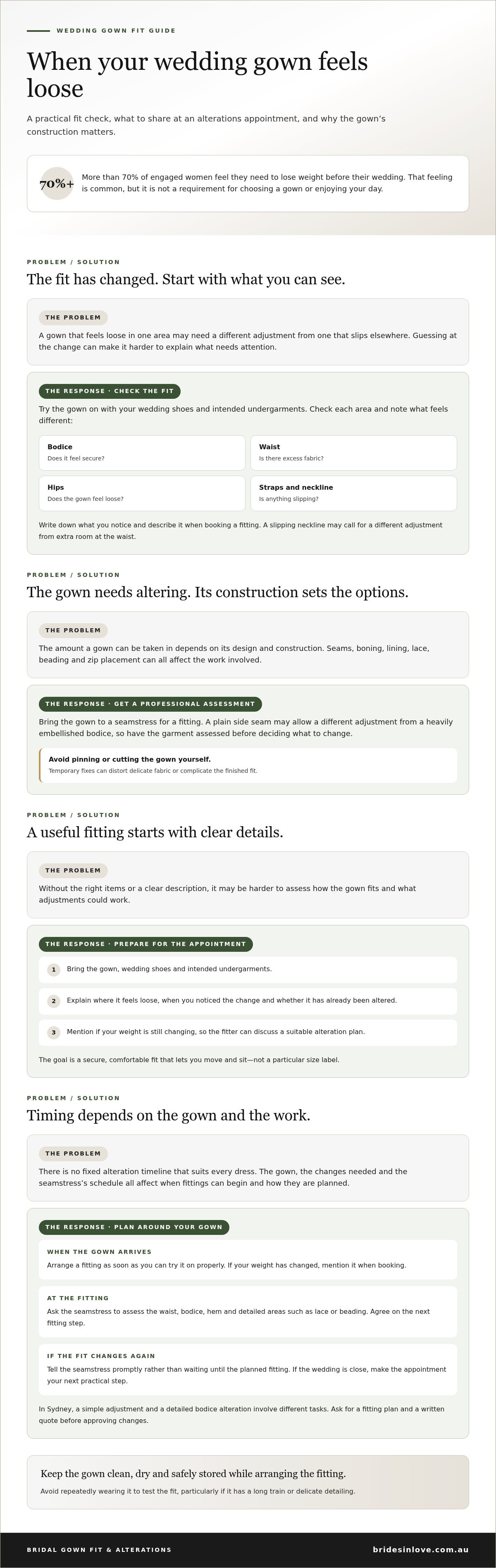
If you’re wondering what to do if you lose weight before the wedding and your gown feels loose, note where the fit has changed before arranging an alteration. Try it on with your wedding shoes and intended undergarments, then check the bodice, waist, hips and straps. A slipping neckline may need a different adjustment from excess fabric around the waist. Write down what you notice and share it when booking a fitting.
A professional fitting helps determine whether the gown can be taken in neatly and how adjustments may affect its shape. The answer depends on its construction: seams, boning, lining, lace, beading and zip placement can all influence the work. A plain side seam may allow a different adjustment from a heavily embellished bodice. Avoid pinning or cutting the dress yourself, as temporary fixes can distort delicate fabric or complicate the finished fit.
Knowing what to do if you lose weight before the wedding starts with giving the seamstress clear information. Bring the gown, shoes and intended undergarments, and explain where it feels loose, when you noticed the change and whether it has already been altered. Mention if your weight is still changing. The fitter can assess the gown and discuss possible adjustments. The goal is a secure, comfortable fit that lets you move and sit, not a particular size label.
Keep the gown clean, dry and safely stored while arranging the fitting. Avoid wearing it repeatedly to test the fit, particularly if it has a long train or delicate detailing. If the wedding is close, make the appointment your next practical step and follow the fitting plan for your dress. A bridal appointment can help you explore gown fit and styling before choosing a dress.
3. How long before the wedding should you get your dress altered
Book alterations as soon as your gown arrives and you can try it on properly. The timing depends on the dress, the changes needed and the seamstress’s schedule. If your weight has changed, mention it when arranging the appointment. A gown that slips at the bodice may need different work from one that feels loose through the hips.
Kristina Bruce’s example shows why arrival and fitting dates matter: she expected to hear within the next few weeks that her dress had arrived, followed by an alterations appointment. Use that sequence as a prompt to plan ahead, not as a universal timeline. Delivery, the gown’s condition and the work required all affect when fittings can begin.
At your first fitting, wear the shoes and undergarments intended for the wedding. Ask the seamstress to assess the waist, bodice, hem and detailed areas such as lace or beading. Explain where the dress feels different and whether your weight is still changing. These details help shape the alteration plan and reduce the chance of overlooking a fit issue.
Before leaving, agree on the next fitting step and note any tasks you need to complete. If the hem is being adjusted, for example, bring your wedding shoes again so the length can be assessed accurately. Keep appointment details with your gown purchase records. If the fit changes again, tell the seamstress promptly rather than waiting until the planned fitting.
In Sydney, allow the alterations schedule to reflect the specific gown and requested work. A simple adjustment and a detailed bodice alteration involve different tasks, so a fixed timeline cannot suit every dress. Arrange the first fitting once the gown is in hand, then follow the schedule set for its construction and fit.
At Kristina Bruce’s wedding dress consultation, the dresses were grouped into two types: straight size and plus sized. These categories do not replace checking how a particular gown fits, so discuss the actual fit and any requested adjustments with the seamstress.
A trainer quoted in the article says that people with less than six months before the wedding should plan to spend more time in the gym. If exercise is part of your plans, keep the seamstress informed about any changes in fit as the wedding approaches.
4. Can a wedding dress be taken in multiple sizes
A wedding dress can sometimes be taken in by more than one size, but there’s no universal size limit. The result depends on the gown’s construction, the seam allowance and where the fabric needs adjusting. A simple satin skirt with accessible side seams presents different options from a fitted bodice covered in lace appliqué. A seamstress assesses the actual garment before planning substantial changes.
Construction details matter. Boning, cups, zips, buttons and beading can all affect how a gown can be reshaped. Taking in the waist might change the position of a zip or disturb a pattern across the bodice. A lace motif crossing a seam may need careful repositioning, while a plain skirt may be more straightforward. The key question is how to preserve the gown’s balance and finish, not simply how many sizes it changes.
At a fitting, ask the seamstress to identify which areas need adjustment and how each change could affect the silhouette. Bring your wedding shoes and intended undergarments, then try sitting, walking and raising your arms. These movements reveal practical fit issues that a still mirror check can miss. If the dress needs changes across the bust, waist and hips, ask how the adjustments will work together.
Share any recent fit changes and your wedding date before work begins. If the gown is several sizes too large, the assessment should cover its seams, fabric, embellishments and internal structure. The seamstress can explain the alteration approach and how it may affect the finished shape. Don’t rely on a standard size chart to predict the result: the label doesn’t show the construction inside your particular dress.
If you’re still choosing a gown, book a bridal gown appointment to explore silhouettes and discuss how fit influences your choice.
Brides in Love: Zavana Bridal Gowns
Brides in Love offers Zavana Bridal Gowns for Sydney brides planning for possible changes in fit. If your weight has shifted, focus on how a dress sits across the bodice, waist and hips rather than relying on its size label alone. The gown’s construction and detailing can affect its fit and what adjustments may be possible later.
Explore Zavana alongside White April, Wedding Societe and Cizzy Bridal Gowns to compare bridal looks and silhouettes. Try on gowns with the shoes and undergarments you expect to wear, and notice which designs feel secure and comfortable as you move. These observations can help you choose thoughtfully without making weight change the only factor.
To explore the gowns, contact Brides in Love or visit bridesinlove.com.au.
Choose the next step with confidence
Your wedding look should feel like you, not like a deadline or a number on a label. If you’re deciding what to do if you lose weight before the wedding, focus on a gown that feels comfortable and reflects your personal style. You can make fit decisions as your plans progress, based on how the dress sits and moves with you.
Give yourself room to consider what matters most: the silhouette, the details and how you want to feel on the day. A thoughtful choice can keep the focus on celebrating rather than chasing someone else’s ideal.
When you’re ready to explore your options, book a bridal appointment. Take the next step at your own pace and look forward to a wedding day that feels like yours.
Frequently Asked Questions
Do most brides want to lose weight before their wedding?
Yes, wanting to lose weight before a wedding is common, but it isn’t a requirement for getting married or choosing a gown. A personal goal is different from a condition you must meet. Consider whether the choice supports your wellbeing rather than treating a particular appearance on your wedding day as the measure of success.
What are the health risks of rapid weight loss before a wedding?
Rapid weight loss methods can involve unsafe food restriction. Eating fewer than 1,000 calories a day could put your health in danger. If your reduced intake approaches 1,200 calories per day, speak with a doctor before continuing. For Sydney brides planning around fittings, don’t use a dress appointment as a reason to pursue extreme dietary changes.


