
Embellishment can change a wedding gown’s entire mood, from softly vintage to strikingly modern. An embroidered wedding dress features designs stitched onto its fabric, often alongside lace appliqués, beads, pearls or three-dimensional florals. Intricate beading and embroidery on wedding gowns add texture and visual impact, while their pattern and placement help shape the overall look.
If you’re drawn to the detail but unsure how much feels right, consider how the finish works with your style, silhouette and celebration. More embellishment isn’t automatically better. A few carefully placed details can make a confident statement, too.
This guide explains how beadwork, metallic accents and embroidery shape a gown, how embellishments may appear in photographs, and which details suit different styles. Explore vintage-inspired and contemporary looks, plus practical points to consider when comparing embellished gowns in Sydney.
Key Takeaways
- Match embellishment placement and density to your gown’s silhouette to guide the eye and keep the overall look balanced.
- Choose beads and metallic details with the fabric, wedding setting and comfort in mind.
- See how light, movement and camera angles can affect the way embroidery and beadwork appear in wedding photographs.
- Compare vintage-inspired and contemporary finishes to find a style that feels cohesive with your gown and accessories.
What is an Embroidered Wedding Dress?
An embroidered wedding dress has designs stitched onto its fabric, sometimes alongside beads, pearls, lace or three-dimensional florals. The placement, pattern and density of these embellishments influence the gown’s visual impact and feel.
Silhouette and embellishment choices
Choose embellishments that complement the silhouette and draw attention to the features you want to highlight. Beading at the neckline, waist or hem creates a focal point, while details on the bodice, sleeves or train add dimension and movement. For a pear-shaped figure, an A-line or ball gown can emphasise the waist and balance the lower body. A fitted mermaid or trumpet silhouette follows an hourglass figure, while a sheath or soft A-line with delicate detail can suit a petite frame.
Beadwork design and density
Beadwork ranges from subtle accents to dense, all-over designs. Concentrated embellishments create a focal point, while lighter, spaced details leave more fabric visible and may feel less visually dominant. Fully embellished gowns are often fitted, but A-line and ball gown silhouettes can also carry beading. Beaded gowns are typically heavier, depending on bead density, fabric and bead type. Consider how the gown feels as well as how its pattern looks.
Hand-beaded versus machine-embroidered gowns
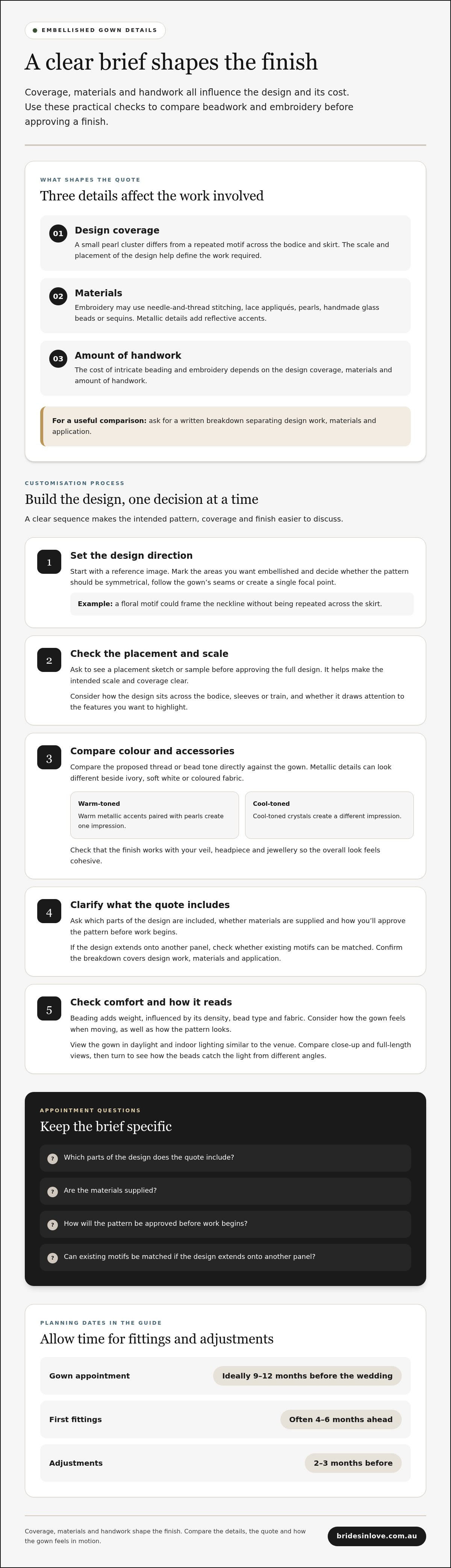
Compare the finish, texture and pattern rather than relying on a label alone. Examine close-up photographs and the garment itself, noting how evenly the design sits and whether beadwork is concentrated or scattered. To find Australian specialists, look for bridalwear experience and examples of embroidery or beadwork on comparable fabrics. Brides should book their gown appointment ideally 9 to 12 months before the wedding; first fittings are often scheduled 4 to 6 months ahead, with adjustments 2 to 3 months before.
Beading materials and techniques
Embroidery can appear on a range of fabrics. Designs may combine needle-and-thread stitching with lace appliqués, pearls, handmade glass beads or sequins to create texture and movement. Metallic details add reflective accents, with their effect shaped by placement and density. Look at how the design sits across the bodice, sleeves or train, and consider comfort when moving. For care, a professional bridal-garment cleaner is recommended. Store the gown in a dark, dry wardrobe away from direct sunlight, and avoid basements, attics and cedar wardrobes.
Customisation with beads and metallic embellishments
The cost of intricate beading and embroidery on wedding gowns depends on design coverage, materials and the amount of handwork. A small cluster of pearls differs from a repeated motif across the bodice and skirt. Ask for a written breakdown separating design work, materials and application, so you can compare what each proposed finish includes. Clear priorities help shape a quote that reflects the design you want.
Define the design before choosing details
Start with a reference image and mark the areas you want embellished. Decide whether the pattern should be symmetrical, follow the gown’s seams or create a single focal point. For example, a floral motif could frame the neckline without being repeated across the skirt. Ask to see a placement sketch or sample before approving the full design. This makes the intended scale and coverage easier to discuss.
Coordinate colour and accessories
Metallic details can look different beside ivory, soft white or coloured fabric. Compare the proposed thread or bead tone directly against the gown, then consider how it will work with your veil, headpiece and jewellery. Warm metallic accents paired with pearls create a different impression from cool-toned crystals. With intricate beading and embroidery on wedding gowns, these choices help keep the finished look cohesive rather than crowded.
Questions to ask at your appointment
Ask which parts of the design the quote includes, whether materials are supplied, and how you’ll approve the pattern before work begins. Clarify whether existing motifs can be matched if the design extends onto another panel. Also consider how the embellishment will coordinate with your accessories. These practical questions turn inspiration into a clear brief and help you assess the design before committing.
How beadwork and embroidery appear in photographs
Beads and embroidery can read differently in close-ups and full-length wedding portraits. Raised pearls and floral appliqués create visible dimension, while fine, tone-on-tone stitching may appear more subtle from a distance. Reflective beads and metallic details catch light, so their highlights can stand out against matte fabric. Brides in Australia can compare gown photographs in both close and full-length views to see which design features remain clear.
Lighting and venue affect the mood captured on camera. Delicate beadwork can complement a garden setting, while bolder patterns may suit a formal ballroom. Before choosing, view the gown in daylight and under indoor lighting similar to your venue. Turn slightly and watch how the beads catch the light from different angles. This helps you assess whether the pattern looks balanced in motion, not only from the front.
Resizing calls for care around the beadwork pattern. Structural changes to a heavily embellished gown may require embellishments to be removed by hand, then sewn back after fitting. For a hem adjustment, lace motifs and beadwork may need to be reconstructed so the design looks continuous. Discuss the proposed alteration with a bridal specialist and identify which motifs cross seams, the waist or hem. These details can affect how the finished couture gown photographs.
Consider weight as well as appearance when planning portraits and moving around at the reception. Beading adds weight, influenced by its density, bead type and fabric. A heavily decorated train may create dramatic images when spread out, but move differently from a lightly embellished skirt. During a fitting, walk, turn and sit in the gown. Notice whether the sleeves, bodice details or train shift, and whether the embroidery stays in place as intended.
Beading styles from vintage-inspired to contemporary
Wedding gown embellishments range from vintage-inspired lace and pearls to contemporary, restrained beadwork and sequins. Floral embroidery, three-dimensional appliqués and metallic accents offer more ways to shape the look, from softly romantic to a pronounced statement.
For a vintage-inspired finish, look for lace patterns paired with pearl details across the bodice, neckline or sleeves. Repeated motifs can give a dress a considered, heirloom character without covering every panel. To keep the effect balanced, choose one focal area, such as a beaded neckline, then let the skirt’s fabric and silhouette provide contrast. A matching embroidered veil can echo the pattern, while simple accessories keep attention on the gown.
Contemporary designs often use sequins or subtle beadwork as accents rather than all-over decoration. A scattering across the bodice can catch the light while leaving the skirt visually clean. Geometric lines, spaced motifs and tonal embroidery create a modern finish without competing with the gown’s shape. Compare the pattern up close and from a few steps away; its scale should suit both the dress and the setting.
To discover which styles feel right, compare gowns with different levels of detail and note what draws your eye first. A pearl-embroidered neckline reads differently from a floral train or a sequinned bodice. Then consider accessories: pearl jewellery can complement pearl embroidery, while understated pieces let intricate beadwork take centre stage. A veil with matching embroidery or dimensional flowers can link the look without repeating every detail.
The clearest takeaway: choose a style by its pattern, placement and overall effect, not by embellishment alone. At a Sydney appointment, compare vintage-inspired and contemporary details in person to see how each works with your preferred silhouette. Book an appointment to explore gown styles.
Brides in Love: Zavana Bridal Gowns
Brides in Love gives Sydney brides a place to compare gown options and consider how embellishment works with their preferred silhouette. Explore Zavana Bridal Gowns alongside White April Gowns, Wedding Societe Gowns and Cizzy Bridal Gowns. As you view each dress, note the placement and density of its beadwork, how details sit across the bodice or neckline, and whether the overall look suits your wedding style.
Visit the boutique when you’re narrowing down gown styles and want personalised bridal styling to help assess the details in person. Bring reference images of embroidery or metallic finishes you like, and use them to compare pattern, proportion and accessories.
Visit bridesinlove.com.au to explore the gowns.
Bring your gown vision into focus
Turn your inspiration into a focused fitting brief. Choose the detail that matters most, then note the shape, placement and finish you’re drawn to. A saved image or simple sketch can help explain the look you want, while leaving room to compare how different designs work on you.
Intricate beading and embroidery on wedding gowns can make a strong style statement when the pattern reflects your vision. Before your appointment, write down what you want the embellishment to express, from understated refinement to a more dramatic finish. Then explore gown options at your fitting and decide which details feel right in person.
Arrange an appointment to explore gown options and take the next step towards a look that feels distinctly your own.
Frequently Asked Questions
Which Type of Embroidery is a Popular Choice for Bridalwear?
Lace appliqué is a popular bridalwear choice, often paired with pearls, beadwork or dimensional floral details. To compare designs, look at close-up and full-length views: a motif that appears delicate up close may create a stronger pattern across the dress. Note whether the embroidery follows the gown’s seams or forms a separate focal motif, such as a flower on one shoulder.
How much extra time is needed for intricate wedding gown beadwork?
The time required depends on the amount of handwork and whether existing details need to be moved for fitting changes. Plan alterations for a heavily beaded gown several months before the wedding. If the bodice needs structural work, embellishments may need careful removal and re-sewing afterwards. Allow time to assess the finished gown in motion, so any shifted or uneven details can be addressed before the day.
What are the risks of heavy beadwork, including damage, weight, and discomfort?
Dense beadwork can add weight and create more points where threads or beads may snag. Pay particular attention to mesh, lace edges and areas that rub against seams or accessories. During a fitting, check for loose beads, pulled fabric and pressure beneath the arms or at the waist. After wearing the gown, inspect those areas before storing it rather than pulling at a loose thread yourself.
Can a wedding gown be altered or customised with added beading and embroidery?
Yes, a gown can often be altered or customised with added details, but the fabric, lining and existing construction shape what’s possible. For example, a small motif may suit a stable bodice panel better than fine mesh or a moving seam. Mark the intended placement on a fitting photo, then have a bridal alterations professional assess the fabric and how the addition will sit when worn.
How much does custom beading or embroidery cost on a wedding gown in Australia?
The cost depends on design coverage, materials and the amount of handwork. Ask for a written breakdown of design work, materials and application to compare quotes.


