
An invitation should feel like a welcome, not a request for permission. If you’d like your future mother-in-law beside you, ask warmly and make clear you’d value her company. Getting your mother-in-law's approval on a dress doesn’t mean she has the final say. Your wedding dress should still feel like your choice, and she should feel free to share her opinion respectfully.
It’s natural to want the people closest to you to enjoy this milestone while also wanting space to trust your own taste. A thoughtful invitation can make room for both. This guide explains how to ask her to join you, what to say if you’d prefer to shop without her, and how to respond if your styles differ. You’ll also find ways to keep the experience warm and focused on finding a gown that feels right for you.
Key Takeaways
- Offer your future mother-in-law a warm invitation to join, while leaving her room to share her thoughts without pressure.
- If the bride prefers to shop without her, respect that choice and find another moment to connect over the experience.
- Set a kind boundary around whose decision the dress is, especially if opinions differ.
- Choose when and how to share the dress based on what feels comfortable for the bride.
- Focus on making the conversation supportive, so wedding dress shopping remains a positive part of the celebrations.
Offering to join the bride's wedding dress shopping
If you’re the future mother-in-law hoping to join the search, tell the bride directly and warmly. Make the invitation about sharing time, not securing a vote on the gown. For example: “I’d love to come along if you’d enjoy having me there, but I understand if you’d rather shop another way.” This leaves the choice with the bride and sets a gracious tone before a boutique visit.
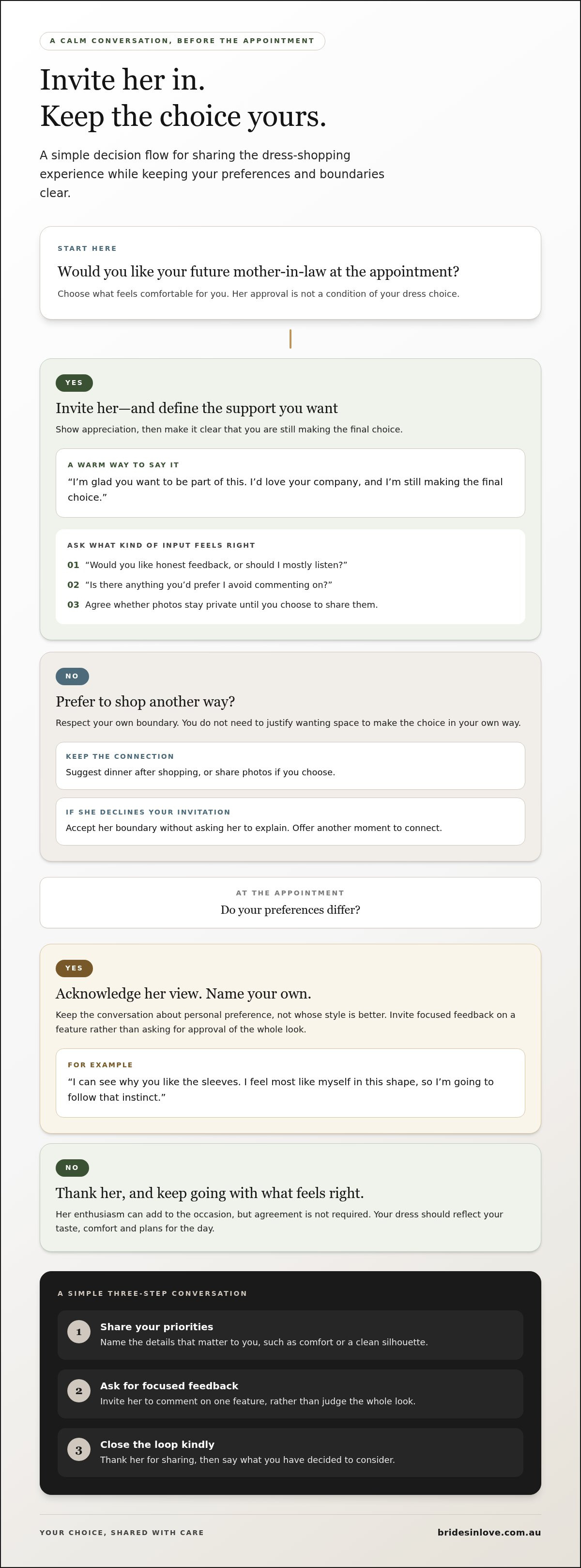
If she accepts, agree on the kind of support she wants before the appointment. She may value your company but prefer to make the final decision herself. Ask what would help, then respect her answer. You could say:
- “Would you like honest feedback, or should I mostly listen?”
- “Is there anything you’d prefer I avoid commenting on?”
- “Would you like me to keep photos private until you share them?”
- “Would you rather I join the appointment or celebrate afterwards?”
These questions give the bride room to define your role. If she declines, accept her boundary without asking her to justify it. Suggest another way to share the milestone, such as dinner after shopping, where she can talk about the dresses and show photos if she chooses. A calm response protects the relationship and keeps the focus on her experience.
White dress traditions can also shape expectations. Queen Victoria popularised white wedding dresses in 1840 when she married Prince Albert. In Western wedding culture, white is widely accepted as a colour reserved for the bride unless she says otherwise. That custom is useful context, not a reason to direct the bride’s gown choice. Her preferences, ceremony and personal style guide what she wears.
Wedding guest etiquette offers another clear boundary: wearing white to a wedding is widely considered a major faux pas and can look like an attempt to upstage the bride. If the bride has set a dress code or named colours to avoid, follow her instructions. For mother-of-the-groom attire, let the mother of the bride choose her outfit first, then coordinate yours with hers. Coordination can mean complementary colours or a similar level of formality, rather than matching exactly.
Keep the invitation separate from outfit decisions. The bride chooses her wedding dress; each guest chooses attire that respects the event and the couple’s stated preferences. If you’re unsure how much input she wants, ask once before shopping. If she says no, dinner or a chance to see photos can keep you involved without crossing that boundary.
Communicating with a future mother-in-law
A clear conversation before a dress appointment can prevent awkward moments in the fitting room. Start by saying what you value about her involvement, then explain what support would feel useful. For example: “I’m glad you want to be part of this. I’d love your company, and I’m still making the final choice.” This shows appreciation while setting a boundary without turning the discussion into a contest.
Choose a calm moment rather than raising sensitive topics when emotions are running high. A phone call or quiet conversation over coffee gives you both space to listen. Be specific about the feedback you welcome. “Tell me what you like about the neckline” invites a useful observation. “Do you approve?” can make one person’s opinion seem like the deciding test.
If you’re unsure how to explain your preferences, try this three-step approach:
- Share your priorities. Name two details that matter, such as comfort and a clean silhouette.
- Ask for focused feedback. Invite her to comment on one feature, rather than judging the whole look.
- Close the loop kindly. Thank her for sharing, then say what you’ve decided to consider.
For instance, if she prefers sleeves and you’re drawn to a strapless design, acknowledge the difference without debating taste. Try: “I can see why you like the sleeves. I feel most like myself in this shape, so I’m going to follow that instinct.” This keeps the discussion about personal preference, not whose style is better. It also helps with getting your mother-in-law's approval on a dress: aim for understanding, not permission.
Agree on practical boundaries before sharing photos or opinions. Tell her whether you’re comfortable with pictures being sent to relatives, posted online or kept private until the wedding. If you’re shopping with several people, ask everyone to give feedback one at a time. A chorus of opinions can make it harder to hear your own reaction. You can also pause the conversation with, “I’d like a moment to look at the dress without comments.”
If a text feels easier, keep it warm and direct. “I appreciate your advice, and I’ll let you know when I’m ready to share the final choice” acknowledges her care while preserving your decision. If a conversation becomes tense, suggest returning to it later. A thoughtful pause can prevent a disagreement about a gown from affecting the wider relationship.
Should you seek your mother-in-law’s approval when choosing a wedding dress?
You can invite your future mother-in-law’s opinion without making her approval a condition of your choice. A wedding dress reflects your taste, comfort and plans for the day. For example, you might ask whether she likes the lace detail while keeping the final decision yours. Her enthusiasm can add to the occasion, but agreement isn’t a requirement.
First, decide what you want from her input. Perhaps you value her eye for colour, know she understands your family’s traditions, or simply want to share a milestone. If you’re seeking practical feedback, name the point: “Does this fabric feel right for an outdoor ceremony?” That invites a useful response, unlike asking her to approve the entire look.
Before shopping, consider who is paying and what expectations you’ve discussed. If a relative is contributing towards the gown, talk clearly about the budget and whether that contribution comes with opinions. A gift doesn’t automatically make the giver the decision-maker. Agreeing on expectations early can prevent a later disagreement about a particular dress.
Use these questions to decide whether to ask for her view:
- Do I genuinely want her opinion? Invite her if you’re curious, not because you feel obliged.
- Can I hear a different preference? If she favours sleeves and you prefer a simple strapless shape, decide whether that contrast feels manageable.
- What feedback would help? Ask about comfort, movement or a detail you’re unsure about, rather than seeking a broad verdict.
- Will her answer affect my decision? Be honest with yourself before asking for input.
Her perspective may be especially useful when you’re unsure about a detail. For instance, if you’re choosing between two necklines, ask which one looks more balanced with the veil you’ve selected. Keep the question specific. You’ll get clearer feedback while staying focused on the dress features that matter to you.
If you’re already confident about your choice, share it as news rather than asking for approval. Try, “I’ve chosen my dress, and I’m excited for you to see it.” This sets a warm, clear expectation. If she expresses a different preference, thank her for caring, then return to the reasons the gown feels right for you.
Seeking input can build connection when it’s freely chosen and focused. Approval becomes an unnecessary burden if you feel you must satisfy someone else before deciding. Keep the question, the boundary and the final choice clear. Your dress decision can remain yours while still making room for her perspective.
What to do if your mother-in-law dislikes your wedding dress
A blunt reaction can sting, especially after you’ve pictured wearing the gown down the aisle. Pause before answering. If your future mother-in-law says, “That isn’t what I expected,” you could reply, “I know it’s different from your taste, but I feel comfortable and confident in it.” This acknowledges her response without turning the moment into an argument or a request to reconsider.
Try to understand what sits behind her dislike. She may be reacting to a detail, such as a low back, a modern silhouette or a fabric she wouldn’t choose. Ask one calm question: “Is there a particular detail you’re worried about?” A specific answer gives you something useful to consider. A general statement like “It’s not my style” may simply describe her preference, rather than a problem with your dress.
Use this sequence to keep the conversation constructive:
- Let her finish. Don’t interrupt the first reaction, even if you disagree.
- Clarify the concern. Ask whether she means the fit, the formality or personal taste.
- Decide what matters. Consider practical feedback, but weigh it against how you feel in the gown.
- State your decision. Say, “I’ve considered your view, and this is still the dress I want.”
For example, if she thinks a sleek gown looks too simple for a formal reception, consider the invitation, venue and styling you’ve planned. If the dress suits the event and feels like you, her preference for embellishment doesn’t require a change. If she raises a practical issue you hadn’t considered, such as feeling restricted when walking, revisit it for your own comfort.
Don’t rush into changing your choice during an emotional conversation. Take time to look at your photos privately and remember what drew you to the gown. Was it the clean line, the way it moved or how you felt when you tried it on? Those reasons can help you distinguish a genuine concern from pressure to please someone else.
If the disagreement continues, set a firm, respectful limit. You might say, “I value your honesty, but I’m not discussing changing the dress.” Then shift to another wedding detail, such as the reception flowers or ceremony music. If she repeats the criticism, use the same brief response rather than reopening the decision. You can appreciate her care without handing over the final choice.
If she wants to be involved before the decision is final, set the same boundary around dress shopping. A mother-in-law who wants to join the bride's wedding dress shopping should ask the bride and understand if she declines. An offer to come along doesn’t oblige the bride to accept, and declining need not be treated as a judgment of the relationship. You can thank her for offering, explain that you want to shop privately, or invite her to share her thoughts later if that feels right. Making your preference clear can keep the choice in your hands while leaving room for warmth and respect.
When should you show your mother-in-law your wedding dress?
Show your dress when you feel ready, not because a family milestone demands a reveal. If you’d like your future mother-in-law’s reaction before deciding, invite her to a fitting or share a photo after trying on the gown. If you’ve already chosen, present it as a special moment rather than reopening the decision. For example: “I’ve found my dress, and I’d love you to see it.”
The right moment depends on what you want from her response. A fitting lets her see the gown in motion and notice its details, while a photo works if she lives outside Sydney or can’t attend. Decide first whether you’re inviting comments or simply sharing your excitement. That small distinction can prevent a celebratory reveal from becoming another round of dress deliberations.
If you want her opinion while choosing, show her only the options you’re genuinely considering. Explain what you’re deciding between, such as a structured bodice and a softer draped shape. Ask her to comment on the detail you’re weighing. A focused conversation gives her a meaningful role without suggesting she must choose the winner.
If the dress is already chosen, pick a setting that suits the reveal:
- At a private fitting: Invite her to see how the gown moves and fits.
- Over dinner: Share photos and talk through the moment you made your choice.
- At a family gathering: Reveal it only if you’re comfortable sharing the moment with everyone present.
- After the ceremony: Keep the gown a surprise if that matters to you.
Before sending photos, decide who may see them. A direct message to your mother-in-law keeps the reveal personal; a family group chat can spread it beyond your control. You might write, “I’m sharing this with you first, please keep it private until I say otherwise.” If you want to keep the design secret until the wedding, say so plainly and avoid forwarding images.
Think about the emotional timing, too. If you’re unsure after a fitting, wait until you’ve had time to reflect before asking for feedback. Look at the photos, remember what felt right, then decide whether another opinion would help. If you’re settled on the gown, say so before showing it: “I’m happy with my choice, and I’m excited to share it.”
For a Sydney appointment where you can assess gown details in person before deciding what to share, book a bridal appointment.
Brides in Love: Zavana Bridal Gowns
Brides in Love offers Zavana Bridal gowns for Sydney brides exploring wedding dresses with family input in mind. A boutique appointment gives you space to consider your style, compare gown options and decide how you’d like your future mother-in-law involved. Her opinion can be part of the conversation without becoming the deciding vote.
If you’re beginning your search or want to explore a different design direction, browse Zavana Bridal gowns alongside White April, Wedding Societe and Cizzy Bridal gowns. Choose the gown that feels right for you, then share the news in a way that suits your relationship and boundaries.
Contact Brides in Love to enquire about bridal gowns.
Make your next step your own
Let your dress decision reflect how you want to feel on your wedding day. Getting your mother-in-law's approval on a dress can matter emotionally, but her response doesn’t need to determine your choice. You can welcome her perspective, keep the final decision yours and choose a reveal that feels comfortable for both of you. That leaves room for connection without turning a personal milestone into a test of agreement.
If you’re ready to explore gowns, Brides in Love offers designs from Zavana Bridal and White April. A bridal appointment can give you a chance to consider different styles and decide how you’d like to share the experience with family. Arrange an appointment with Brides in Love and take the next step towards a gown that feels like you.
Enjoy making this choice in a way that suits you, with the excitement of your wedding at the centre.


