
A memorable bridal look comes from thoughtful details, not a bigger budget. Knowing how to create a unique bridal look starts with choosing a gown that feels like you, then coordinating accessories, hair, makeup and flowers around it. The result should reflect your style while feeling comfortable and right for your wedding setting.
It’s easy to feel that a luxury finish depends on spending more, but thoughtful choices can make a look feel distinctive without adding detail everywhere. A clear style direction helps you focus your budget on the elements that matter most to you.
This guide shows how to bring each part of your look together, adapt it to your venue and wedding theme, and make considered choices on a budget. You’ll also find out how a bridal stylist can help refine the details into a cohesive look.
Key Takeaways
- Choose your gown first, then let its neckline, fabric and embellishments guide your accessories, hair and makeup.
- Match the look to your venue and wedding style, while keeping comfort and the setting in mind.
- Make a budget feel considered by prioritising details and choosing accessories in proportion to your frame and outfit.
- A bridal stylist can help bring your preferences together and refine the details into a cohesive look.
1. Coordinating the dress, accessories, hair, makeup and bouquet
Start with the wedding dress, using its silhouette, fabric and neckline to guide the rest. A classic gown with clean lines creates a polished base, while a fitted lace bodice already adds texture and visual interest. If the dress is heavily embellished, keep jewellery restrained so its details remain the focus. A simpler gown leaves more room for a statement veil, earrings or belt.
Match jewellery to the neckline and gown’s hardware. A strapless neckline can suit a necklace, while a high neckline often works better with statement earrings and no necklace. Echo the dress’s fastenings or embellishments with gold or silver details. Add one personal touch, such as a family bracelet, then choose bouquet colours that complement the look.
Popular Australian bridal choices include A-line and sheath silhouettes, lace and chiffon fabrics, and white, off-white or softly coloured gowns. Blush or champagne tones, for example, add colour without overpowering the dress. Buying means keeping the gown, renting can reduce the outlay, and custom-making gives you scope to shape the details around your vision but involves more design decisions.
Choose shoes for the hemline and venue, not just the photographs. Stilettos may sink into grass, while chunky heels offer more stability; flats or sneakers can be a practical change for the reception. Walk in your shoes before the wedding and check that the hem works with the pair you plan to wear.
Bridal separates, such as a top and skirt, let you create a two-piece look and wear the pieces again after the wedding. Coordinate hair and makeup with their shape and detail: an updo can frame statement earrings, while loose waves pair well with a delicate headpiece. For brides focusing on long-lasting beauty prep, studios like Laveda Lash & Brow Boutique showcase how defined brows and lashes provide a polished base for wedding-day makeup. Trial the complete combination so your dress, accessories, hair, makeup and bouquet feel cohesive.
2. Matching the bridal look to the wedding theme and venue
Let the venue set practical boundaries for your wedding look. A coastal ceremony in Sydney may suit a lighter, less formal feel, while a ballroom reception can carry a more structured gown and refined accessories. For a garden setting, consider how the hem, train and shoes will move across grass. Match the mood, too: romantic styling might pair soft fabric with delicate details, while a modern venue can suit clean lines and sharper accents.
Give each accessory a role in the theme instead of matching every detail exactly. For a relaxed beach wedding, a simple headpiece and understated earrings can complement the setting without competing with the dress. At a formal evening celebration, a longer veil or polished jewellery can add refinement. Choose one focal point, such as the veil, then select supporting details that echo its finish or texture.
A low-back gown makes the open back a feature, so consider an updo or swept-back hair that keeps the line visible. A square neckline creates a strong frame across the shoulders; structured earrings or a simple necklace can follow its geometry. Try each accessory with the gown: proportions that look balanced on a hanger can sit differently when worn.
For a cold-weather wedding, plan outerwear as part of the outfit, not as an afterthought. A wrap or shawl adds warmth while keeping the gown visible; a tailored jacket creates a sharper finish. Choose a colour and texture that work with the fabric, then wear the piece during a fitting to see how it sits over the bodice and sleeves.
Bridal separates can move beyond the wedding day when styled with existing pieces. Pair a bridal top with tailored trousers for a celebration, or wear the skirt with a simple knit. To bring these choices together, book a bridal styling appointment and explore how each element supports your venue, theme and personal style.
3. Can You Have A Luxury Bridal Look On A Budget?
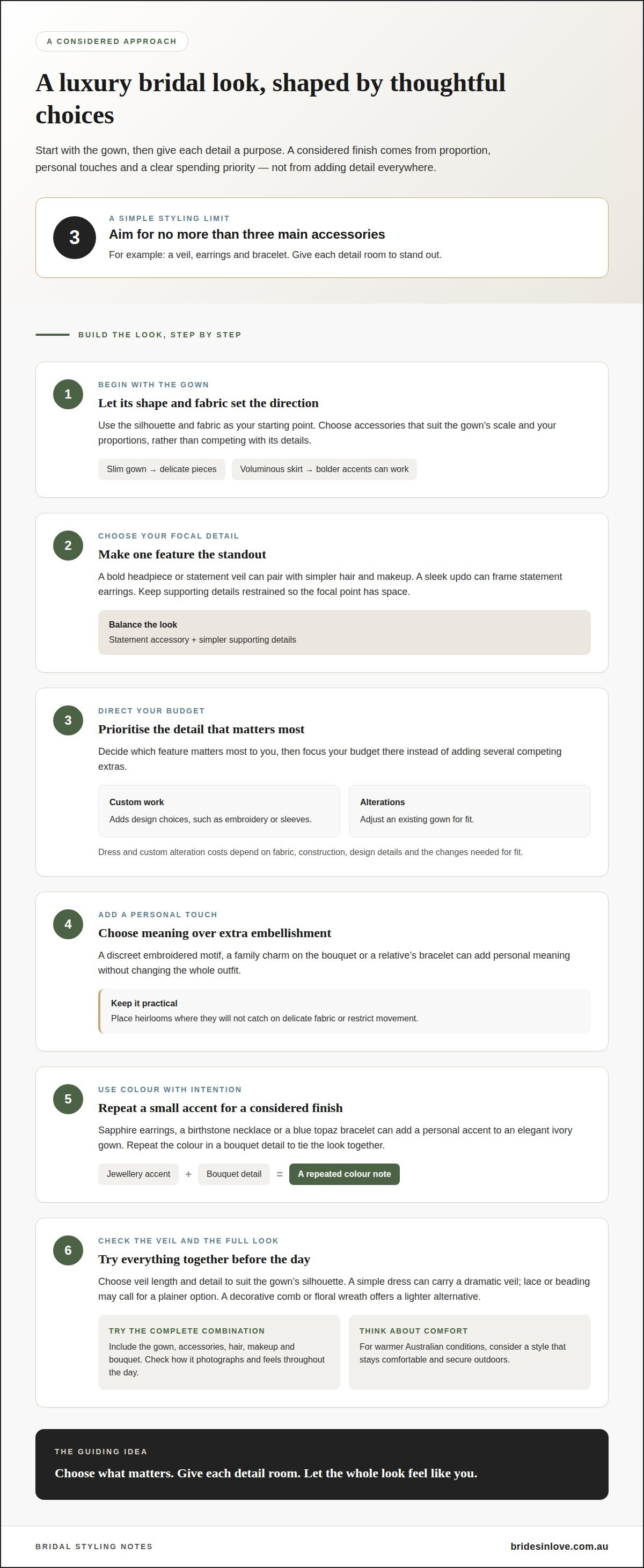
Yes. A luxury finish comes from considered choices, not detail everywhere. Start with the gown’s silhouette and fabric, then choose accessories that suit your proportions and the dress’s scale. Petite brides can favour delicate pieces with a slim gown, while a voluminous skirt can carry bolder earrings or a defined headpiece. Aim for no more than three main accessories, such as a veil, earrings and bracelet, so each detail has room to stand out.
In Australia, bridal dress and custom alteration costs depend on the gown’s fabric, construction, design details and the changes needed for fit. Custom work adds choices such as embroidery or sleeves, while alterations adjust an existing gown. Set priorities by deciding which feature matters most, then direct your budget towards it rather than adding several competing extras.
Personal touches can be meaningful without changing the whole outfit. Add a discreet embroidered motif, attach a family charm to your bouquet, or wear a relative’s bracelet. A small heirloom can bring a personal story to the ceremony; place it where it won’t catch on delicate fabric or restrict movement. If you don’t have an antique piece to pass down, curated collections from estate specialists like Heirloom Jewelers can introduce vintage character and lasting craftsmanship to your styling.
Balance a statement veil or necklace with simpler hair and makeup. A bold headpiece, for example, can pair with soft makeup and a clean hairstyle, while a sleek updo can frame statement earrings. Trial the full look in advance, including hair and makeup, to see how it photographs and feels throughout the day. For warmer Australian conditions, consider a style that stays comfortable and secure outdoors.
Colour offers another way to make your look distinctive. Sapphire earrings, a birthstone necklace or a blue topaz bracelet can add a personal accent to an elegant ivory gown. Repeat the colour in a bouquet detail for a deliberate finish. Choose a veil length and detail to suit the gown’s silhouette: a simple dress can carry a dramatic veil, while lace or beading may call for a plainer option. A decorative comb or floral wreath offers a lighter alternative.
4. Creating a cohesive look with help from a bridal stylist
A bridal stylist can turn your preferences into a clear direction for your wedding look. Start by naming what matters most: ease of movement, a particular design detail, or a balance between tradition and contemporary style. A stylist can use those priorities to shape a shortlist, rather than letting every new inspiration pull the look in a different direction. This makes planning how to create a unique bridal look more focused and personal.
Bring visual references showing details you like, then talk through what appeals to you in each one. A particular sleeve, fabric finish or overall mood may be more useful than trying to recreate a whole photograph. A stylist can help identify essential features and optional extras, and consider how the choices work together. This gives you a clear way to weigh new ideas without losing sight of your original vision.
Styling advice can help maintain continuity as the day moves from ceremony to reception. A stylist can consider which elements should stay consistent and where a small change might suit a new part of the celebration. They can also help you assess the overall effect in person, rather than judging each piece separately. The aim is a considered result that still feels like you, not a look dictated by trends.
Use the appointment to talk through your preferences, practical priorities and any details you’re unsure about. A bridal stylist can help you decide how to create a unique bridal look while keeping your choices coherent and wearable. In Wetherill Park, bridal stylists bring over a decade of experience to these conversations. If you’re ready to develop your ideas with guidance, book a bridal styling appointment and start shaping a look that reflects your vision.
Brides in Love
Brides in Love can help you bring your wedding vision into focus by exploring gown styles and the details that complement them. If you’re weighing different silhouettes, embellishments or levels of formality, a stylist can help you consider how each choice fits your venue and personal style. The collection includes Zavana Bridal Gowns, White April Gowns, Wedding Societe Gowns and Cizzy Bridal Gowns, offering distinct directions for your look. Use your preferred accessories, bouquet colours and wedding setting as a starting point for a more considered selection. When you’re ready to explore bridal styles with guidance, contact Brides in Love to discuss your wedding look.
Shape the finishing touches around you
Before your next fitting, choose one feeling you want your wedding look to express: romantic, modern, understated or bold. Use that idea to guide your final decisions, from the detail you want guests to notice first to the elements that should stay in the background. A clear direction makes it easier to avoid making every choice match.
Creating a unique bridal look is about making deliberate choices that feel personal and comfortable. Explore Sima Couture Gowns, Zavana Bridal Gowns and White April Gowns at Brides in Love as you refine your vision. A stylist can help you consider how each gown supports the mood and details you have in mind.
Take the next step when you’re ready to turn your ideas into a considered bridal look. Arrange an appointment with Brides in Love and begin shaping a style that feels distinctly yours. Your wedding look can be elegant, personal and true to you.
Frequently Asked Questions
Can You Have A Luxury Bridal Look On A Budget?
Yes, a luxury bridal look can feel polished without spending on detail at every turn. Decide which part matters most, such as the gown’s fit or one distinctive finishing touch, then keep the other choices restrained. Before buying anything new, consider whether accessories you already own could complement the outfit. A clear priority makes spending intentional while preserving a refined overall effect.
Want more bridal inspiration and tips?
For bridal inspiration, collect images showing specific details you like rather than saving complete looks to copy. Notice features such as sleeve shape, neckline or fabric finish, then bring those references to a styling appointment. A bridal stylist can help translate the ideas into choices that suit your preferences and Sydney wedding plans, rather than recreating someone else’s outfit.
How can a bride create a unique wedding-day look that reflects her personal style?
Choose a detail with personal meaning and make it the signature of your wedding-day look. It could be a colour linked to a place you love, a motif repeated in your ceremony details, or a subtle feature that contrasts with a traditional gown. Keep the rest of your styling aligned with that choice, so the result feels individual rather than assembled from unrelated trends.
How should a bride coordinate her look with the wedding venue, season, and dress code?
Use the dress code to set the level of formality, then adapt fabric and accessories to the venue and season. A formal evening reception may suit a more structured finish, while an outdoor summer ceremony calls for ease of movement and lighter-feeling styling. Consider the full schedule, too: a look worn for a garden ceremony and indoor reception needs to work in both settings.
What practical risks should brides consider, such as comfort, heat, movement, and dress damage?
Test the outfit with the movements planned for the day: walking, sitting, climbing steps and dancing. Check that straps stay in place, shoes feel stable and the hem clears the ground. For an outdoor Sydney celebration, consider the heat and whether extra layers might become uncomfortable. Keep delicate fabric clear of rough surfaces, food and drink, and plan how the train will be managed during the reception.


