
Could two gowns that look equally polished online feel entirely different once you try them on? The difference between silk mikado and satin isn’t simply a choice between two kinds of silk. Mikado describes a crisp, structured fabric that’s often a silk blend, while satin refers to a weave that creates a smooth, lustrous surface and may be made from silk or synthetic fibres. Similar-sounding labels can describe different things, and a photograph can’t show how a skirt holds its shape, catches the light or moves as you walk.
Choosing between them comes down to more than sheen. Consider the gown’s structure, how fluidly the fabric drapes and how it feels against your skin. This guide explains those differences in practical terms, so you can picture each fabric beyond the screen and ask informed questions at a Sydney bridal appointment. At Brides in Love’s Wetherill Park boutique, a personalised one-on-one consultation gives you the chance to compare gowns in person and ask about a specific dress’s fibre composition and care guidance.
Key Takeaways
- The difference between silk mikado and satin starts with the terms: Mikado describes a structured fabric, while satin describes a weave and its smooth surface.
- Check fibre composition rather than assuming silk Mikado is always pure silk or that satin is made from one particular fibre.
- Compare each gown’s sheen, structure, drape and movement to find the balance of definition or fluidity you prefer.
- During a fitting, view the fabric in different light and notice how it looks and moves while you stand and walk.
- Ask a Sydney stylist about the gown’s composition and care guidance, then assess its feel and finish in person.
Silk Mikado vs satin: what do the fabric names actually mean?
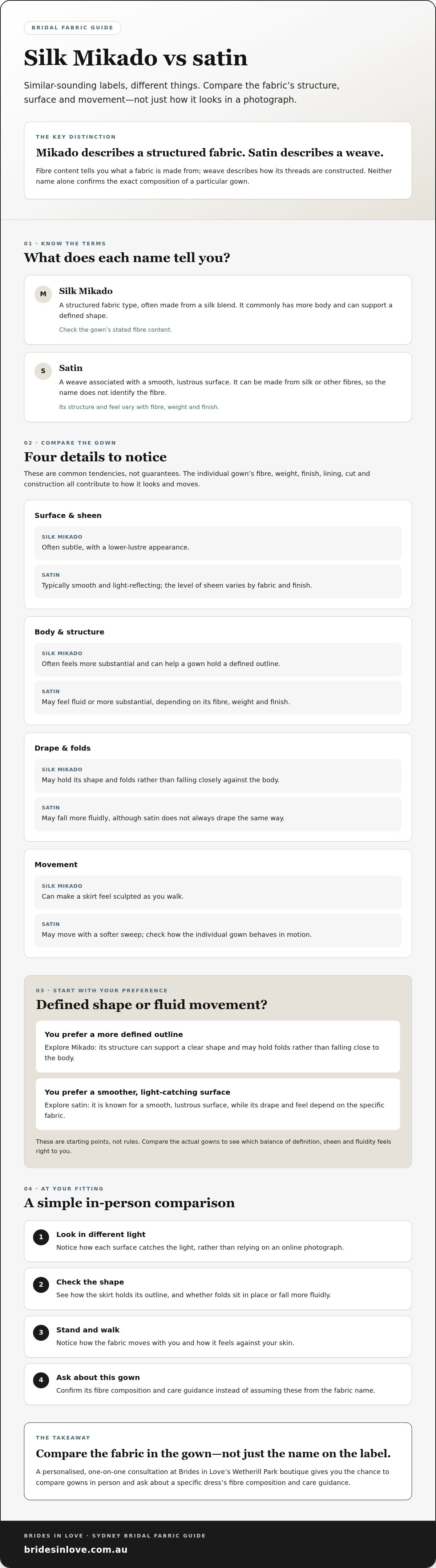
Mikado describes a structured fabric; satin refers to a weave associated with a smooth, light-reflecting surface. That distinction helps make sense of the difference between silk mikado and satin: one term points to a fabric type and its body, while the other describes how threads are woven to create a particular surface.
| Feature | Silk Mikado | Satin |
|---|---|---|
| Composition | Often a silk blend; confirm the gown’s stated fibre content. | Can use silk or other fibres; the name alone doesn’t identify the fibre. |
| Structure | Usually has more body and can support a defined shape. | Depends on fibre, weight and finish; satin describes the weave, not a fixed level of structure. |
| Surface | Often has a subtle, low-lustre appearance. | Known for a smooth surface that reflects light. |
| Typical visual impression | Defined and architectural. | Smooth and lustrous, with the overall effect varying by fabric. |
Is silk Mikado the same as satin?
No. They aren’t interchangeable terms, even though a fabric description can include both a fibre and a construction. “Silk” identifies a fibre, while “Mikado” describes a structured fabric type. Satin identifies a weave that can be made using different fibres. Check the gown’s stated composition rather than assuming the name tells you exactly what it contains. When comparing two dresses, ask for the composition of each one so you’re comparing like with like.
What does satin mean in a wedding dress?
Satin is a weave associated with a smooth surface and lustrous finish. A satin wedding dress isn’t necessarily made from silk: satin can use different fibres, and its appearance and feel vary with fibre, weight and finish. For a technical explanation of satin weave, see Wikipedia. For your gown, ask the boutique about its specific composition and finish rather than relying on a general fabric label.
How silk Mikado and satin differ in structure, sheen and feel
A gown’s fabric influences its outline, how it catches the light and how it moves as you walk. Silk Mikado is commonly chosen for its body and ability to support a defined shape. Satin is recognised for its smooth, light-catching surface, but its drape and feel can vary between fabrics. The difference between silk mikado and satin is clearest when you assess the actual gown, not just its label.
Fibre, construction and finish work together to shape how a gown looks and feels. The George Washington University Museum’s Textile Terms resource can help clarify textile vocabulary, but a fitting offers the most useful view of how a particular fabric behaves. As you compare, look at the whole dress as well as the fabric: its lining, cut and construction also contribute to how it sits and moves.
| What to compare | Silk Mikado | Satin |
|---|---|---|
| Surface | Often has a more subtle, low-lustre appearance. | Typically smooth and reflective, with the level of sheen varying by fabric and finish. |
| Body | Often feels more substantial and can help a gown hold a defined outline. | Can feel fluid or more substantial, depending on its fibre, weight and finish. |
| Drape | May hold folds and shape rather than falling closely against the body. | May fall more fluidly, though satin doesn’t always behave the same way. |
| Movement | Can make a skirt feel sculpted as you walk. | May move with a softer sweep; check the individual gown in motion. |
Which fabric looks more structured on a gown?
Mikado is generally the more structured option, so it can support a defined bodice or a skirt with a clear outline. For example, it may suit the architectural effect of a full skirt or crisp pleats. These are possibilities, not guarantees: pattern, lining and construction also shape the result. Look at how the dress sits on your body, then walk and turn to see whether the structure feels comfortable and balanced. If you’re comparing gowns, notice whether the shape stays defined when you move, rather than judging it only while standing still.
How do sheen and drape change the look?
Satin’s smooth surface can reflect light across the gown, while Mikado often reads as more restrained in its lustre. Drape describes how cloth falls and moves; it isn’t determined by fibre alone. View the gown in natural and indoor lighting if possible, both close up and from a few steps away. Notice whether the sheen looks even from different angles and whether the fabric falls the way you prefer. In a one-on-one appointment, a stylist can help you compare the fabric’s appearance and movement on the actual dress. Arrange a Sydney bridal appointment to assess those details in person.
Silk Mikado or satin: which suits your gown preferences?
There’s no universal winner. The right choice depends on the look you want, how you’d like the gown to move and the setting for your wedding. The difference between silk mikado and satin can help narrow your preferences, but a fabric name alone can’t tell you whether a particular dress will suit your style, feel right on your body or meet your expectations.
Think about the whole occasion as well as the fitting-room view. A structured silhouette may feel at home in a formal venue, while a more fluid effect might better match your vision for a relaxed celebration. These are style considerations, not rules about which fabric belongs at a particular venue or in a particular season. For a warm-weather or coastal wedding, assess how the actual gown feels and moves rather than assuming its fabric name predicts comfort. Try sitting as well as walking if those movements matter to your plans, and consider how the fabric feels when it rests against your skin.
When might a bride prefer Mikado?
If you’re drawn to a more defined outline, try gowns in Mikado and see whether you like the sculptural effect. Notice how the skirt or bodice holds its shape as you stand, turn and walk. Mikado fabrics can differ in weight, fibre content and finish, so one gown won’t necessarily feel or look like another. Ask what the specific dress is made from, and compare its shape with the silhouette you have in mind.
When might a bride prefer satin?
If a smooth, reflective surface appeals to you, view satin gowns in person. Look at the sheen from different angles and notice whether the skirt follows your movement in a way you enjoy. Satin can be made from different fibres, so check the composition of each gown rather than relying on the label to predict its feel or appearance. If you prefer less shine, ask to see how the particular dress looks in different lighting before ruling it out based on the word “satin”.
Let your preferences guide the comparison:
- Shape: Do you prefer a gown with a more sculpted outline, or one that falls closer to your body?
- Light: Do you want a restrained finish or a surface that catches the light?
- Movement: How does the skirt feel as you walk, turn and sit?
- Setting: Does the fabric’s look suit the atmosphere you’re planning, without relying on assumptions about season or venue?
A higher-sounding fabric name doesn’t automatically mean better quality, a particular fibre or a better match for your gown. Construction, finish and the quality of the individual garment all matter. At a Sydney bridal appointment, compare the actual dresses and ask about their composition and care guidance. Brides in Love offers personalised one-on-one consultations to help you assess how each gown looks and moves in person.
How to compare silk Mikado and satin during a gown fitting
Photos can suggest a fabric’s finish, but they can’t show exactly how it feels or moves on your body. A fitting lets you compare gowns under real lighting and in motion, rather than judging by the label alone. Use the same checks for each dress so your impressions are easier to compare. If you can, try to view each gown in similar lighting and take a moment between dresses to note what stood out.
What should you look at and feel during a fitting?
Try to assess each gown in a similar way. A short, repeatable check can make the difference between silk mikado and satin clearer:
- Look from different angles. Notice how the surface catches light as you face forward, turn and move closer to the mirror. If possible, view the gown in both natural and indoor lighting.
- Check the outline. Stand naturally and see how the bodice and skirt sit on your body. Does the dress hold a defined shape, or fall in a way that feels softer and more fluid?
- Walk and turn. Pay attention to how the skirt moves, settles and feels as you take a few steps. Photographs can’t capture this movement.
- Notice the feel. Consider how the fabric feels against your skin and whether you feel at ease wearing it. Let your preference guide you, rather than relying on assumptions about a fabric name.
What should you ask about fabric composition?
Ask the stylist which fibres are present and whether the fabric description refers to its composition, construction, finish or a combination. Satin, for example, describes a weave, while a fibre name identifies what the material is made from. Request the composition for the specific gown instead of inferring it from a general label. If you’re comparing two dresses, ask the same questions about both so you can make a useful comparison.
Also ask for the care guidance for that dress. It can vary with the gown’s materials and finish, so don’t assume a fabric name provides all the information you need. When considering a designer gown, always confirm the composition and care details directly with your boutique.
Brides in Love offers personalised one-on-one consultations in Wetherill Park, Sydney, where you can compare fabric appearance, movement and feel on the actual gown. Book a Sydney bridal appointment to discuss your preferences and ask about the details of the dresses you’re considering.
Compare bridal fabrics with a Sydney stylist before choosing
Fabric descriptions and photographs can narrow your options, but they can’t fully show how a particular gown feels, catches the light or moves on your body. Before deciding, assess the actual dress, ask about its fibre composition and care guidance, and notice whether its finish and silhouette match what you want. Taking a few notes after trying on each gown can also help you remember which details you preferred.
Why is an in-person fabric comparison useful?
Two gowns labelled with the same fabric name may still look and feel different. Fibre content, construction, finish and gown design all contribute to the result. Seeing dresses in person lets you compare the surface from different angles, notice how the skirt falls as you walk, and consider how the silhouette feels on you. It’s a more reliable way to judge the difference between silk mikado and satin than relying on online images alone.
At Brides in Love in Wetherill Park, Sydney, a personalised one-on-one appointment gives you the chance to discuss a specific gown’s composition and finish with a stylist. The boutique’s collection includes designer labels such as Sima Couture, Zavana Bridal, White April, Wedding Societe and Cizzy Bridal. Ask about the details of any gown you’re considering rather than assuming a particular fabric is available.
How can you prepare for a bridal appointment?
- Save images of silhouettes, fabric finishes and skirt movement that appeal to you.
- Ask which fibres are present and whether the fabric description refers to its weave, finish or both.
- Ask how the gown holds its shape and moves as you walk or turn.
- Request care guidance for the specific dress, not just the fabric name.
You don’t need to have every detail settled before visiting. A stylist can help you compare the actual gowns and focus on what matters most to you, whether that’s structure, sheen, movement or feel.
Book a personalised bridal appointment at Brides in Love in Wetherill Park, Sydney, to compare gown fabrics and find the finish that feels right for you.
Choose your gown by how it looks and feels
The difference between silk mikado and satin comes down to more than a fabric name. Mikado is associated with structure, while satin describes a weave and its smooth, light-catching surface. Fibre content, finish and gown construction also shape the final look, so check the details of the dress you’re considering.
Use an in-person fitting to compare how each gown catches the light, holds its silhouette and moves as you walk. Brides in Love offers personalised bridal consultations in Wetherill Park, Sydney, and carries designer gowns including Sima Couture. Ask about the composition and care guidance for each specific gown.
To compare fabrics in person and discuss what matters to you, book a personalised bridal appointment with Brides in Love.
Frequently Asked Questions
Is Mikado always made from silk?
No. Mikado isn’t always made entirely from silk. The name describes a structured fabric, and a gown labelled “silk Mikado” may contain a silk blend rather than pure silk. Composition can vary between dresses, so don’t rely on the fabric name to identify every fibre. Ask the boutique for the specific gown’s composition, and check its care guidance before making your choice.
Which is more structured, silk Mikado or satin?
Silk Mikado is generally the more structured option and can support a gown with a defined outline. Satin can also have body, depending on its fibre, weight, finish and how the dress is made, so the name alone won’t tell you how it will sit. Try the specific gown on, then see how its silhouette holds as you stand, turn and walk.
Does satin always have a shiny finish?
Satin is associated with a smooth surface that reflects light, but it doesn’t always look highly glossy. Its appearance can vary with fibre, weight and finish, and the light in a room can affect how much sheen you notice. View the gown from different angles and, if possible, in more than one type of lighting. A fitting gives you a better sense of its finish than a photograph.
How can I tell what fabric a wedding dress is made from?
Ask the boutique for the gown’s stated fibre composition, fabric construction and care guidance. A label or verbal description may name a fabric without spelling out its exact fibre content or finish. Touching the dress and watching how it falls can help you understand its feel and appearance, but those impressions don’t confirm its composition. Check details for the specific gown rather than inferring them from its look.
Can I compare silk Mikado and satin wedding dresses in Sydney?
Yes. Brides in Love is a bridal boutique in Wetherill Park, Sydney, where you can compare the appearance, movement and feel of gowns in a personalised one-on-one consultation. Ask about the composition and care guidance of each dress you try. Book an appointment to discuss your preferences with a stylist.


