
A glass tips, a heel catches the hem, or your train brushes the ground between photographs. These small moments can feel daunting when you’re protecting your gown on the wedding day, but preparation can reduce the risk of stains, snags and avoidable stress. If you’re planning a Sydney wedding, consider the surfaces and distances your gown will encounter, from getting ready to the ceremony and reception.
It’s natural to want your dress to look immaculate from the first photographs to the last dance, especially when delicate fabric, beadwork or a long train needs extra care. Plan around how your gown will move and where the day will take you. If something goes wrong, a calm, gentle response is usually more useful than an untested quick fix.
This guide covers practical steps for getting ready, travelling between locations and managing your train throughout the celebration. You’ll also find cautious guidance for spills, snags and dirty hems, plus suggestions for preparing a trusted helper. With a plan suited to your gown and Sydney wedding schedule, you can focus on enjoying the day.
Key Takeaways
- Protecting your gown on the wedding day starts with a plan suited to your dress and the places your celebration will take you.
- Review your gown’s care instructions and plan for getting ready, transport and the ceremony.
- Consider how indoor floors, garden paths, coastal settings and mixed-location schedules may affect the hem and train.
- If a spill or snag happens, stay calm and follow your gown’s fabric-specific care guidance.
- Prepare a small support kit and share a clear gown-care plan with someone you trust.
Why protecting your gown on the wedding day starts before you get dressed
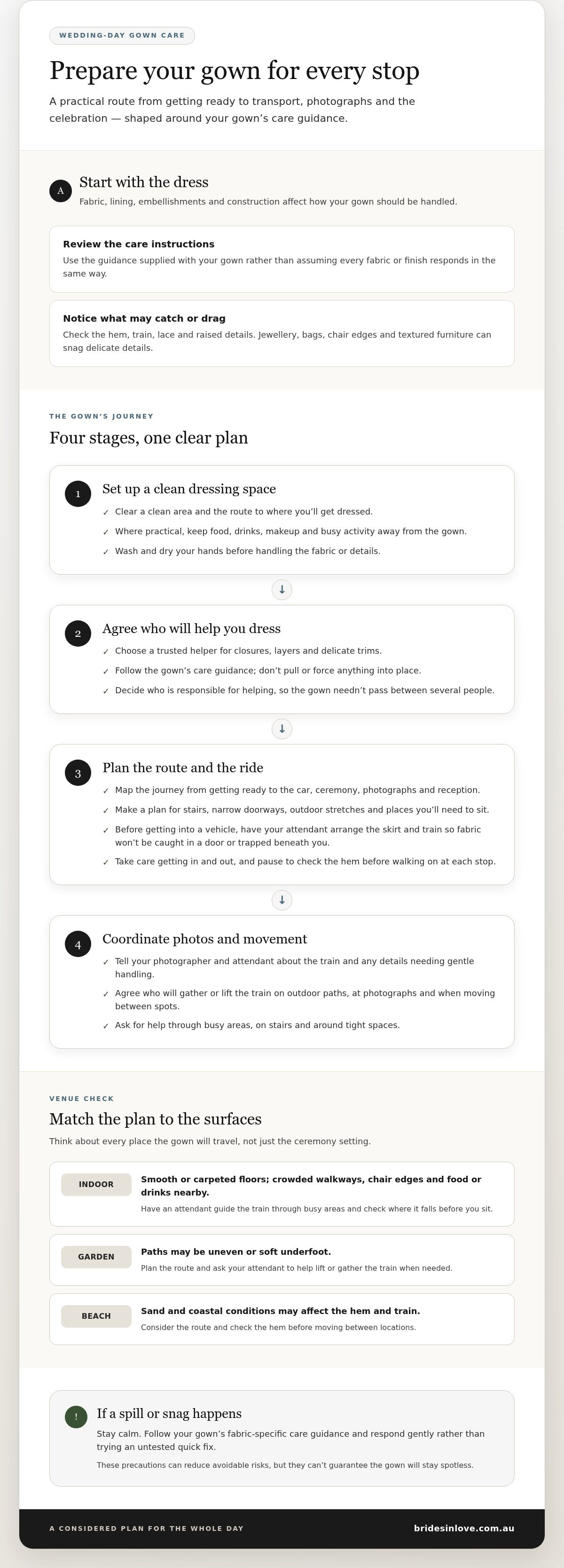
Your gown may move through several settings during the day: the getting-ready space, transport, the ceremony, photographs and the reception. Each transition brings different considerations. A long train may need help on stairs or outdoor paths, while lace or beadwork can catch on jewellery, bags, chair edges and textured furniture.
Wedding-day gown protection means reducing avoidable risks while still enjoying wearing your dress. It isn’t about keeping the gown untouched at all costs. A wedding dress can hold personal and cultural significance, as explored in this overview of the wedding dress. Sensible preparation can help you feel more confident without taking you out of the celebration.
Which parts of a wedding gown need the most attention?
Start with the hem and train. They may brush floors or paths as you walk, spread out for photographs, or trail behind you on the dance floor. Beading, lace and other raised details can snag on a handbag, jewellery, chair edges or textured furniture. Precautions depend on your gown’s construction, fabric and finish, so follow its care guidance instead of assuming every dress responds in the same way.
Consider how the whole gown moves. A light, flowing skirt behaves differently from a structured design, and embellishments may need more careful handling. Before the wedding, identify details that could catch or drag. Tell the person helping you dress and move around so they know where to take extra care.
How do the venue and schedule change your preparation?
Venue surfaces and transitions matter. Indoor floors may be smooth or carpeted; garden paths can be uneven or soft underfoot; beach settings bring sand and coastal conditions into the picture. A Sydney wedding with both indoor and outdoor locations may expose the hem to several surfaces in quick succession. Plan for the route your gown will travel, not just the ceremony setting.
Map the route from getting dressed to the car, ceremony, photographs and reception. Note stairs, narrow doorways, outdoor stretches and moments when you’ll need to sit or move quickly. Ask a trusted attendant to help lift or gather the train when needed, and agree who will assist during photographs and dancing. A little coordination can make the gown easier to manage while leaving you free to enjoy each part of the day.
How to prepare your gown for getting ready, transport, and the ceremony
There isn’t one preparation routine that suits every gown. Fabric, lining, embellishments and construction all affect how a dress should be handled. Start by reviewing the care instructions supplied with your gown, then shape the day’s plan around your route, venue and the people helping you.
Good gown preparation matches the dress to its journey, rather than relying on a one-size-fits-all checklist. That’s the foundation of protecting your gown on the wedding day, from the dressing room to the ceremony and photographs.
What should you do before putting your gown on?
Set up a clear, clean area before dressing begins. Where practical, keep food, drinks, makeup and busy activity away from the gown to reduce the chance of accidental marks or snags. Prepare a clean surface for the dress and accessories, and clear clutter from the route between that space and the dressing area.
Wash and dry your hands before handling the fabric or details. Ask a trusted person to help with closures, layers and delicate trims, following the gown’s care guidance rather than pulling or forcing anything into place. Decide who will help with each step so the gown doesn’t need to be passed between several people.
How can you protect your gown during transport and photos?
Before getting into a vehicle, decide how the skirt and train will be arranged. Have your attendant gather and position the fabric so it won’t be caught in a door or trapped beneath you. Take extra care getting in and out, and arrange help for stairs, narrow doorways and other tight spaces. At each stop, pause to check the hem before walking on.
If your journey includes air travel, this guide to traveling with your gown offers additional transport considerations. For travel around Sydney, the same principle applies: plan how the gown will be handled before the journey starts, and follow its specific care instructions.
For outdoor portraits, tell your photographer and attendant about the train and any details that need gentle handling. They can coordinate where the gown is placed and help gather it before you move between photo spots. If you’re still considering gown details for your venue and schedule, a personalised bridal appointment can help you plan your overall look.
Wedding-day gown protection for indoor, garden, and beach settings
Your venue shapes how the gown moves and what it may brush against. A plan for protecting your gown on the wedding day should account for the surfaces, transitions and activities you’ll encounter, while allowing for changes in conditions. These precautions can reduce avoidable risks, but they can’t guarantee the dress will stay spotless.
The venue, weather and way you move through the day all shape a practical gown-care plan. Use this comparison as a starting point, then adapt it to your gown’s silhouette, fabric and details.
| Setting | Likely gown-care concern | Sensible precaution |
|---|---|---|
| Indoor venue | Crowded walkways, chair edges, and proximity to food or drinks. | Ask an attendant to help guide the train through busy areas and check where it falls before you sit. |
| Garden or outdoor ceremony | Grass, uneven paths and damp ground may come into contact with the hem. | Choose a clear route where possible, move at a steady pace and arrange help when walking or posing. |
| Coastal or beach setting | Sand, wind and the distance between ceremony and reception spaces can affect the skirt and train. | Plan how you’ll move between locations and have someone help gather the train when crossing sandy areas. |
| Mixed indoor-outdoor schedule | Repeated transitions expose the gown to different surfaces and busy spaces. | Identify each change of setting in advance and decide who’ll assist with the gown at each point. |
What should you consider for gardens and outdoor ceremonies?
Grass and uneven paths can make a long hem harder to manage, while damp ground may leave it more vulnerable to marks. Walk with your attendant’s help rather than pulling the skirt by its delicate details. For photographs, agree where you’ll stand and how the train will be arranged. Keep a clean place available for the gown when you sit or need to adjust its layers.
How can coastal and indoor celebrations call for different precautions?
At the beach, consider how far you’ll walk between the ceremony, portrait locations and reception, as well as how wind may affect a flowing skirt or veil. Indoors, narrow walkways, chair edges and nearby food or drink areas call for a different kind of awareness. A fitted silhouette, full skirt and embellished gown each move differently, so base your plan on your dress rather than relying on one rule for every setting.
What to do about spills, snags, and a dirty hem on the day
Pause, take a breath and prevent the problem from getting worse. Your gown’s fabric-specific care instructions take priority over general advice, particularly if it has delicate lace, beading or layered details. Don’t improvise a stain treatment on a wedding gown; gentle restraint can be safer than an untested fix.
What is a cautious first response to a fresh spill?
Move away from the food or drink source, then check that the spill hasn’t transferred to another part of the gown. If the care instructions allow it, gently blot the affected area with a clean cloth. Blotting may lift some surface moisture without the friction caused by rubbing. Stop if the mark spreads, the fabric changes appearance or you’re unsure how it will respond.
Avoid scrubbing or applying bleach, stain remover, heat or household products unless the gown’s care guidance specifically permits it. These treatments may affect delicate fibres, colour or embellishments, and the wrong response can make a small mark harder to manage. If you can’t establish a safe next step, leave the area alone and tell your attendant.
How should you handle a snag or a dirty hem?
Don’t pull at a snag or trim loose threads during the celebration. A tug can worsen the catch or disturb nearby details. Keep the hem from dragging as you move, and ask your attendant to help gather or guide the skirt through busy spaces. If the hem picks up dirt, resist wiping it with a napkin or another untested material.
Leave uncertain marks and damage untouched rather than attempting a quick repair. Note where the issue is and avoid handling that area more than necessary. The aim is to limit further contact, not to make a difficult stain disappear during the celebration, as thorough stain removal is best left to professional services like Newcastle Dry Cleaning after the event. A calm response helps protect delicate gown details from unnecessary friction or products, so you can return your attention to the day.
Gown fabric, silhouette and embellishments all affect how the dress moves and which precautions may suit it. If you’re planning your gown around your venue and wedding-day details, book a personalised bridal appointment to discuss your overall look with an expert stylist.
Your final gown-protection plan: pack thoughtfully and enjoy the day
A simple plan gives you and your support person clear roles, so small decisions don’t need to interrupt the celebration. Tailor these steps to your gown’s care instructions and the day’s locations. Protecting your gown on the wedding day means thoughtful handling, not expecting a small kit to remove every mark or repair every snag.
- Before dressing: Revisit your gown’s care guidance and prepare a clean, uncluttered space.
- Assign support: Choose one trusted person to help with the gown, train and movement between locations.
- Pack a small kit: Set aside a clean cloth or tissues for cautious blotting, if appropriate for your gown.
- Agree on the response: Remind your attendant not to rub a spill, pull a snag or apply products without gown-specific guidance.
- Enjoy the day: Let your support person help with the hem and train as you move, sit and pose.
What belongs in a simple wedding-day gown-care kit?
Keep the kit modest. A clean cloth or clean tissues may be useful for gently blotting a fresh spill, but only if your gown’s care instructions allow it. Store these items separately from food, drinks, cosmetics and anything else that could mark the fabric. The kit is there to support a cautious first response, not to promise stain removal or on-the-spot repairs. If a mark or snag is uncertain, leave it alone rather than testing a product during the celebration.
How can a bridal appointment support a confident gown plan?
A personalised consultation can help you consider gown details and accessories alongside your venue and plans for the day. Thinking about silhouette, embellishments and setting together can help you prepare for movement and train management. After the celebration, storage is a separate consideration; a gown storage bag may be useful as part of your plans for caring for the dress.
With a clear plan and a trusted attendant by your side, you can focus on the moments that matter. If you’re choosing a gown or refining your overall look, you’re welcome to book a personalised bridal appointment to discuss the setting and details of your celebration.
Plan with care, then enjoy every moment
Protecting your gown on the wedding day starts with a plan suited to your dress, venue and schedule. Review your gown’s care guidance, prepare a clean space for getting dressed, and arrange for a trusted person to help with the train as you move between locations. If a spill or snag happens, stay calm and avoid untested treatments that could affect the fabric or delicate details.
Thoughtful preparation helps reduce avoidable risks without taking your attention away from the celebration. The right gown and accessories can also complement the practical needs of your day, whether you’re planning an indoor reception, garden ceremony or coastal wedding.
At Brides in Love’s Wetherill Park showroom, Sydney brides can explore luxury designer gowns and bridal accessories with personalised one-on-one guidance. Book a personalised bridal appointment to discuss your gown and the setting for your celebration. With a considered plan and support by your side, you can step into the day feeling confident and ready to enjoy it.
Frequently Asked Questions
Can I remove a wedding dress stain myself?
Avoid improvised stain removers, rubbing or heat on a wedding gown, because fabrics and finishes respond differently. First, protect nearby layers from further contact, then check the gown’s care instructions. If they allow it, gently blot with a clean cloth. If you’re unsure, stop rather than testing a household product. A cautious response is less likely to spread a mark or disturb delicate details than a rushed treatment.
How do I keep my wedding dress hem clean outdoors?
Check the route and ground conditions, arrange help with your train, and avoid dragging the hem. Grass, sand and damp surfaces call for different precautions, and none can guarantee a spotless dress. If you’re planning a Sydney garden or coastal celebration, map the transitions between the ceremony, photographs and reception before the day. Ask a trusted attendant to help gather the train when you move between locations or pose outdoors.
What should I do if I spill something on my wedding gown?
Move away from the spill source and prevent the affected area from touching other gown layers. Check the care instructions before doing anything further. If they permit it, gently blot the spill with a clean cloth rather than rubbing. Don’t apply household products or heat without gown-specific guidance. If you’re uncertain about the fabric or the mark, stop before trying a DIY treatment that could spread it or affect delicate details.
Can rain damage a wedding dress?
Moisture may affect a gown differently depending on its fabric and construction, so there isn’t one rule for every dress. Check the forecast and plan sheltered transitions where practical, with someone ready to help keep the hem from dragging. If the gown becomes damp, follow its care instructions. Avoid applying heat or placing wet fabric against coloured materials, which could transfer colour or affect delicate details.
How can I protect a long train during the reception?
Ask a trusted attendant to help manage the train as you walk, sit and move through busy spaces. Before the reception, agree where it can rest safely during breaks and how it will be arranged for photographs. These small plans can make moving around easier, but they can’t keep a train pristine through every part of the celebration. Focus on sensible handling, then enjoy the dance floor and the company around you.
What should I pack in a wedding dress emergency kit?
Pack a clean cloth or tissues for cautious blotting, if your gown’s care instructions allow it, along with practical items you already know you’ll need. Keep the kit separate from cosmetics, food and drinks to avoid accidental marks. It’s intended for simple first responses, not stain removal or repairs. Your gown’s specific care guidance should always take priority, especially if a spill or snag involves delicate fabric or embellishments.
How do I protect delicate details such as lace or beading?
Handle lace and beading carefully while dressing and moving, and keep the gown clear of rough surfaces, jewellery and crowded areas where details could catch. Ask a trusted person to help with closures and layers rather than pulling at the fabric yourself. If a thread or embellishment comes loose, don’t tug or trim it during the celebration. Follow the care guidance supplied with your gown, as construction and materials vary.


