
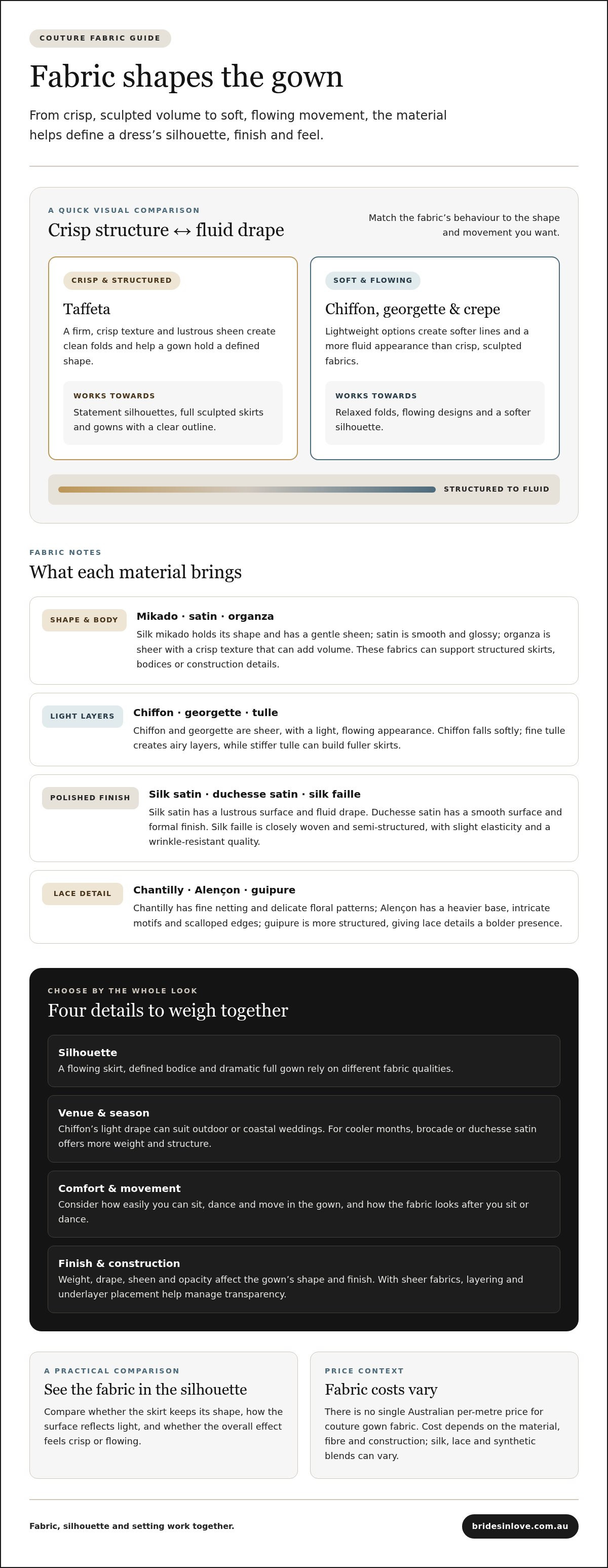
A gown’s silhouette begins with its fabric. The fabrics used in couture wedding gowns shape how a design falls, holds volume and moves: taffeta creates a crisp, structured effect, while lightweight chiffon, georgette and crepe offer softer, more fluid lines. Fabric choice also affects how the gown feels and how it suits your wedding setting.
It’s natural to focus first on the silhouette you love, but the material beneath that shape matters just as much. A flowing skirt, defined bodice and dramatic full gown each rely on different fabric qualities to create their look.
This guide explains why fabric matters and how taffeta compares with lighter options, helping you understand what may suit your preferred silhouette, wedding style and setting. You’ll also see how fabric influences movement and volume, from airy, flowing designs to gowns with a sculptural finish.
Key Takeaways
- Match fabric to the silhouette you want: crisp materials can hold sculptural volume, while fluid fabrics create softer movement.
- For an outdoor or coastal wedding, consider chiffon’s light drape and airy feel.
- Compare taffeta’s crisp texture with lightweight options to see which finish and shape suit your gown vision.
- Factor in your venue and season when weighing a fabric’s structure, movement and overall feel.
Why Fabric Choice Matters in Wedding Dresses?
Fabric determines how a wedding dress falls, reflects light and feels in motion. Weight, drape, sheen and opacity shape its silhouette, from smooth, flowing skirts to layered designs with intricate detail.
These qualities also affect how a gown suits its setting. Chiffon’s light drape, for example, works well for outdoor weddings and flowing designs.
Weight, drape, sheen and opacity
Weight describes how substantial a fabric feels, while drape is the way it hangs; sheen describes its surface lustre, and opacity indicates how much it reveals. Together, these qualities help define a gown’s shape and finish. A light, sheer fabric can soften a skirt, while a lustrous surface draws attention to its folds. For a couture gown design, fabric and silhouette work together to create the overall effect.
Sheer fabric choices
Chiffon and georgette are sheer fabrics that give a gown a light, flowing appearance. Layering helps manage their transparency: a sheer outer layer can soften the look, while the fabric beneath provides coverage. This creates an airy effect without relying on an opaque fabric alone. The sheerness also becomes part of the design in details such as sleeves and overlays.
Chiffon’s light flowing drape
Chiffon is a lightweight, sheer fabric with a soft drape, often used in flowing bridal designs. It moves in relaxed folds rather than holding a crisp, sculpted outline. That quality can suit outdoor weddings, including coastal settings, where a softer silhouette complements the surroundings. Chiffon creates an elegant look without the visual weight of a more structured fabric.
Overlay and volume fabrics
Chiffon, tulle and organza can each create overlays and volume, but their effects differ. Chiffon falls softly; fine tulle creates airy layers, while stiffer tulle can build fuller skirts. Organza has a crisper texture, adding volume while remaining sheer. Designers use these fabrics over a gown or in layered skirts to add dimension. Choose according to whether you want a fluid, softly full or more defined finish.
Taffeta’s crisp texture and structured silhouettes
Taffeta has a crisp texture and lustrous sheen, helping a wedding gown hold a defined shape. Its firmness creates clean folds and volume, making it suited to a statement silhouette rather than a softly flowing design. The structured fabric gives the skirt presence, while its sheen catches light across the gown’s lines.
For ball gowns and A-line dresses, structured fabrics help maintain the outline from bodice to hem. Taffeta can support a full, sculpted skirt; satin and mikado are other options for gowns that need shape. Each gives a different finish: satin is smooth and glossy, while mikado has a subtle twill texture and gentle sheen.
Silk mikado suits structured ball gowns and fit-and-flare designs because it holds its shape. Its rich sheen adds polish without drawing attention away from the silhouette. Duchesse satin is another option for ball gowns and A-line styles, with a smooth surface and formal finish. Both fabrics can give a gown an architectural, composed look.
Structure matters in fitted designs, too. Satin, taffeta and organza can support a fitted bodice or intricate construction, while stretch crepe is used for sheath and fit-and-flare silhouettes. Consider how the fabric’s firmness, sheen and texture work with the design details. A close-fitting gown and a voluminous skirt call for different visual effects, even when both look polished.
To clarify your vision, compare how each fabric looks in the same silhouette. Notice whether the skirt keeps its shape, how the surface reflects light, and whether the overall effect feels crisp or flowing. These details can help narrow your fabric preference before choosing a dress. Book an appointment to explore gown silhouettes and see which structured finish feels right for your wedding.
Q: Which fabric is best for a luxury bridal gown?
No single material suits every bridal look. The right choice depends on silhouette, season, venue and comfort. Compare how the fabric behaves with the gown’s details and your plans for the day.
Silk satin has a lustrous surface and fluid drape, while silk mikado holds its structure with a gentle sheen. Silk faille is closely woven and semi-structured, with slight elasticity and a wrinkle-resistant quality.
For a warm-weather ceremony or coastal venue, lightweight chiffon, georgette or lace can feel airy. In cooler months, brocade or duchess satin offers more weight and structure. Consider the venue’s formality too: a crisp finish may suit an elegant indoor setting, while softer drapes can complement an outdoor celebration. Comfort also depends on how easily you can sit, dance and move in the gown.
There is no single Australian per-metre price for couture gown fabric. Cost depends on the material, fibre and construction, so silk, lace and synthetic blends can vary.
Common fabric considerations include delicate weaves catching on jewellery, creasing during wear and sheer layers revealing more than intended. With chiffon, for example, the underlayer and placement of overlays are part of the design. A fabric’s weight and finish also affect how it looks after you sit or dance.
Bespoke fabric and bridal look
For a bespoke gown, fabric is selected to support its intended shape, finish and design details. A romantic look might pair delicate lace with soft drapes, while a more defined silhouette may call for silk mikado. Consider how overlays, seams and movement work together, then weigh those details against the venue and how you want the gown to feel.
Lace types and differences
Couture gowns may use Chantilly, Alençon or guipure lace, each with a distinct appearance. Chantilly has fine netting and delicate floral patterns, making it lightweight; Alençon has a heavier base, intricate motifs and scalloped edges. Guipure is more structured, giving lace details a bolder presence. These differences affect how lace drapes, where it works best and the gown’s overall finish.
Lightweight fabrics for flowing bridal styles
Lightweight fabrics create movement without relying on a heavily structured silhouette. Silk crepe, georgette crepe, charmeuse and Chantilly lace each offer a different finish. Silk crepe has a matte surface and softly crinkled texture, while charmeuse satin has a subtle sheen. These qualities help shape whether a gown feels understated, fluid or softly luminous.
For a modern, flowing design, consider how the fabric behaves across the whole gown. Stretch crepe and georgette crepe balance style with breathability and can suit fitted shapes that need ease of movement. Silk crepe’s fluid drape works well for gowns with gentle folds. Charmeuse creates a smoother, slightly lustrous look without a crisp, structured effect.
Delicate lace adds detail while keeping the overall look light. Chantilly lace has fine netting and delicate floral patterns, making it a considered option for sleeves, bodices or carefully placed panels. As an overlay, its pattern remains visible while the material beneath provides coverage and shape. Placement matters: a lace bodice creates a different balance from lace running throughout a skirt.
Layering can add dimension while preserving a soft finish. Fine tulle creates a light, veil-like layer, while silk organza has a crisper feel and can give a skirt more definition. Combining either with a flowing base fabric contrasts softness with added shape. For example, a sheer organza layer can make a crepe gown look more dimensional than crepe alone.
Consider the fabric swatches beside one another, then compare their drape, texture and transparency. Book an appointment to explore bridal gown fabrics and find a finish that suits your style.
Brides in Love: Zavana Bridal Gowns
Brides in Love offers Zavana Bridal Gowns for brides ready to explore how fabric and silhouette work together. Seeing a gown in person helps you compare its movement, structure and finish with the look you want, whether that’s a flowing skirt or a more defined shape.
Alongside Zavana, Brides in Love offers White April, Wedding Societe and Cizzy Bridal Gowns. Exploring these collections can help you compare design details and styles as you refine your bridal vision.
When you’re ready to move from fabric research to viewing gowns and finding a silhouette that feels right, visit Brides in Love in Wetherill Park, Sydney. Contact the boutique or visit bridesinlove.com.au to take the next step.
Bring your gown vision into focus
Choosing the fabrics used in couture wedding gowns helps shape a look that feels personal, rather than simply following a trend. Consider your preferred silhouette, wedding setting and comfort together as you plan your next step. A clear vision helps you compare gowns with purpose and notice which details feel most like you.
Before your appointment, consider what you want the gown to express. Should the overall effect feel understated or dramatic? Which details matter most, and how do you want the design to move from ceremony to reception? These questions help you assess the whole look rather than focus on one fabric feature in isolation.
At Brides in Love, you can explore gowns and consider how their designs align with your vision. Book an appointment to explore bridal gowns and take the next step towards a look that feels distinctly yours. Your ideal gown starts with the choices that matter most to you.
Frequently Asked Questions
Can tulle be modern and not just traditional?
Yes. Among fabrics used in couture wedding gowns, tulle can feel modern when placed precisely. A single tulle panel can add transparency, while a clean neckline or simple seam lines keep the overall design restrained. Beading or sequins can shift the effect towards evening glamour. The key is how much detail the gown uses and where it appears.
What fabrics are most commonly used in couture wedding gowns?
Common choices include silk, satin, mikado, crepe, lace, tulle, organza, chiffon and georgette. Designers can combine fabrics to balance different effects within one gown. For example, a textured bodice and plain skirt create contrast without competing patterns. Looking at the fabric in each part of the dress helps you decide whether the details feel balanced.
What is the difference between silk organza, tulle, and chiffon for bridal gowns?
Silk organza is a crisp, sheer woven fabric; tulle is fine netting, available in softer or stiffer forms; chiffon is delicate and falls softly. Their different textures affect how a layer frames the body or catches light. An organza panel, for instance, can make a design feel more defined, while a chiffon panel creates a softer impression.
Which fabrics are best for structured bodices, draping, and voluminous skirts?
Mikado, satin or taffeta can support a structured bodice, while silk crepe and chiffon lend themselves to softer draping. Organza or layered tulle can add volume to a skirt. Consider the balance between bodice and hem: a defined upper shape with a fuller skirt creates a different effect from a gown that falls fluidly throughout.
Which wedding gown fabrics suit Australia’s climate and different seasons?
For Sydney brides, consider the fabrics used in couture wedding gowns alongside the season and venue. Lightweight chiffon, silk georgette or crepe may suit a warm outdoor celebration; brocade or duchess satin may suit cooler months. Picture the full day, including time indoors, outdoor photographs and dancing, as each setting affects how the gown feels to wear.


