
Did you know that invisible residue from champagne, sweat, or perfume can start yellowing a luxury gown in as little as six months? After investing in a masterpiece like a Sima Couture or Zavana bridal gown, the last thing you want is for Sydney's high humidity to invite mould or for a heavy train to stretch the delicate bodice out of shape. Learning exactly how to store your wedding dress is the only way to ensure your investment remains as breathtaking as the day you first stepped into it.
It's completely natural to feel overwhelmed by the conflicting advice regarding plastic bags versus breathable fabric. We agree that your gown is more than just fabric; it's a curated piece of your history that deserves expert care. This guide provides a professional masterclass on preserving luxury couture within the unique Australian climate. You'll gain a clear checklist for pre-wedding storage, learn the secrets to preventing permanent fabric decay, and discover why specialized storage bags are a non-negotiable for high-end labels.
Key Takeaways
- Discover the "Golden Rule" for pre-wedding storage, including why you must remove your gown from its original plastic delivery bag to prevent fabric suffocation.
- Master exactly how to store your wedding dress using pH-neutral, breathable materials that protect luxury fabrics from the yellowing effects of chemical decay.
- Understand the specific risks of the Australian climate, from Sydney’s humidity-driven mildew to the hidden dangers of storing couture in traditional wooden chests.
- Learn why professional cleaning is vital even for gowns that appear spotless, preventing "invisible" sugar and perspiration stains from surfacing as brown spots years later.
- Access expert advice from our Wetherill Park stylists on maintaining the structural integrity and prestige of high-end labels like Sima Couture and Zavana Bridal.
Storing Your Gown Before the Big Day: The Pre-Wedding Safe Haven
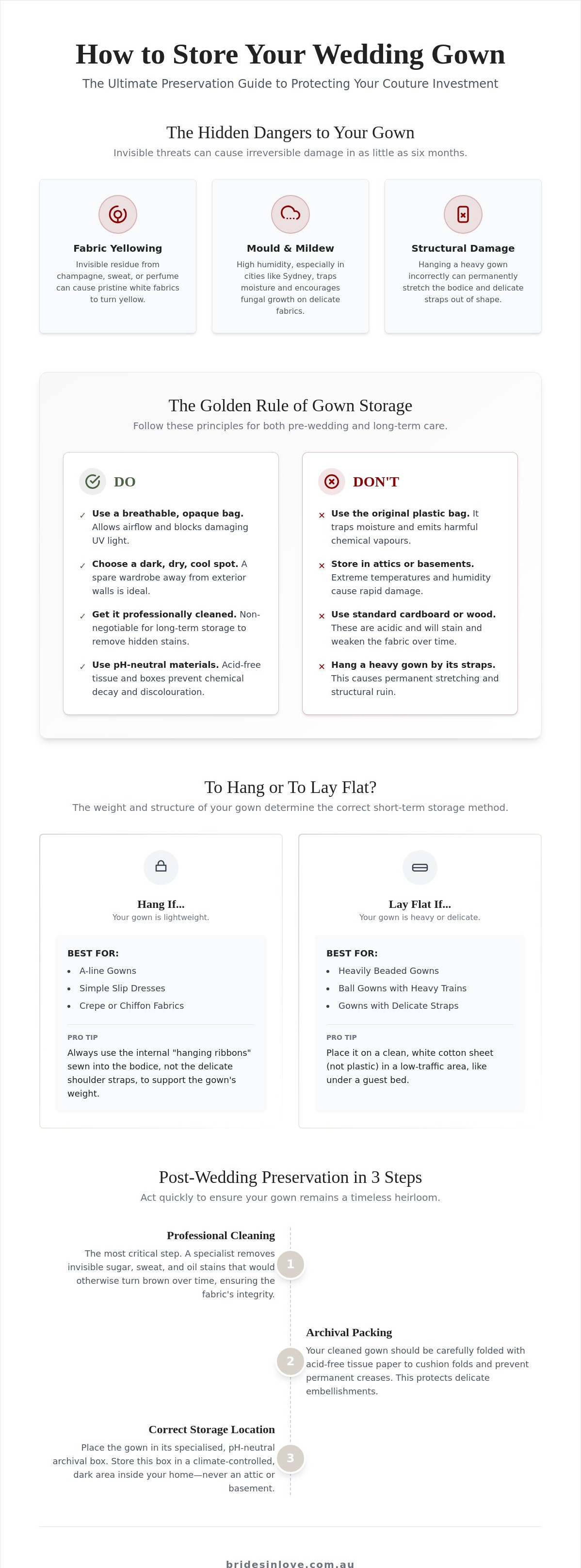
Protecting your gown before the ceremony is just as critical as long-term preservation. The period between your final fitting and the wedding day is a high-risk window for accidental damage. Following the "Golden Rule" is essential: keep the gown in a dark, dry, and cool environment. This aligns with fundamental textile preservation principles, which suggest that heat and light are the primary catalysts for fabric degradation. When you are considering how to store your wedding dress during these final weeks, think of it as protecting a museum-grade investment.
One of the most common mistakes is leaving the gown in the clear plastic bag it arrived in. Plastic is a breathable nightmare. It traps moisture, which leads to mildew, and emits harmful vapours as it breaks down over time. This "off-gassing" can cause synthetic fabrics and delicate silks to yellow prematurely. Always swap the plastic for a high-quality, breathable, opaque Gown Storage Bag. This protects against light damage while allowing the fabric to breathe.
Household hazards are often overlooked. Pets, cigarette smoke, and even strong cooking odours can permeate luxury fabrics like those found in Sima Couture gowns. Ensure your storage area is a pet-free zone and far from the kitchen. A high-quality garment bag acts as a barrier, but the environment itself must be controlled to maintain the gown's pristine condition.
The Hanging vs. Laying Flat Dilemma
Lightweight A-line gowns or simple slips are usually safe to hang. However, heavily beaded gowns or those with delicate mesh straps are prone to stretching under their own weight. If your gown is substantial, lay it flat on a clean, white sheet in a low-traffic area like under a guest bed. If you must hang it, always use the internal "hanging ribbons" sewn into the side seams. These ribbons take the weight off the shoulders and distribute it through the sturdier parts of the bodice, preventing permanent structural damage.
Choosing the Right Wardrobe Space
Location is everything. The back of a spare bedroom wardrobe is ideal because it remains undisturbed. Avoid hallway cupboards or laundry spaces where humidity fluctuates. Never store your gown against an exterior wall. These walls are susceptible to condensation and temperature spikes, which create a breeding ground for mould. Ensure the dress has plenty of "breathing room" rather than being squashed between other garments. This prevents permanent creasing and allows air to circulate around the fibres, ensuring you know exactly how to store your wedding dress for maximum safety.
The Essential Storage Toolkit: Breathability and Protection
Understanding the chemistry of fabric care is the first step in mastering how to store your wedding dress safely. High-end textiles, particularly silk mikado, delicate crepe, and intricate lace, are living fibres. They require consistent airflow to remain stable. When these materials are sealed in airtight environments, they become susceptible to oxidative yellowing. This chemical reaction occurs when fibres react with trapped moisture and residual cleaning agents, turning a pristine ivory into a dull, aged yellow.
The term "pH-neutral" is the most critical descriptor in your preservation toolkit. Traditional storage materials, like standard cardboard boxes or wooden chests, are often highly acidic. Over time, these acids migrate into the gown's fabric, causing permanent brittle spots and discolouration. To combat this, professional preservationists rely on Smithsonian's textile care tips, which emphasise using chemically stable materials to prevent long-term decay. Avoiding "off-gassing" is equally vital. Cheap plastic bags and non-archival cardboard release volatile organic compounds as they degrade. These vapours act like a slow-acting dye, staining the fabric from the inside out.
Why Gown Storage Bags are Non-Negotiable
A professional Gown Storage Bag is a sophisticated piece of equipment. Unlike standard dry-cleaning bags that trap humidity, a dedicated bridal bag is made from breathable, non-woven fabrics. These bags are opaque to block UV light, which can bleach delicate lace even in indoor settings. When selecting a bag, ensure it offers sufficient length. A crushed train leads to deep, permanent creases that can snap the delicate threads of a Zavana Couture gown. Providing your gown with ample space is a core tenet of professional care. It ensures the architecture of the dress remains intact while you learn how to store your wedding dress for the long term.
The Role of Acid-Free Tissue Paper
Acid-free, pH-neutral tissue paper is the secret weapon of couture curators. It serves three primary functions. First, stuffing the bodice and sleeves with crumpled tissue prevents the fabric from collapsing and developing deep, structural wrinkles. Second, placing sheets between layers of beading or lace prevents snagging. This is especially important for Sima Couture designs where heavy embroidery could catch on fine tulle. Finally, high-quality tissue acts as a secondary buffer against Sydney's fluctuating humidity levels. For brides who want to ensure their investment remains in gallery condition, our stylists can provide a personalised care consultation to help you select the right materials.
Navigating the Australian Climate: Best Storage Locations
The Australian climate presents a unique challenge for bridal couture. While many international guides suggest simple wardrobe storage, Sydney’s high humidity and fluctuating temperatures require a more strategic approach. Moisture is the primary catalyst for irreversible mildew, which can settle into the fibres of a Sima Couture gown long before it becomes visible to the naked eye. When you are deciding how to store your wedding dress, you must prioritise an environment that remains stable throughout the brutal summer months.
Many families pass down cedar chests as the "ultimate" storage solution, but this is a persistent myth. Natural wood, including cedar, contains acids and oils that can leach into bridal fabrics, causing permanent brown staining and structural weakening. Similarly, lofts, attics, and garages are absolute "No-Go Zones." These spaces experience extreme temperature spikes that cause fibres to expand and contract, leading to brittle lace and yellowed silk. Following expert advice from the Minnesota Historical Society, luxury garments should only be kept in "living" spaces where the temperature and humidity are naturally regulated by your home's climate control.
Combatting Sydney Humidity
Temperature Control and Fabric Stability
Fabric stability relies on a lack of change. The most reliable room in your home is typically an internal bedroom wardrobe far from windows and laundry rooms. Direct sunlight is another silent predator. UV rays can "sun-bleach" shades like Winter White and Ivory, leading to uneven patches of discolouration. An opaque, high-quality garment bag is essential, but the room itself must remain cool. By selecting a dark, internal space, you ensure the delicate silk and lace fibres of your gown don't lose their elasticity or lustre. Mastering how to store your wedding dress in the Australian heat is simply a matter of choosing a location that stays as comfortable as you do.
Post-Wedding Preservation: Long-Term Storage Strategies
Once the celebrations conclude, the focus shifts from short-term protection to a multi-decade preservation plan. Many brides fall into the "Invisible Stain" trap. A gown may appear immaculate after the reception, but sugar-based spills from champagne or clear sodas are deceptive. These substances dry clear but caramelise over five to ten years. This process results in stubborn brown patches that are nearly impossible to remove without damaging the fabric. Perspiration salts act similarly, slowly degrading the delicate silk fibres of a Sima Couture masterpiece if they aren't professionally neutralised.
When deciding how to store your wedding dress for the long term, the choice between boxing and bagging depends on your available space and the gown's architecture. For a preservation plan spanning 20 years or more, a pH-neutral preservation box is the gold standard. It provides a stable environment and structural support that a hanging bag cannot offer over decades. Heavy gowns, in particular, benefit from being stored flat to prevent the weight of the skirt from pulling on the shoulder seams and distorting the bodice over time.
The Art of Folding for Preservation
Folding a luxury gown requires a gentle touch and plenty of padding. Never press down on the fabric or create sharp edges. Use rolls of acid-free tissue paper to create "soft folds" in the train and skirt. This technique prevents the fibres from snapping at the crease points. The bodice should be padded out with tissue to maintain its curated shape, ensuring it remains the focal point when the box is opened in the future. Proper interleaving with tissue between layers of lace or beading is also essential to prevent snagging during the folding process.
Selecting a Preservation Box
Your preservation box must be both acid-free and lignin-free. Lignin is a natural component of wood pulp that turns paper yellow and acidic as it ages. A high-quality box with a UV-protected viewing window allows you to admire your gown without exposing it to harmful light or breaking the protective seal. We recommend an annual check-up. Briefly inspect the gown once a year to ensure no moisture has entered the environment. This is also the perfect time to refold the fabric slightly, which prevents permanent set-creases from forming. Our Wetherill Park stylists are experts in these preservation techniques. Book a gown care appointment to discuss the best preservation strategy for your specific couture label.
Maintaining Couture Quality with Brides in Love
Our Wetherill Park stylists understand that a wedding gown is a significant emotional and financial investment. At Brides in Love, we don't just provide a dress; we offer a lifetime of expertise in garment care. Preparing a gown for storage requires more than just a hanger and a cupboard. It involves a meticulous assessment of the fabric, weight, and embellishments. When you consult with our team on how to store your wedding dress, you're tapping into years of experience handling the world's most prestigious labels.
As the exclusive Sydney retailer for Sima Couture, we take the protection of these masterpieces seriously. Our approach is proactive and professional. We recommend that every bride leaves our showroom with one of our specialised Gown Storage Bags. These bags are the first line of defence against the environmental hazards discussed in this guide. They are specifically engineered to provide the breathability and UV protection necessary for high-end textiles, ensuring your gown remains in showroom condition long after the wedding day.
Expert Advice for Luxury Labels
Different labels require unique preservation strategies tailored to their craftsmanship. For the intricate and heavy beading found in Zavana Couture, our stylists demonstrate how to support the gown's weight to prevent thread snap or fabric stretching. The delicate 3D lace of White April gowns requires careful interleaving with acid-free tissue to maintain the "lift" and dimension of the floral motifs. For Wedding Societe designs, we focus on maintaining architectural integrity. This ensures that internal boning and structured bodices aren't crushed or warped during the long-term storage process.
Visit Our Sydney Showroom
Preserve Your Couture Legacy with Expert Care
Protecting a high-end gown is about more than just finding a spare hanger; it's about safeguarding a masterpiece for the future. By mastering how to store your wedding dress using pH-neutral materials and climate-controlled environments, you prevent the heartbreak of oxidative yellowing and structural decay. From Sydney's coastal humidity to the intricate needs of heavy beading, expert care ensures your investment remains as breathtaking as your wedding day.
As the exclusive Sydney home of Sima Couture, our stylists are trained in the specific preservation requirements of luxury bridal fabrics. We invite you to visit our massive designer showroom in Wetherill Park to experience the Brides in Love difference and secure your professional storage essentials. Our team provides the stability and expertise needed to manage every detail of your gown's journey.
Book your one-on-one bridal styling consultation in Sydney to receive tailored advice on protecting your gown's legacy. Your dress is a curated piece of your history, and with the right professional care, it will stay in gallery condition for decades to come.
Frequently Asked Questions
Can I store my wedding dress in a plastic vacuum-sealed bag?
No, vacuum sealing is actively harmful to luxury bridal fabrics. These bags trap residual moisture and force deep, permanent creases into delicate silks and tulles. Suffocating the fibres prevents the natural airflow required to maintain fabric stability, which often leads to mould growth or brittle threads. Always opt for a breathable, non-woven Gown Storage Bag instead.
How long can I leave my wedding dress hanging before it starts to stretch?
Lightweight gowns are generally safe on a padded hanger for several months. However, structured or heavily beaded couture should be moved to flat storage if kept for more than a few weeks. The weight of a substantial train can pull on the shoulder seams, permanently distorting the bodice. Always use the internal hanging ribbons to distribute weight through the sturdier side seams.
Should I take my dress out of the bag to let it breathe occasionally?
If you are using a professional-grade, breathable garment bag, there is no need for frequent removal. These materials are designed to facilitate constant airflow while blocking out dust and light. For gowns in preservation boxes, a brief annual inspection is recommended. This allows you to check for any environmental changes and slightly refold the fabric to prevent set-creases from becoming permanent.
Is it okay to store my wedding dress in the attic or garage?
Attics and garages are the most dangerous locations for bridal textiles. These spaces experience extreme temperature fluctuations and high humidity, which accelerate the decay of delicate fibres. These areas are also prone to pests and dampness. Your gown should only be stored in a "living" space, such as an internal wardrobe, where the temperature and moisture levels remain consistent year-round.
Does my wedding dress really need to be cleaned before long-term storage?
Cleaning is non-negotiable for long-term preservation. Even if the gown looks immaculate, invisible stains from champagne, perspiration, or perfume will caramelise and turn brown over five to ten years. Professional cleaning is the most critical step in learning how to store your wedding dress safely, as it neutralises these hidden contaminants before they can cause permanent discolouration.
What is the best way to travel with my gown to a destination wedding?
Use a high-quality, opaque garment bag for all travel. Most airlines allow brides to carry their gown as a cabin item, which can often be hung in the captain’s closet or laid flat across overhead bins. Avoid checking your gown in as hold luggage, where it is subject to extreme pressure and temperature changes. Once you arrive, hang the dress immediately to allow the fibres to relax.
How do I get wrinkles out of my dress after it has been in storage?
Professional steaming is the safest way to remove storage creases. If you are doing this yourself, use a high-quality hand steamer and keep it at a safe distance to avoid water spotting. Never use a traditional iron directly on luxury bridal fabrics, as the high heat can melt synthetic fibres or scorch delicate silks. For complex couture, our Wetherill Park stylists recommend professional pressing to ensure the gown's architecture is preserved.
Why has my wedding dress turned yellow in the wardrobe?
Yellowing is usually the result of "oxidative yellowing," which occurs when fibres react with acidic materials or light. This is frequently caused by storing a gown in a standard plastic bag or a non-archival cardboard box. These materials release harmful vapours as they degrade. Using pH-neutral tissue paper and a breathable bag is the best way to prevent this when deciding how to store your wedding dress for the long term.


