
A designer gown’s value isn’t measured by its label alone. If your parents are weighing the decision practically, that’s understandable. Explaining the value of a designer gown to parents means showing what informs your choice, from considered construction and fit to the significance of wearing it for a once-in-a-lifetime celebration.
This guide will help you discuss value without reducing it to a price tag. It looks at how craftsmanship shapes a gown, why fit and comfortable movement matter, and how choosing carefully can make sense when you focus on the details that matter to you. It also considers cultural meaning: a gown can reflect family traditions, personal identity and the way you want to express yourself on your wedding day. Not every premium detail is essential. The goal is to identify which details will contribute to your celebration and how you want to feel in the gown, so you can have a practical conversation with your parents about shared priorities.
Key Takeaways
- Look beyond the designer label: construction details and fitting refinements help explain the work behind a gown.
- Match the gown’s silhouette, fabric and formality to the celebration, while keeping comfort and ease of movement in mind.
- Weigh quality against quantity by considering how thoughtfully the gown suits your priorities and the occasion.
- Consider the traditions and personal meaning you want your wedding attire to express, then explore Gown Storage Bags as a next step for storing the gown.
Craftsmanship and construction quality
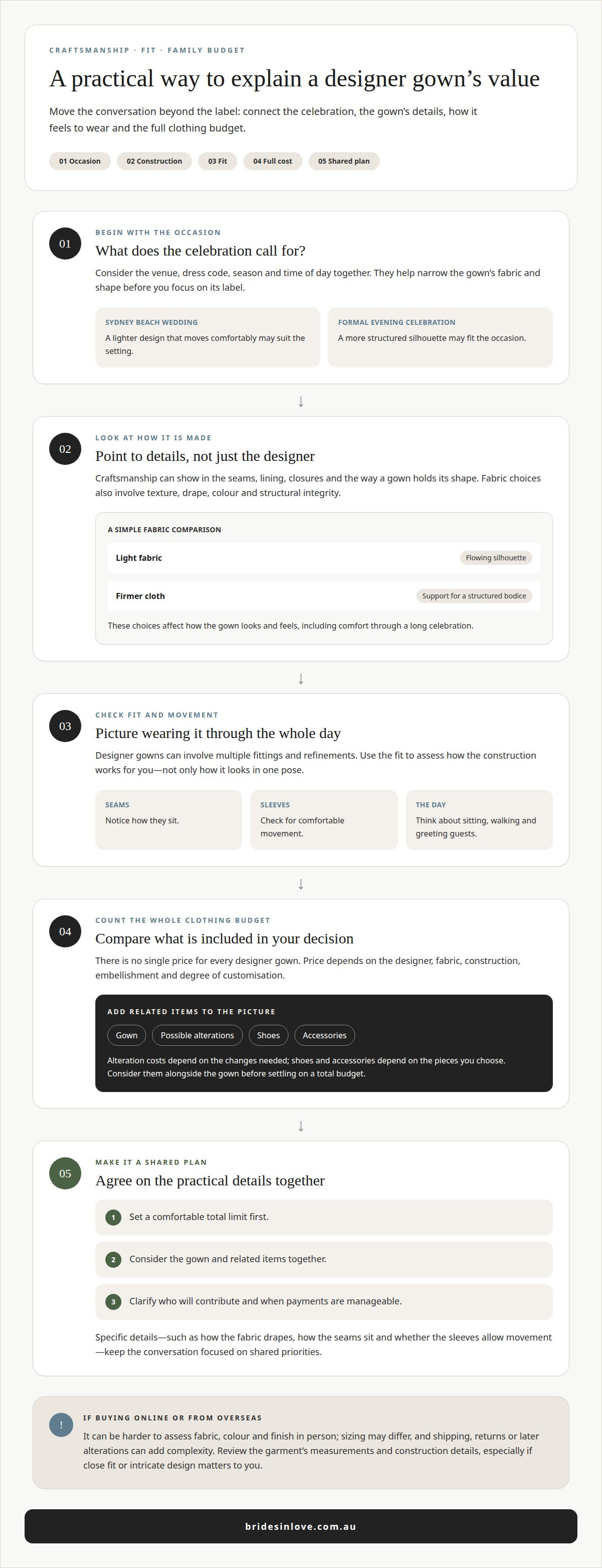
Craftsmanship shows in the seams, lining, closures and way a gown holds its shape. Fabric choice matters too: designers weigh texture, drape, colour and structural integrity when selecting materials. A light fabric may suit a flowing silhouette, while firmer cloth can support a structured bodice. These choices affect how the gown looks and feels, including comfort through a long celebration.
Fashion has long paired design with personal fitting. At the House of Worth, clients selected designs shown on live models, then garments were tailor-made in Worth’s workshop. Charles Frederick Worth opened his own firm with a business partner in 1858, illustrating how turning creative craftsmanship into an enduring enterprise requires sound commercial foundations—a path today’s entrepreneurs often navigate with the help of corporate advisory firms like AOWJ Business Consultants. Designer gowns today can involve multiple fittings and refinements, allowing construction to reflect the design and the wearer’s fit preferences.
What does a designer gown cost in Australia? There’s no single price for every gown. The designer, fabric, construction, embellishment and degree of customisation all affect the price. Compare those details to discuss value more clearly than the label alone can.
Include possible alterations, shoes and accessories in your clothing budget. Costs depend on the changes needed and the pieces you choose, so consider them alongside the gown before settling on your total budget.
To discuss a budget and payment plan with your parents, agree on a comfortable total limit first. Then consider the gown and related items together, and clarify who will contribute and when payments are manageable. This keeps the conversation practical and focused on shared priorities.
How long can a designer gown last, and can it be worn again? There’s no fixed lifespan: construction, care and storage all affect its condition. Depending on its design and fit, you may be able to restyle it for another occasion by changing accessories or adapting its look.
Buying online or from an overseas retailer can make it harder to assess fabric, colour and finish in person. Sizing may differ too, and shipping, returns or later alterations can add complexity. Before buying, review the garment’s measurements and construction details, especially if a close fit or intricate design matters to you.
When explaining a designer gown’s value to parents, point to specific details: how the fabric drapes, how the seams sit and whether the sleeves allow comfortable movement. The season and venue can also help explain why a particular fabric or construction suits your wedding day.
Gowns for weddings and special occasions
The occasion helps define what a gown needs to do. A Sydney beach wedding may suit a lighter design that moves comfortably, while a formal evening celebration may call for a more structured silhouette. Consider the venue, dress code, season and time of day together. These details help narrow your choices of fabric and shape, beyond the label alone.
Silhouette offers a practical starting point. An A-line gown allows graceful movement without a dramatic skirt. Tea-length and short gowns can suit beach weddings, garden parties and casual celebrations. A sleek sheath may work well for a city wedding or intimate gathering, while a ball gown creates a dramatic effect with its structured bodice and full skirt. Mermaid and fit-and-flare designs highlight curves.
Comfort matters as much as appearance. A gown should let you sit, walk and greet guests with ease. Think about the ceremony, photos and reception as parts of one day, not just a single pose. For a coastal setting, movement and the season can guide your choices about fabric weight and design. The right fit supports confidence throughout the celebration.
Bridal collections offer different interpretations of style, but the occasion and your vision should guide your choice. Match the gown’s formality to the event, then consider how accessories could change its look. Depending on its design, a thoughtfully chosen gown may be styled for multiple occasions. That possibility adds another dimension to value without making resale the only measure.
In Australia, resale prices for designer gowns vary with the designer, condition, fit, alterations and buyer demand. A clean, well-cared-for gown that suits current preferences may attract different interest from one needing repairs or extensive changes. Resale value isn’t guaranteed, so treat it as a possible benefit, not a dependable part of your wedding budget.
To explore silhouettes and how they suit your celebration, book a gown appointment.
Craftsmanship and quality over quantity
A designer gown can offer a more individual approach than a high-street dress. Designer gowns may be produced in limited quantities or made as custom pieces, rather than mass-produced. This can give the bride room to choose a silhouette and details that suit her preferences. The value lies in how well those choices match her priorities, not simply in buying fewer garments.
Compare the gown’s fabric, finish and fit with how you plan to wear it. Designers consider texture, drape, colour and structure when choosing materials. For example, fabric drape influences how a skirt falls, while a fabric’s structure can help support a defined shape. These details help explain what distinguishes one design from another without assuming every designer gown is made the same way.
How does a designer gown compare with a high-street or rental gown? A designer gown may be made in limited quantities or as a custom piece; high-street clothing is generally mass-produced, while renting offers temporary use. Specialised studios such as weddingcrafters.com.sg showcase how rental collections and bespoke designs can balance craftsmanship with budget flexibility. The right choice depends on your budget, fit preferences and whether owning a gown matters to you.
Quality over quantity can help frame the family conversation. Focus on the details that matter most, such as a particular fabric, a considered fit or a silhouette that reflects your style. A confident choice doesn’t need every embellishment. One well-chosen detail can create a distinctive look while keeping the design aligned with your vision.
For instance, if intricate surface detail matters more than a dramatic skirt, prioritise that feature when comparing gowns. If ease of movement matters most, assess how the gown feels when you walk and sit. These examples turn an abstract discussion about value into clear priorities. They also help your parents understand what the gown offers beyond its label, while keeping the decision grounded in your needs.
Think of value as the fit between construction, personal priorities and the occasion. A gown with a distinctive design may be meaningful even if you wear it once; a simpler design may suit someone who values versatility. Comparing these intentions helps families discuss quality without treating a higher price or designer name as proof of better value.
Cultural symbolism and social status
A wedding gown can carry meaning beyond its cut or fabric. It may reflect family traditions, cultural expectations, personal identity or your own vision. For example, you might choose a detail that honours a family custom while selecting a silhouette that feels distinctly yours. Sharing these intentions helps your parents understand why the gown matters beyond its appearance.
Fashion history also shows how a designer’s name can carry social meaning. Empress Eugénie’s patronage helped establish Charles Frederick Worth’s success as a popular dressmaker from the 1860s onward. By the 1870s, Worth’s name frequently appeared in ordinary fashion magazines. His reputation connected a maker’s identity with the garments worn by clients, adding recognition to the design itself.
That history offers context, not a rule that a label makes every gown valuable. For a Sydney wedding, consider what the dress represents to you and your family. A particular colour, fabric or modest neckline may honour a tradition; another bride may prioritise an individual style. Explaining the reason behind your choice makes the conversation specific and respectful.
Consider the gown’s meaning alongside practical priorities. Does it suit the ceremony’s traditions and the chosen venue? Could a small styling choice bring family expectations and your personal taste together? These questions help distinguish meaningful symbolism from pressure to choose a recognisable name. A lasting connection to the day can come from the story attached to the gown, not its status alone.
To explore how different gown designs can reflect your priorities and celebration, book an appointment to discuss your gown. Bringing your ideas into the conversation can help clarify which details feel significant, what traditions you want to honour, and how you want to feel wearing the finished look.
Brides in Love: Gown Storage Bags
Brides in Love offers Gown Storage Bags to help you care for a designer gown after choosing it. A dedicated bag gives you a place to keep the gown between fittings, before the wedding and afterwards. Planning how to store the garment is another practical part of the value conversation with your parents, and can help you preserve its significance beyond the celebration.
Consider a Gown Storage Bag when planning where your gown will stay before the wedding or how to keep it afterwards. Your choice of gown remains personal, shaped by craftsmanship, occasion and meaning; thoughtful storage supports your plans for the garment once you’ve chosen it.
For information about Gown Storage Bags, contact Brides in Love.
Choose a gown that feels right for you
Turn your priorities into a clear choice by considering what you want your wedding look to express, which details matter most and how you want to feel wearing it. This gives you a considered starting point for discussing the decision with your parents, without treating a designer name as the whole story.
For brides explaining the value of a designer gown to parents, seeing designs in person can make the conversation more tangible. At Brides in Love in Sydney, explore Zavana Bridal Gowns and White April Gowns as you refine your preferences.
Bring your ideas and questions to an appointment, then focus on the gown that feels aligned with your celebration and personal style. Book an appointment to explore gown options and take the next step with confidence.
Frequently Asked Questions
What factors determine the price of a designer gown?
A gown’s price reflects its designer, materials and level of detail. The fabric, complexity of decorative finishes and any custom design work can all affect the final amount. For a useful comparison, consider what each gown includes and separate essential features from optional details. This makes it easier to weigh the design against your overall wedding budget.
How can I explain the quality and craftsmanship of a designer gown to my parents?
Explain which features matter to you and why, rather than relying on the designer label. Point out a detail that supports your preferred fit and explain how it suits your celebration. Distinguish must-haves from decorative extras to show how you’ve considered value and budget together. A specific, balanced explanation helps your parents understand the thinking behind your choice.


