
The A-line silhouette offers elegance without making you choose between shape and ease. A-line bridal gowns are fitted through the bodice and waist, then flare gently into a skirt shaped like the letter A. This balance of definition and movement is a key reason brides choose the style.
If you love the drama of a mermaid gown or the fullness of a ballgown, it can be difficult to know which silhouette will feel right on your wedding day. A dress is about more than how it looks in a photograph: comfort and freedom to move matter when you walk, greet guests and dance.
This guide explains why A-line gowns appeal to brides, how their shape compares with mermaid and ballgown styles, and what to consider for different Sydney wedding settings, from a coastal celebration to a formal reception. You’ll also find practical pointers for choosing a silhouette that feels polished, suits your setting and lets you enjoy the day.
Key Takeaways
- See how a gently flared skirt can balance proportions and complement different body shapes.
- Compare the defined shape of a mermaid gown and the fuller volume of a ballgown to decide what feels right for you.
- Match fabric, skirt volume and overall formality to your Sydney wedding setting, including coastal celebrations.
- Assess how a gown feels in motion by noticing your comfort as you walk, sit and dance.
Why is the A-line wedding dress silhouette popular?
An A-line wedding dress has a fitted bodice and waist, followed by a skirt that gradually widens towards the hem. From the front, its outline resembles the letter A. The style is sometimes called a princess-line silhouette, though details such as waist seams and skirt volume can vary. Brides choose A-line bridal gowns for their defined upper shape and graceful movement, without the fullness of a ballgown.
The silhouette can create different effects on different proportions. For a pear-shaped figure, the gradual flare can balance the hips with the bodice. On an hourglass shape, a fitted waist can highlight the natural curve. For a rectangle or athletic build, the transition from waist to skirt can suggest more defined curves. These are styling effects, not rules: neckline, waist placement and fabric all affect how a dress sits. Compare a defined waist with a softer, less structured version to find what feels comfortable.
What are the latest A-line wedding dress trends in Australia? Design options include satin, lace, floral details and beaded chiffon, alongside a range of necklines and bodice finishes. Rather than choosing a trend by default, consider which details suit your ceremony and personal style.
Where can I buy A-line wedding dresses in Australia? Bridal boutiques across the country carry dresses in this silhouette. In Sydney, book a boutique appointment to try different skirt volumes and waistlines in person.
Which Australian bridal boutiques offer A-line gowns in plus sizes? Look for boutiques with plus-size sample gowns and inclusive ordering options, then compare how the waist and skirt feel when worn. Walk and sit in each dress to assess its comfort and movement.
How long does it take to order and alter an A-line bridal gown in Australia? Timing varies with the gown and the alterations required, so plan early. Book your bridal appointment ideally 9 to 12 months before the wedding, allowing time for selection, ordering and fitting appointments.
Comparisons with mermaid and ballgown silhouettes
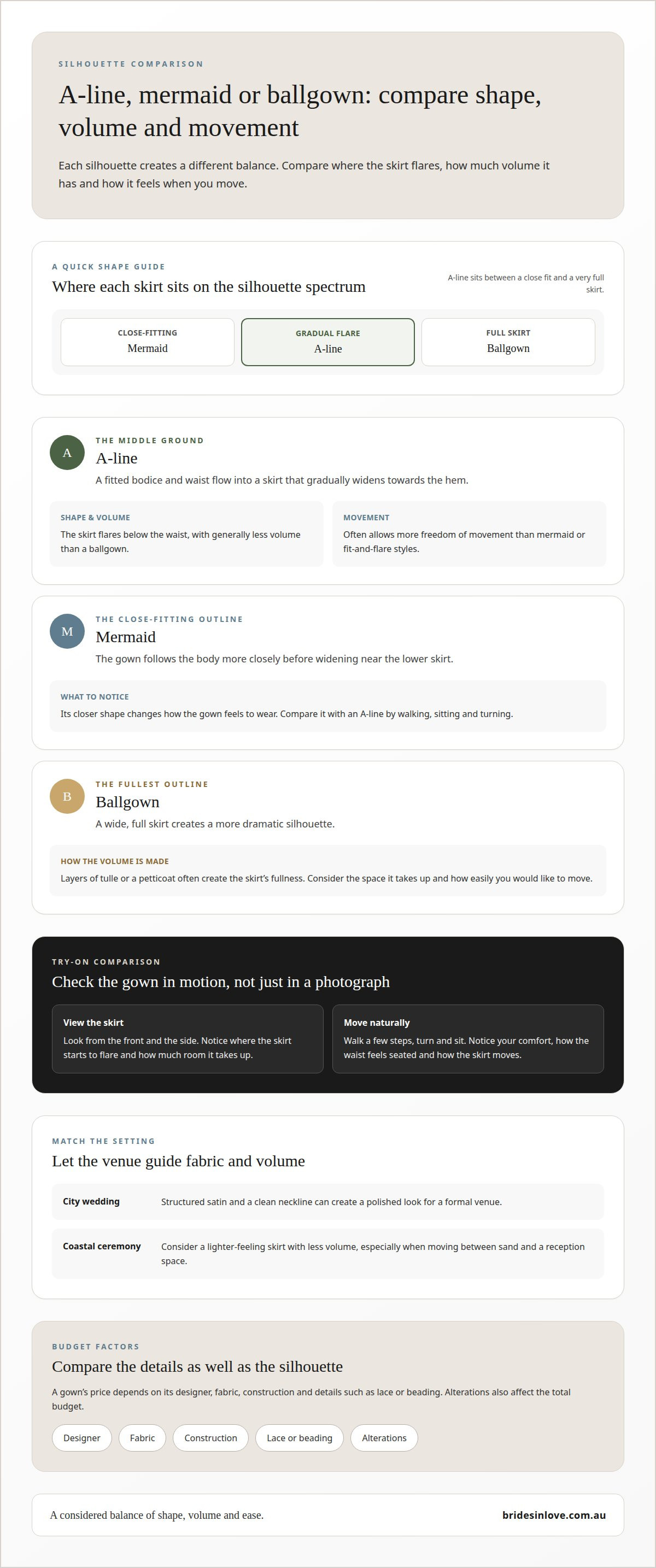
Each silhouette creates a different balance of shape, volume and movement. Compare how the skirt falls, then consider how you’ll move throughout your wedding day.
A-line and mermaid silhouettes
A-line dresses flare below the waist, while mermaid styles follow the body more closely before widening near the lower skirt. This changes both the gown’s outline and how it feels to wear. A-line styles often allow more freedom of movement than mermaid or fit-and-flare dresses. Walk, sit and turn in each shape to see how it suits your plans.
A-line and ballgown silhouettes
A ballgown has a wide, full skirt, often created with layers of tulle or a petticoat. An A-line skirt also widens from the waist, but generally has less volume. The choice is between dramatic fullness and a more streamlined profile. Consider the space around you, the visual impact you want and how easily you’d like to move.
For a practical comparison, view gowns from the side as well as the front. Notice where each skirt starts to flare and how much room it takes up. Then walk a few steps and turn. A-line silhouettes offer a middle ground: more skirt movement than a close-fitting mermaid shape, without a ballgown’s volume.
This balance helps explain the silhouette’s lasting appeal. A fitted bodice defines the wedding dress, while the gradual flare gives the skirt a clear shape without a very full outline. The effect varies with fabric and construction, so compare gowns with similar necklines if you want to focus on the silhouette.
To create your shortlist, decide whether you prefer a close fit, a gradual flare or a full skirt. Try each shape and consider which suits your ceremony and reception. A bridal appointment lets you compare how different silhouettes look and move in person.
A-line gowns for different wedding settings
An A-line gown can suit a Sydney wedding through its fabric, neckline and styling. Match these details to your venue, ceremony and practical needs for the day.
For a city wedding, consider structured satin and a clean neckline for a polished look in a formal venue. A coastal ceremony may suit a lighter-feeling skirt with less volume, especially when moving between sand and a reception space. For a civil ceremony, a simple bodice and restrained accessories can keep the look composed. For a religious wedding, you might prefer more coverage, such as a higher neckline or sleeves, depending on your preferences and the ceremony’s dress expectations.
How much do A-line bridal gowns cost in Australia? The price depends on the designer, fabric, construction and details such as lace or beading. Alterations also affect the total budget, so compare gowns by their features and the adjustments you expect to need.
Fabric and neckline options include satin, lace and beaded chiffon, as well as scoop and strapless necklines. Floral detailing can add softness, while smooth satin creates a more classic effect. For a beach setting, consider how the fabric feels and moves. For a formal city reception, compare structured fabrics and detailed finishes.
Styling can connect the gown to your wedding theme without changing its silhouette. Floral detailing can echo a garden setting, while a clean neckline and simple accessories suit a minimalist city wedding. A veil or headpiece adds a traditional note; pared-back jewellery keeps the gown’s design in focus.
Before choosing, picture the full day: the ceremony location, the walk between spaces and the reception floor. Then consider fabric, neckline and accessories as a complete look. This helps you choose an A-line wedding style that suits the setting while preserving the gown’s elegance.
Real bride experience in an A-line gown
A fitting tells you more than a posed photograph. Notice how the bodice feels when you breathe, whether the waist remains comfortable when seated and how the skirt moves as you walk. A romantic outline matters, but your wedding-day experience also depends on fit, fabric and ease of movement.
Try a simple test in the gown: walk across the room, sit down, then turn. Notice whether the hem catches, the bodice shifts or the skirt feels difficult to manage. Repeat those movements in another silhouette. Comparing the same actions helps you distinguish a flattering mirror pose from a comfortable fit.
Consider how the gown will work with your plans. Picture moving from the ceremony aisle to the reception floor, greeting guests and sitting for a meal. A-line skirts often allow more freedom of movement than mermaid or fit-and-flare styles, though construction and fit still shape the experience.
- Bodice: Raise your arms gently and check whether the top remains secure and comfortable.
- Waist: Sit and breathe normally, noticing any pressure or restriction.
- Skirt: Walk, turn and take a few steps as if entering your reception.
- Details: Check how lace, beading or other embellishments feel against your skin.
There’s no universally right silhouette for every bride. A gown that feels effortless on one person may feel too structured or too full on another. Use your fitting to identify what you prefer, such as a defined waist, a softer skirt or less fabric to manage. These observations give you clear criteria for comparing dresses beyond that first impression of elegance.
Ready to compare how different silhouettes feel in person? Book a bridal appointment to try on gowns and assess the fit in motion.
Brides in Love: Zavana Bridal Gowns
Brides in Love offers Zavana Bridal gowns for Sydney brides comparing gown styles with their wedding setting and personal preferences. Consider the bodice, skirt shape and overall feel to turn ideas from this guide into a practical shortlist.
Alongside Zavana, Brides in Love offers White April, Wedding Societe and Cizzy Bridal gowns. These labels give you more options as you refine details such as silhouette, neckline and fabric. Consider your wedding setting and how you want to move, from walking down the aisle to joining the reception.
Contact Brides in Love to explore the gown collection and discuss your bridal style.
Choose the silhouette that feels like you
Let your priorities guide the final choice. Before your next fitting, note the details you want to explore, such as neckline, fabric finish or level of structure. A short list helps you compare gowns and focus on what feels personal, rather than following trends alone.
An A-line bridal gown can be a starting point, not a decision you need to make before trying different designs. Use your appointment to refine what you like, and give yourself room to change direction as you see each look in person.
Book an appointment to take the next step in finding a wedding look that feels distinctly yours.
Frequently Asked Questions
What is an A-line bridal gown?
An A-line bridal gown is defined by its recognisable outline, not by a particular fabric or neckline. Satin, lace and chiffon gowns can all use this silhouette. When comparing dresses, check the front and side views: seam placement, bodice details and fabric weight can make gowns with the same silhouette feel quite different.
What body shapes suit A-line wedding dresses?
A-line wedding dresses can suit pear-shaped, hourglass, rectangle and athletic figures, but body-shape labels are not fitting rules. Focus on your proportions and comfort in the gown itself. Compare how different waist placements sit on your torso, and whether the bodice feels secure without pulling. These details can guide your choice more reliably than a category alone.
How do A-line bridal gowns compare with ball gowns and mermaid dresses?
Each style creates a different visual emphasis: an A-line gown has a balanced outline, a ballgown makes a more dramatic statement, and a mermaid dress draws attention to the body’s contours. Consider the look you want in full-length photographs and alongside your accessories. Try each style with similar shoes to compare the hem and overall proportions more easily.
How should I choose the right size and fit for an A-line wedding dress?
Choose a size using the measurements and guidance for the specific designer, rather than assuming your usual clothing size will match. At a fitting, check the bust, waist and hips separately, looking for pulling, gaping or excess fabric. Wear the shoes and undergarments planned for the wedding, as they can affect the gown’s balance and final fit.
What should I check before buying a second-hand or online A-line wedding dress?
Check how the bodice feels, whether the waist stays comfortable when seated and how the skirt moves. If you can try the gown on, walk, sit and turn to see whether the hem catches, the bodice shifts or the skirt is difficult to manage.


