
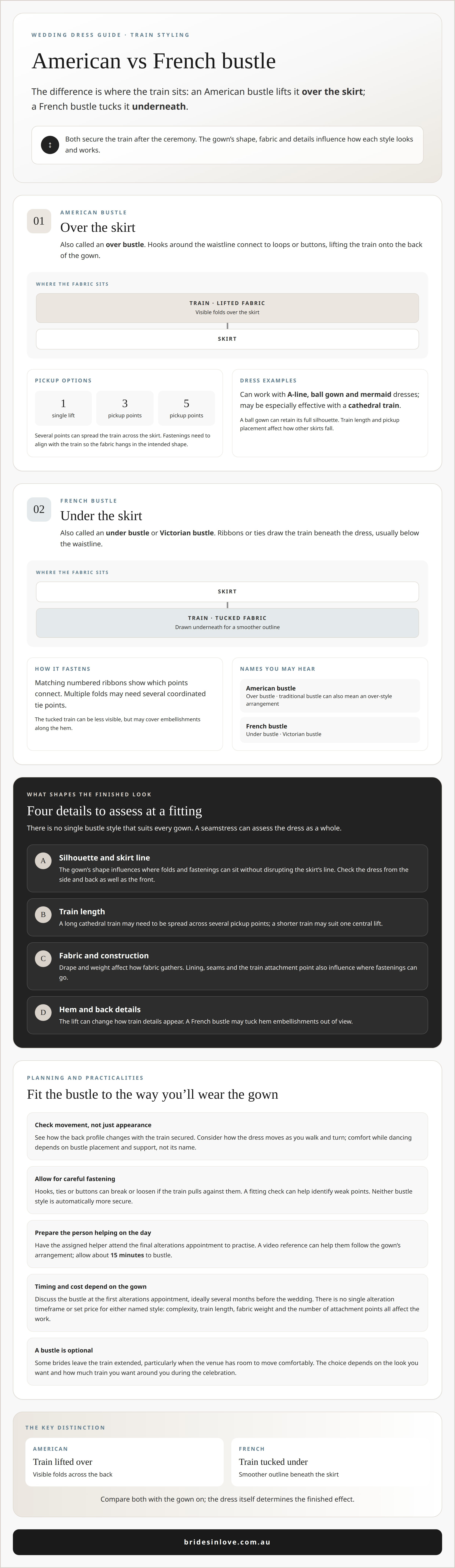
A bustle changes how a wedding dress moves and looks. In an American vs French bustle, the key difference is where the train sits: an American bustle lifts it over the skirt, while a French bustle tucks it underneath. One creates visible folds; the other gives the back a smoother finish.
Choosing between them involves more than lifting the train. The gown’s silhouette, fabric and detailing all affect the finished look, and a bustle isn’t essential for every dress.
This guide explains what a bustle does, how American and French styles are constructed, and the alternative names you might hear, including over bustle, under bustle and Victorian bustle. Knowing how each style looks can help you discuss the options when planning your wedding dress.
Key Takeaways
- A bustle lifts or secures the train after the ceremony, helping you move more freely during the reception.
- An over bustle creates a visible fold over the skirt, while an under bustle tucks the train beneath it.
- Dress silhouette, train and hem details can help guide which bustle style suits your gown.
- Knowing terms such as “over bustle”, “under bustle” and “Victorian bustle” can make bustle options easier to discuss.
American bustle construction and appearance
An American bustle lifts a wedding dress train over the back of the skirt. Its pickup points and fastening style shape the finished look.
American bustle lift and appearance
Hooks positioned around the waistline connect to loops or buttons, lifting the train over the gown. The folded fabric creates visible folds across the back rather than disappearing beneath the skirt. Depending on the gown’s design, the lift can sit at the waist or lower down. Its placement affects how the train’s fabric and details look after the ceremony.
An American bustle can use one, three or five pickup points. One creates a single lift; several spread the train across the skirt. The fastenings need to align with the train so the lifted fabric hangs in the intended shape.
Dress styles suited to an American bustle
An American bustle can work with A-line, ball gown and mermaid dresses, and can be especially effective with a cathedral train. On a ball gown, lifting the train over the skirt can preserve the full silhouette while securing the extra fabric. On an A-line or mermaid dress, the number and placement of pickup points affect how the skirt falls.
During a fitting, a seamstress can assess the train, fabric and back details together. A long cathedral train, for example, may need to be spread across several pickup points, while a shorter train may suit one central lift.
A French bustle uses ribbons or ties to draw the train underneath the dress, usually below the waistline. Matching numbered ribbons show which points connect, and the tucked fabric creates a smoother outline. This placement can make the train less visible, though it may cover embellishments along the hem. Multiple folds may need several coordinated tie points.
Fastenings can break or loosen if the train pulls against a hook, tie or button. Secure attachment and a fitting check help identify weak points. Practising with the person who will help on your wedding day can also prevent the fabric from being yanked while the bustle is fastened.
What Is a Wedding Bustle?
A wedding bustle secures the train, making it easier to move in your dress after the formal ceremony. It’s optional, and the right choice depends on the gown’s design and how you want it to look at the reception.
Matching bustle styles to dress silhouettes
A dress’s silhouette helps determine where bustle folds and fastenings can sit without disrupting the skirt’s line. During a fitting, look at the gown from the side and back, not just the front. A structured skirt and a softer, flowing shape offer different ways to gather fabric, so the finished effect can vary even with a similar train.
Consider how the skirt moves as you walk and turn. The bustle should keep the train manageable while maintaining the gown’s balance. A fitting lets the seamstress assess the whole dress rather than choosing a style based on silhouette alone.
Choosing a bustle for the dress and fabric
Fabric affects how a gathered section falls, so a seamstress can assess its drape and weight during a fitting. Pliable material may form softer folds, while firmer fabric can hold a more defined shape. The gown’s construction matters too: its lining, seams and train attachment point all influence where fastenings can go.
Think about the shoes you’ll wear for the ceremony and reception. If you change to lower heels, the hem may be adjusted to suit both pairs, depending on the difference in heel height. A bridesmaid helping with the bustle should watch the seamstress position and fasten it during a fitting, then practise handling the fabric gently. That way, the helper can follow the gown’s arrangement instead of guessing on the wedding day.
To discuss gown silhouettes and how they shape your styling choices, arrange an appointment.
Alternative names for American and French bustles
Bustle terminology can vary at bridal fittings, so knowing alternate names makes conversations about gown styling clearer. An “American bustle” is commonly called an “over bustle”, while a “French bustle” may be called an “under bustle” or “Victorian bustle”. These labels describe broad style choices, not different dress silhouettes.
“Traditional bustle” can also refer to an over-style arrangement. The word “bustle” describes securing a gown’s train, not one specific set of hooks, ties or buttons. A named style may use different fastening layouts depending on the train and the dress’s construction. The label alone doesn’t describe every detail of the finished look.
There’s no single alteration time that applies to every American or French bustle. A seamstress considers the gown’s existing seams, train length, fabric weight and number of attachment points. A design with several fastening positions involves different sewing and placement work from a simpler arrangement, so the dress itself determines how much time is needed.
The cost can vary with style complexity, train length and fabric weight. A longer train or heavier material may call for a different fastening arrangement, while extra points add construction work. Any estimate covers bustle alterations generally, not a set price for either named style.
A bustle isn’t the only way to wear a gown’s train at the reception. Some brides leave it extended, particularly when the venue has room to move comfortably. The choice depends on the look you want and how much train you want around you during the celebration.
Discuss bustle style at first alterations appointment, ideally several months before the wedding. Have the assigned helper attend final alterations appointment to practise; record a video reference and allow about 15 minutes to bustle.
Differences between American and French bustles
Choosing an American vs French bustle isn’t about finding a universal winner; it’s about the finished gown. Compare both options with the dress on, then see how the back profile changes when the train is secured. A detail that looks balanced while standing may feel different once you move, so consider the whole reception, not just the view in the fitting room.
Comfort while dancing depends on the bustle’s placement and support, not its name. Neither style is automatically more secure. A well-fitted bustle should support the train without pulling sharply at one point or restricting your stride. The fabric’s weight, fastening positions and movement of the skirt all affect how it feels.
During a fitting, try everyday reception movements in the gown: walk, turn, sit and rise. Notice whether a fold presses against your legs, catches on the skirt or shifts as you move. This gives you a more useful comparison than judging the dress from behind alone. It also shows whether the train’s length feels comfortable for the way you plan to celebrate.
Think about which visual details matter most to you. If the gown has embellishments along the hem, check whether they remain visible once the train is secured. If you prefer a cleaner outline, assess the shape from the side as well as the back. The right choice should complement the gown’s design, not compete with its details.
Bring those preferences to a fitting and discuss how each option changes the dress in motion. A considered comparison can help you choose a finish that feels polished and practical for your reception. Arrange an appointment to explore gown styling with Brides in Love.
Brides in Love
Brides in Love helps brides in Sydney explore gown options with the finished silhouette in mind. A skirt’s shape, its train length and the placement of its details all influence how the dress looks from ceremony to reception. Considering these elements while choosing a gown can help you picture how its train might sit when lifted.
Explore gowns from Zavana Bridal, White April, Wedding Societe and Cizzy Bridal, then consider which details matter most to you. A dramatic train, smooth skirt or visible hem embellishments can each shape the look you want after the ceremony. This is a useful next step if you’re choosing a gown or narrowing down the silhouette that feels right.
For a personal conversation about gown options, contact Brides in Love.
Choose a gown with its reception look in mind
Your gown’s silhouette and train shape the look you’ll carry from ceremony to reception. As you explore dresses, picture how you want the skirt to fall once the train is lifted. Comparing an American vs French bustle can clarify which finish you prefer, but the gown’s overall design should guide your choice.
Brides in Love offers Zavana Bridal and White April gowns. At your gown appointment, explore different silhouettes and consider how each design’s train and detailing fit your wedding vision. Thinking about the reception as well as the ceremony can help clarify your preferences.
Arrange an appointment with Brides in Love to explore gown options. Choose a dress that feels unmistakably yours.
Frequently Asked Questions
What is an American bustle on a wedding dress?
An American bustle secures the train by lifting it over the skirt. Its visible folds can become part of the gown’s reception look rather than hiding the train completely. A dress with a long train, for example, may use several pickup points to spread the fabric. The number and placement of those points shape the final look.
What is a French bustle on a wedding dress?
A French bustle fastens the train underneath the skirt, creating a less visible gathered effect. It’s also called an under bustle or Victorian bustle. This style can suit a bride who wants a smooth outline after the ceremony. Consider the hem details before choosing it, as fabric tucked underneath may cover embellishments along the bottom edge.
What are the main differences between an American and French bustle?
The American vs French bustle comparison comes down to where the train folds and how those folds look. An American bustle brings fabric over the skirt, while a French bustle gathers it underneath. If you want the bustle to be a visible design feature, the folds of an American style may appeal. For a subtler outline, an under-skirt finish may better suit your preference.
How much does it cost to add an American or French bustle in Australia?
This is a general estimate, not a quote from Brides in Love. An arrangement with several fastening points may involve more alteration work than a simpler one. The gown’s construction and detailing also affect the work required.


